Your digging level
Description
Rock Radical Vasco (Basque Radical Rock) emerged in the Southern Basque Country during the early 1980s as a fiercely underground, anti-establishment movement.
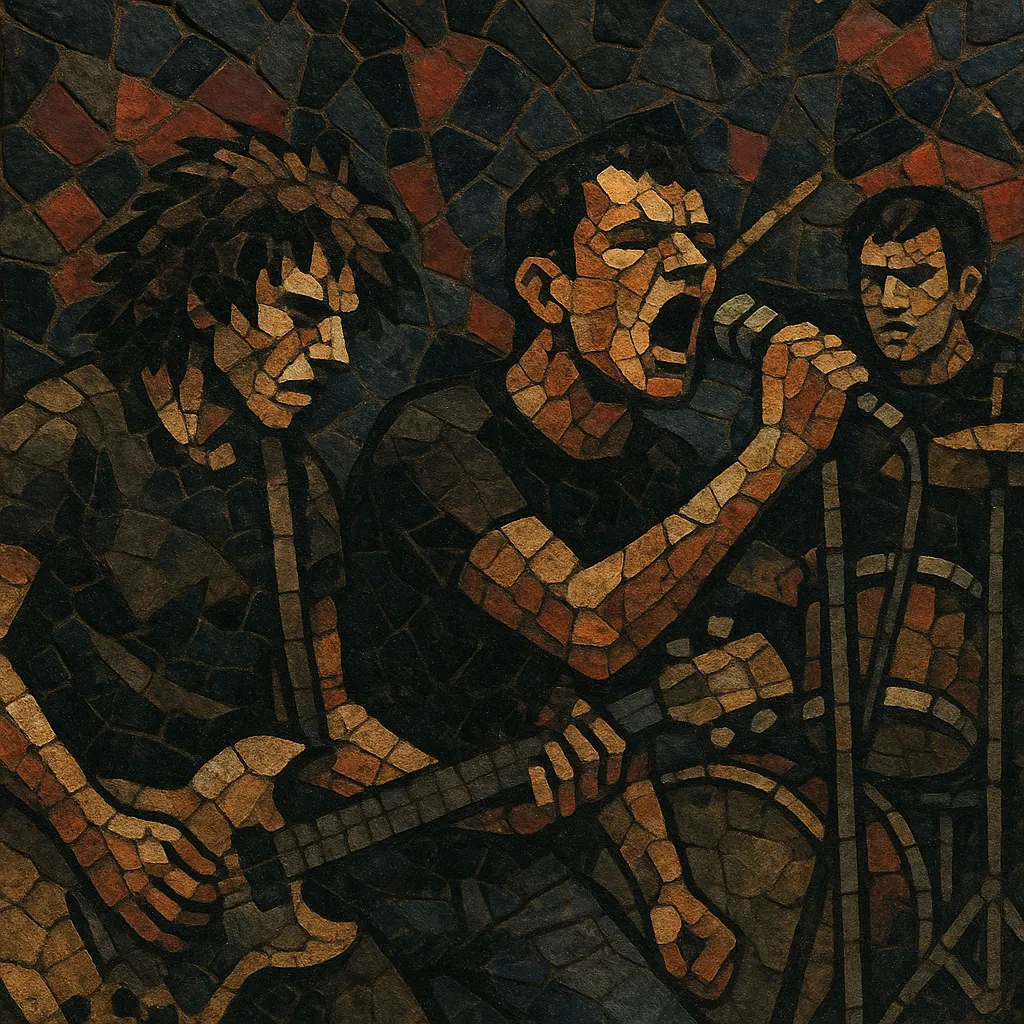
It fused the speed and confrontation of UK punk and hardcore with streetwise Oi!, occasional post‑punk/new wave textures, and a notable current of ska and reggae rhythms. Lyrics—delivered mainly in Basque and Spanish—were explicitly political: anti-Francoist, anti-police, anti-militarist, pro–Basque social and national rights, and concerned with everyday working‑class realities. The sound was raw, fast, and communal, often tied to squats (gaztetxeak), fanzines, and DIY touring networks rather than mainstream venues.
While the label was partly media‑coined and not universally accepted by all bands, it captured a real constellation of groups who articulated the frustrations of a generation that felt the post‑Franco transition had failed to deliver the social and national change they demanded.


![[Documental] Aquellas movidas - Rock Radical Vasco](https://i.ytimg.com/vi/kAUXZq5kXxA/hqdefault.jpg)

History
Basque Radical Rock coalesced in the early 1980s in the Southern Basque Country (the Basque Autonomous Community and Navarre). In the wake of Francisco Franco’s dictatorship and Spain’s transition to democracy, many Basque youths perceived their national and social aspirations as betrayed. Influenced heavily by UK punk (e.g., the Sex Pistols, The Clash) and the rapidly intensifying currents of hardcore, Oi!, ska, and reggae, local bands began forging a raw, confrontational sound with explicitly political lyrics.
The movement grew through gaztetxeak (self‑managed social centers), fanzines, and student/community radio, rather than mainstream circuits. Independent labels like Soñua and later Oihuka (helmed by Marino Goñi) were crucial in recording and distributing the scene, helping to document a dense cluster of bands from Bizkaia, Gipuzkoa, Álava, and Navarre.
Musically, the scene favored fast 4/4 beats, power‑chord riffing, shouted group choruses, and raw production. Ska and reggae off‑beats—popularized locally by groups such as Hertzainak and Potato—brought dancing, communal release, and a broader rhythmic palette. Lyrically, songs attacked police repression, militarism and conscription, class exploitation, heroin devastation, censorship, and cultural assimilation, while advocating Basque language and identity.
“Rock Radical Vasco” was popularized by media and compilations, but some bands rejected the label as reductive or externally imposed. Even so, it became a shorthand for a tightly interlinked constellation of groups that shared scenes, stages, and audiences.
The mid‑1980s marked the movement’s apex, with packed concerts, compilations, and wide circulation of cassettes and LPs. By the late 1980s, multiple factors—mainstream co‑optation pressures, internal fractures, the toll of heroin, and changing cultural currents—saw the original wave ebb. Yet its imprint on Basque and Spanish punk, ska‑reggae, and politically charged rock has endured.
Rock Radical Vasco left an enduring model for DIY infrastructure, politically explicit songwriting, and bilingual (Basque/Spanish) expression. It paved the way for subsequent Basque scenes—from reggae and ska to indie and metal—and helped solidify the idea of punk/rock as a vehicle for community self‑organization and social critique in the region and across Spain.