Genres
Artists
Albums
Make Music
Sign in
Sign in
Artists
Minimalism
Artists
Minimalism
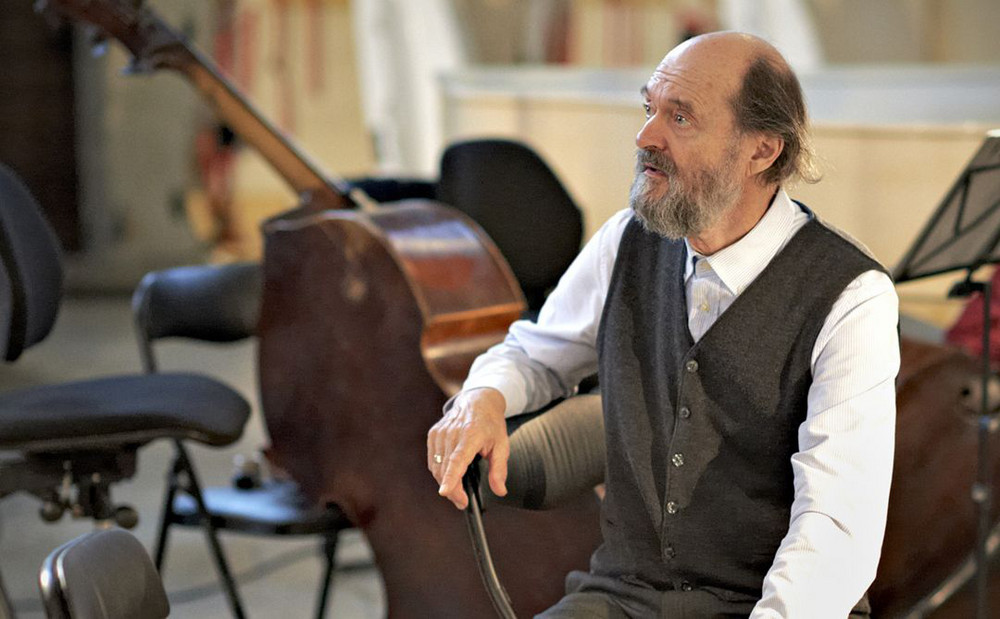
Arvo Pärt
1984–2023
·
21 albums
Listen
3
/5
Genres
Pet Calming
Pet calming is a functional micro‑genre designed to reduce stress and arousal in companion animals—primarily dogs and cats—during triggering situations such as owner absence, fireworks, vet visits, thunderstorms, or travel. Musically it favors very slow tempos, sparse arrangements, soft timbres (piano, pads, gentle strings, warm guitars), long sustains, smooth envelopes, and stable, consonant harmonies. Dynamics are kept narrow and transients are tamed to avoid startle responses. Many releases add gentle environmental ambiences (rain, ocean, rustling leaves) or unobtrusive pink/white‑noise beds to mask external sounds. Structures are highly repetitive with gradual variation so the soundscape feels predictable and safe. While aimed at non‑human listeners, the genre is informed by animal‑behavior findings (e.g., predictable low‑arousal sound reduces stress) and by human relaxation idioms (ambient, new age, lullaby). It is commonly delivered as long‑form, streaming‑friendly content that owners can loop for hours.
Discover
Listen
Christmas Product
“Christmas product” is a meta‑category of holiday recordings designed primarily as functional, keyword‑optimized music products rather than as artist‑driven albums. These releases are typically studio or library sessions that package public‑domain carols and well‑known seasonal standards in accessible styles, often under generic ensemble names, for use in playlists, in‑store ambience, television bumpers, ads, and low‑cost compilations. Sonically, the style leans on bright, welcoming arrangements (strings, choir pads, sleigh bells, glockenspiel, light rhythm sections) and familiar melodic treatments that evoke classic Christmas sentimentality. Tracks are usually mastered for consistency and utility (clean intros, sting endings, tidy cut‑downs), enabling seamless placement across media and streaming contexts.
Discover
Listen
New Isolationism
New isolationism is a contemporary strain of isolationist ambient and post-industrial minimalism that emerged in the 2010s, particularly around Scandinavian experimental labels and studios. It foregrounds intimate, close-mic’d sound, negative space, and a quiet-but-present noise floor; its pieces feel both internal and architectural, like rooms built from reverb tails, tape hiss, and soft electronics. Sonically, the style blends glacial drones, fragile chamber timbres (strings, organ, piano), lo‑fi electronics, and field recordings into stark, slow-evolving tableaux. Melodic information is sparse—often only a few tones or gestures—while rhythm is either absent or reduced to distant pulses, heartbeats, or mechanical cycles. Vocals, when they appear, are murmured, diaristic, or abstracted by pitch and time manipulation. Aesthetically, new isolationism is post‑internet and diaristic: it captures solitude, memory, and dislocation with a palette that feels personal yet estranged, drawing as much from contemporary gallery sound practice as from classic dark ambient.
Discover
Listen
Pianissimo
Pianissimo is a contemporary micro‑genre centered on very soft, intimate piano music designed for calm focus, rest, and reflection. It borrows the classical dynamic marking “pp” (very soft) as an aesthetic principle: close‑miked, felt‑damped pianos, sparse harmonies, slow tempos, and generous ambience. Emerging alongside the streaming era’s focus/sleep/reading playlists, the style sits between post‑classical minimalism and ambient music. Pieces are typically short miniatures, diatonic and melodic, with unobtrusive movement—music that can live comfortably in the background yet rewards attentive listening. Occasional cello or soft strings, subtle tape hiss, and long reverbs are common textural companions. Historically it traces a line from Satie’s quiet piano idiom and the American minimalist school to the 2000s–2010s “neo‑classical” wave (Einaudi, Frahm, Arnalds), but with an explicitly hushed, domestic sound that foregrounds tenderness, space, and restraint.
Discover
Listen
Modern Classical
Modern classical is a contemporary strand of instrumental music that applies classical composition techniques to intimate, cinematic settings. It typically foregrounds piano and strings, is sparsely orchestrated, and embraces ambience, repetition, and timbral detail. Rather than the academic modernism of the early 20th century, modern classical as used today refers to accessible, mood-driven works that sit between classical, ambient, and film music. Felt pianos, close‑miked string quartets, tape hiss, drones, soft electronics, and minimal harmonic movement are common, producing a contemplative, emotionally direct sound that translates well to headphones, streaming playlists, and screen media.
Discover
Listen
Holy Minimalism
Holy minimalism (also called mystic or sacred minimalism) is a strand of late-20th-century classical music that blends the austerity and repetition of minimalism with the devotional focus and modal vocabulary of sacred chant and liturgy. Its soundworld favors slow tempi, diatonic or modal harmony, bell-like triads, long drones and pedal points, and chant-like melodies that unfold with great patience. Silence and resonance are treated as structural materials, and works often center on spiritual texts or wordless vocalise that evoke Orthodox or Catholic rituals. While sharing process-based clarity with American minimalism, holy minimalism is distinct in its overt spiritual intent, its choral emphasis, and its preference for transparent textures, luminous consonance, and contemplative stillness.
Discover
Listen
Minimalism
Minimalism is a style of Western art music that emerged in the United States during the 1960s, characterized by the use of very limited musical materials, steady pulse, and extensive repetition. Composers often build pieces from short cells or motifs that are repeated and slowly transformed through additive or subtractive processes, phase shifting, and gradual changes in harmony, texture, or register. Harmony is typically consonant (often modal or diatonic), though just intonation and extended drones are also common. The result is music that foregrounds process, clarity, audibility of structure, and a hypnotic sense of stasis and flow. Typical ensembles include keyboards, mallet percussion, strings, winds, voices, and electronics or tape. Minimalism influenced a wide array of later styles, from ambient and new age to post-minimalism and minimal techno.
Discover
Listen
Contemporary Classical
Contemporary classical is the broad field of Western art music created after World War II. It embraces an array of aesthetics—from serialism and indeterminacy to minimalism, spectralism, electroacoustic practices, and post‑tonal lyricism—while retaining a concern for notated composition and timbral innovation. Unlike the unified styles of earlier eras, contemporary classical is pluralistic. Composers freely mix acoustic and electronic sound, expand instrumental techniques, adopt non‑Western tuning and rhythm, and explore new forms, from process-based structures to open and graphic scores. The result is a music that can be rigorously complex or radically simple, technologically experimental or intimately acoustic, yet consistently focused on extending how musical time, timbre, and form can be shaped.
Discover
Listen
Symphony
A symphony is a large-scale composition for orchestra, typically cast in multiple movements that contrast in tempo, key, and character. In the Classical era, the most common layout was four movements: a fast opening movement (often in sonata form), a slow movement, a dance-like movement (minuet or later scherzo), and a fast finale. Over time, the symphony evolved from compact works of the mid-18th century into expansive, architecturally ambitious statements in the 19th and 20th centuries. Composers increasingly treated the symphony as a vehicle for thematic development, cyclical unity, and dramatic narrative—sometimes programmatic, sometimes abstract—using the full coloristic range of the modern orchestra. While rooted in Classical balance and clarity, symphonies incorporate a wide spectrum of harmonic languages and orchestral techniques. From Haydn’s wit and structural innovation to Beethoven’s heroic scope, Mahler’s cosmic breadth, and Shostakovich’s modern intensity, the symphony has remained a central pillar of Western concert music.
Discover
Listen
Concerto
A concerto is a large-scale composition that sets one or more solo instruments in dynamic dialogue with an orchestra. Its core idea is contrast—between soloist and tutti—and the dramatic negotiation of power, color, and thematic responsibility. While Baroque concertos often relied on ritornello form, the Classical era standardized a three-movement plan (fast–slow–fast) with sonata principles in the opening movement. The Romantic period emphasized virtuosity and expressive foregrounding of the soloist, and the 20th–21st centuries broadened the palette with new instruments, harmonies, and formats. Across eras, the concerto remains a showcase for instrumental character, technical brilliance, and the art of orchestral conversation.
Discover
Listen
Choral Concerto
The choral concerto is a genre of Eastern Orthodox sacred music that emerged in the mid‑seventeenth century in the Russian Empire, particularly through the work of Ukrainian composers and chapel traditions. Written for unaccompanied choir (a cappella), these works are typically multi‑sectional and contrast homophonic, declamatory blocks with brief soloistic or small‑ensemble passages. Texts are drawn from Psalms and other scriptural or festal sources in Church Slavonic. In liturgical practice, choral concertos were sung during the Divine Liturgy at the moment when the clergy took Holy Communion—just before the Communion of the faithful—so they balance contemplative devotion with vivid rhetorical projection. Stylistically, the genre fuses native chant and Orthodox polyphony with Baroque concepts of contrast and sectional articulation. Although concise, many pieces employ double‑choir writing, antiphonal effects, and expressive dynamic “terracing,” all while maintaining the Orthodox prohibition against instruments inside the church.
Discover
Listen
Chamber Music
Chamber music is a tradition of composed music for small ensembles—typically one player per part—intended for intimate spaces such as courts, salons, and private rooms rather than large public halls. Its aesthetic emphasizes clarity of texture, conversational interplay among parts, and balance without a conductor. Hallmark formations include the string quartet, piano trio, wind quintet, string quintet, and various mixed ensembles. Multi‑movement cycles (often in sonata form) and finely wrought counterpoint are common, ranging from Baroque trio sonatas to Classical string quartets and modern works with expanded timbres and techniques. Because of its scale and transparency, chamber music has long been a proving ground for compositional craft and ensemble musicianship, shaping the core of Western art music from the Baroque through the present.
Discover
Listen
Passion
A Passion is a large‑scale sacred musical genre that sets the Gospel narrative of Christ’s suffering and crucifixion (the Passion) to music. It originated as liturgical chant and evolved into elaborate polyphonic and Baroque oratorio forms. Typical Baroque Passions feature an Evangelist (tenor narrator) who declaims the biblical text in recitative, solo roles for Jesus (Christus) and other characters, congregational-style chorales, reflective arias, and dramatic "turba" choruses representing the crowd. Earlier Renaissance Passions are often austere and predominantly choral, while Catholic traditions favored Latin and Protestant (especially Lutheran) Passions used vernacular German. Passions were historically performed during Holy Week, often in two parts surrounding a sermon, and are among the most revered monuments of Christian sacred music.
Discover
Listen
Passion Setting
Passion setting is a sacred vocal genre that sets the biblical Passion narrative—the arrest, trial, crucifixion, and burial of Jesus—to music. Originally emerging from medieval chant traditions, it later evolved into elaborate multi-movement works featuring narrator (Evangelist), the words of Christ (Christus), soloists for individual roles, and choral "turba" movements representing the crowd. Across history, passion settings range from austere, unaccompanied chant or Renaissance polyphony to large Baroque oratorio-scale works with orchestra and chorales. While Latin and German are the most common languages (reflecting Catholic and Lutheran traditions), the form has been adapted into many vernaculars in the 20th and 21st centuries. In all cases, the musical rhetoric emphasizes solemn devotion, drama, and theological reflection.
Discover
Listen
Classical
Classical music is the notated art-music tradition of Europe and its global descendants, characterized by durable forms, carefully codified harmony and counterpoint, and a literate score-based practice. The term “classical” can refer broadly to the entire Western art-music lineage from the Medieval era to today, not just the Classical period (c. 1750s–1820s). It privileges long-form structures (such as symphonies, sonatas, concertos, masses, and operas), functional or modal harmony, thematic development, and timbral nuance across ensembles ranging from solo instruments to full orchestras and choirs. Across centuries, the style evolved from chant and modal polyphony to tonal harmony, and later to post-tonal idioms, while maintaining a shared emphasis on written notation, performance practice, and craft.
Discover
Listen
Russian Music
Russian music refers to the broad body of folk, sacred, art, and popular music that developed in the lands of historical Rus' and the Russian state. It combines deep-rooted Slavic folk traditions, Orthodox liturgical chant, and European art-music practices absorbed and reimagined from the 18th century onward. Hallmarks include modal folk melodies, powerful choral sonorities (often with resonant basso profundo lines), bell-like tone colors, and an affinity for expansive, emotionally charged lyricism. Folk dances and songs—carried by instruments like balalaika, domra, gusli, and the bayan—coexist with a towering classical canon (from Glinka and Tchaikovsky to Shostakovich) and a rich 20th-century popular sphere (bard song, estrada, rock, and hip hop).
Discover
Listen
Russian Orthodox Liturgical Music
Russian Orthodox liturgical music is the a cappella chant and choral tradition of the Russian Orthodox Church, sung in Church Slavonic during services such as the Divine Liturgy, the All‑Night Vigil, and the Hours. It grew from medieval monophonic chant (especially Znamenny, but also Demestvenny and Put’) structured by the octoechos (eight-mode) system inherited from Byzantium. From the 17th century onward, polyphonic and later richly harmonized choral idioms developed alongside chant, creating a uniquely Slavic blend of ancient modal melody and Romantic choral sonority. Hallmarks include unaccompanied mixed or male choirs, free, text-driven rhythm, deep basses (oktavists), luminous chordal writing in later repertoire, and a reverent, prayerful tone that prioritizes clarity of the sacred text over display. Instruments are not used, in keeping with Orthodox canons.
Discover
Listen
Western Classical
Western classical is the notated art-music tradition that developed in Europe from medieval Christian chant into the large-scale secular and sacred forms of the Baroque, Classical, Romantic, and modern eras. It is characterized by staff notation, evolving systems of modality and tonality, and forms such as symphony, sonata, concerto, mass, opera, and chamber music. Across its history, Western classical established an extensive theory of harmony and counterpoint, refined orchestration across strings, winds, brass, and percussion, and cultivated performance practices from a cappella chant to full symphonic and operatic forces. Its repertoire, pedagogy, and institutions (conservatories, orchestras, opera houses) made it a global reference point for compositional craft and instrumental technique.
Discover
Listen
Choral
Choral refers to music written for and performed by a choir—an ensemble of voices organized into sections such as soprano, alto, tenor, and bass (SATB), or same-voice groupings (SSA, TTBB). It encompasses both sacred and secular repertoire and may be sung a cappella or with accompaniment by organ, piano, or full orchestra. Stylistically, choral music ranges from chant-like monophony to intricate polyphony and rich homophonic textures. Texts are drawn from liturgy, scripture, poetry, and vernacular sources, and are set in many languages. Performance contexts include church services, concert halls, and community events, making choral one of the most socially embedded and widely practiced forms of ensemble music. Across history, choral music has served as a laboratory for vocal counterpoint, word painting, and text-driven form, while functioning as a cultural bridge among religious rites, national traditions, and contemporary concert practice.
Discover
Listen
Church Music
Church music refers to music created for Christian worship and liturgical use, ranging from ancient chant to modern congregational songs and large choral–instrumental works. It encompasses unaccompanied vocal traditions (such as chant and Renaissance polyphony), congregational hymnody and chorales, organ repertoire, Anglican anthems, Lutheran cantatas, Catholic Mass settings, and contemporary praise and worship styles. The music’s primary aims are to carry sacred texts clearly, support ritual actions, cultivate reverence, and enable the gathered assembly to participate in prayer. Typical performance forces include soloists, choirs (children, adult, or mixed SATB), organ, and occasionally chamber or orchestral ensembles, with languages historically in Latin and later in various vernaculars. Stylistically it has evolved through modal melodies, imitative counterpoint, tonal harmony, and contemporary idioms, while remaining text- and context-driven.
Discover
Listen
Show all 20 genres
Albums
2023
2
/5
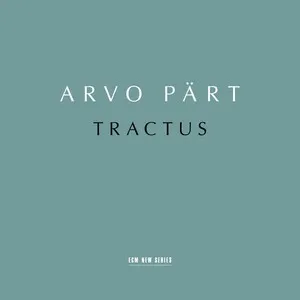
Tractus
Arvo Pärt
Holy Minimalism
2016
2
/5
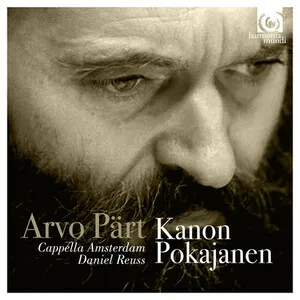
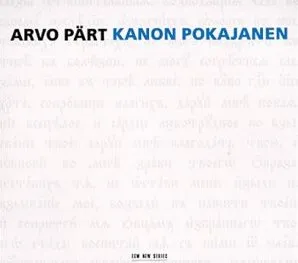
Kanon Pokajanen
Arvo Pärt / Cappella Amsterdam / Daniel Reuss
Choral Concerto
2012
1
/5
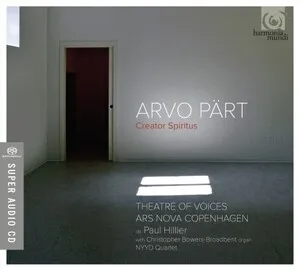
Creator spiritus
Arvo Pärt
Holy Minimalism
2012
2
/5
Adam's Lament
Arvo Pärt
Holy Minimalism
2010
3
/5
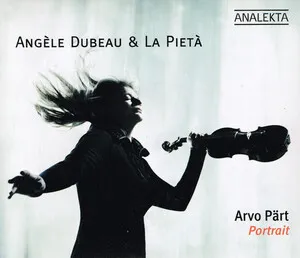
Arvo Pärt: Portrait
Arvo Pärt / Angèle Dubeau & La Pietà
Holy Minimalism
Chamber Music
Minimalism
2009
2
/5
In principio
Arvo Pärt
Holy Minimalism
2006
2
/5
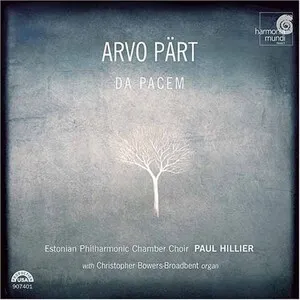
Da pacem
Arvo Pärt
Holy Minimalism
Minimalism
Choral
2003
1
/5
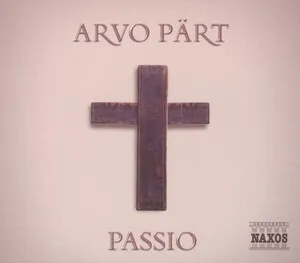
Passio
Arvo Pärt / Tonus Peregrinus / Antony Pitts
Passion
Passion Setting
2002
1
/5
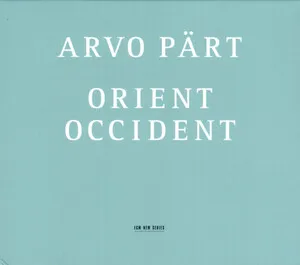
Orient Occident
Arvo Pärt
Holy Minimalism
1999
3
/5
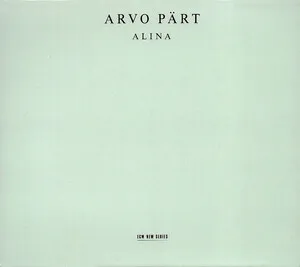
Alina
Arvo Pärt
Holy Minimalism
Minimalism
Classical
1999
1
/5
Tabula rasa; Fratres; Symphony No. 3
Arvo Pärt
Holy Minimalism
Minimalism
Symphony
1998
2
/5
Kanon pokajanen
Arvo Pärt / Eesti Filharmoonia Kammerkoor / Tõnu Kaljuste
Choral Concerto
Russian Orthodox Liturgical Music
Russian Music
1997
1
/5
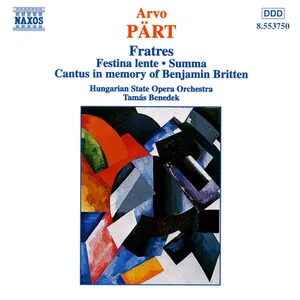
Fratres; Festina lente; Summa; Cantus in Memory of Benjamin Britten
Arvo Pärt / Magyar Állami Operaház Zenekara / Tamás Benedek
Holy Minimalism
Classical
1996
1
/5
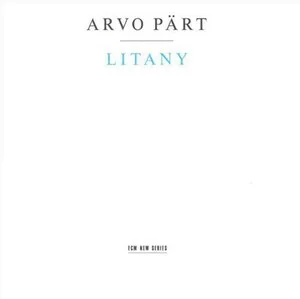
Litany
Arvo Pärt
Holy Minimalism
1996
2
/5
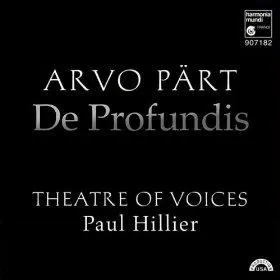
De profundis
Arvo Pärt / Theatre of Voices / Paul Hillier
Holy Minimalism
Minimalism
Choral
1995
1
/5
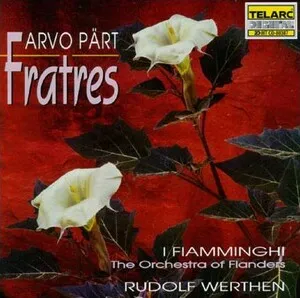
Fratres
Arvo Pärt / I Fiamminghi / Rudolf Werthen
Holy Minimalism
Classical
1994
2
/5
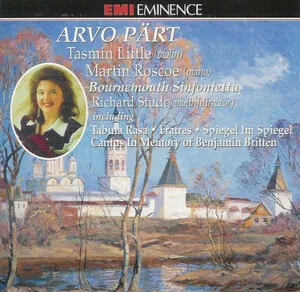
Tabula rasa; Fratres; Spiegel im Spiegel; Cantus in Memory of Benjamin Britten
Arvo Pärt
Holy Minimalism
Minimalism
1993
2
/5
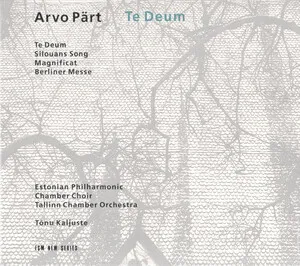
Te Deum
Arvo Pärt
Holy Minimalism
Choral
Minimalism
1988
1
/5
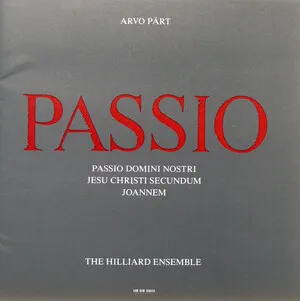
Passio
Arvo Pärt / The Hilliard Ensemble
Passion
Passion Setting
Holy Minimalism
1987
2
/5
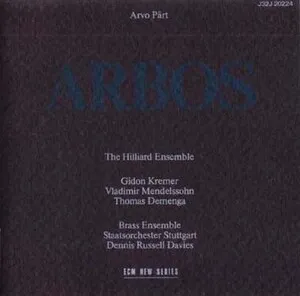
Arbos
Arvo Pärt
Holy Minimalism
1984
2
/5
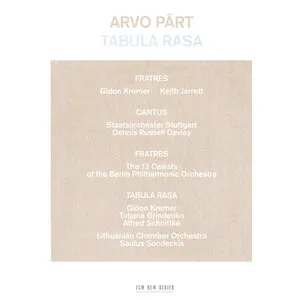
Tabula rasa
Arvo Pärt
Holy Minimalism
Minimalism
Modern Classical
Similar artists
2
/5
Dawn Upshaw
Classical
Minimalism
Opera
2
/5
Henryk Górecki
Classical
Minimalism
Holy Minimalism
3
/5
Paul Hillier
Choral
Minimalism
Classical
2
/5
Estonian Philharmonic Chamber Choir
Choral
Minimalism
Holy Minimalism
3
/5
Antoni Wit
Classical
Requiem
Choral Symphony
3
/5
London Sinfonietta
Classical
Minimalism
Chamber Music
4
/5
London Symphony Orchestra
Classical
Ballet
Concerto
2
/5
Theatre Of Voices
Choral
Minimalism
Avant-Garde
3
/5
Neeme Järvi
Classical
Orchestral
Concerto
2
/5
Alfred Schnittke
Classical
Choral Concerto
Chamber Music
Download our mobile app
Get the Melodigging app and start digging for new genres on the go
Download on the App Store
Get it on Google Play
© 2026 Melodigging
Give feedback
Legal
Melodding was created as a tribute to
Every Noise at Once
, which inspired us to help curious minds keep digging into music's ever-evolving genres.