Your digging level
Description
Holy minimalism (also called mystic or sacred minimalism) is a strand of late-20th-century classical music that blends the austerity and repetition of minimalism with the devotional focus and modal vocabulary of sacred chant and liturgy.
Its soundworld favors slow tempi, diatonic or modal harmony, bell-like triads, long drones and pedal points, and chant-like melodies that unfold with great patience. Silence and resonance are treated as structural materials, and works often center on spiritual texts or wordless vocalise that evoke Orthodox or Catholic rituals.
While sharing process-based clarity with American minimalism, holy minimalism is distinct in its overt spiritual intent, its choral emphasis, and its preference for transparent textures, luminous consonance, and contemplative stillness.
History
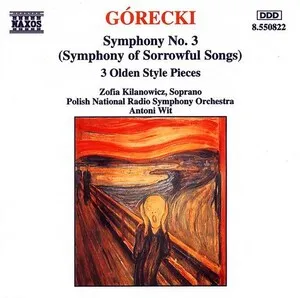
Holy minimalism emerged in the mid-to-late 1970s, largely among Eastern European and UK composers seeking a spiritually grounded alternative to post-war avant-garde modernism. Key early markers include Arvo Pärt’s turn to his tintinnabuli technique (from 1976), Henryk Mikołaj Górecki’s Symphony No. 3 (1976), and the renewed use of sacred texts, chant-derived melody, and radically pared-back materials.
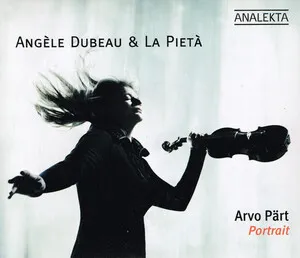
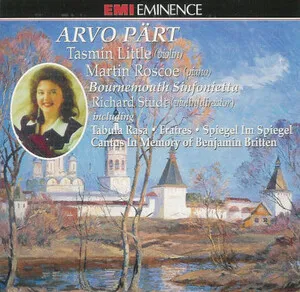
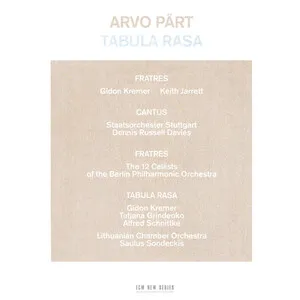
The idiom crystallized through widely circulated recordings, notably on labels such as ECM. Pärt’s Tabula Rasa (1984) and pieces like Spiegel im Spiegel became touchstones for their luminous sonorities and spiritual restraint. In 1992, the Nonesuch recording of Górecki’s Symphony No. 3 unexpectedly sold millions, introducing large audiences to a meditative, sacredly inflected minimal style. John Tavener’s works, including The Protecting Veil (1989) and Song for Athene (1993), further defined the genre’s public identity, the latter widely heard at Princess Diana’s 1997 funeral.
Many composers—Giya Kancheli, Valentin Silvestrov, Vladimir Martynov, Alexander Knaifel, Pēteris Vasks, among others—expanded the language with Orthodox and Catholic resonances, extended chorality, and orchestral transparency. Although some composers resist the label “holy minimalism,” the term persists as a useful descriptor for music that joins minimal means to overt spiritual ends. Its influence has since permeated post-classical scenes, choral writing, film scoring, and neoclassical new age, where calm resonance, modal clarity, and long-breathed lines are prized.


%3B%203%20Olden%20Style%20Pieces%2C%20Cover%20art.webp)