

Your digging level
Description
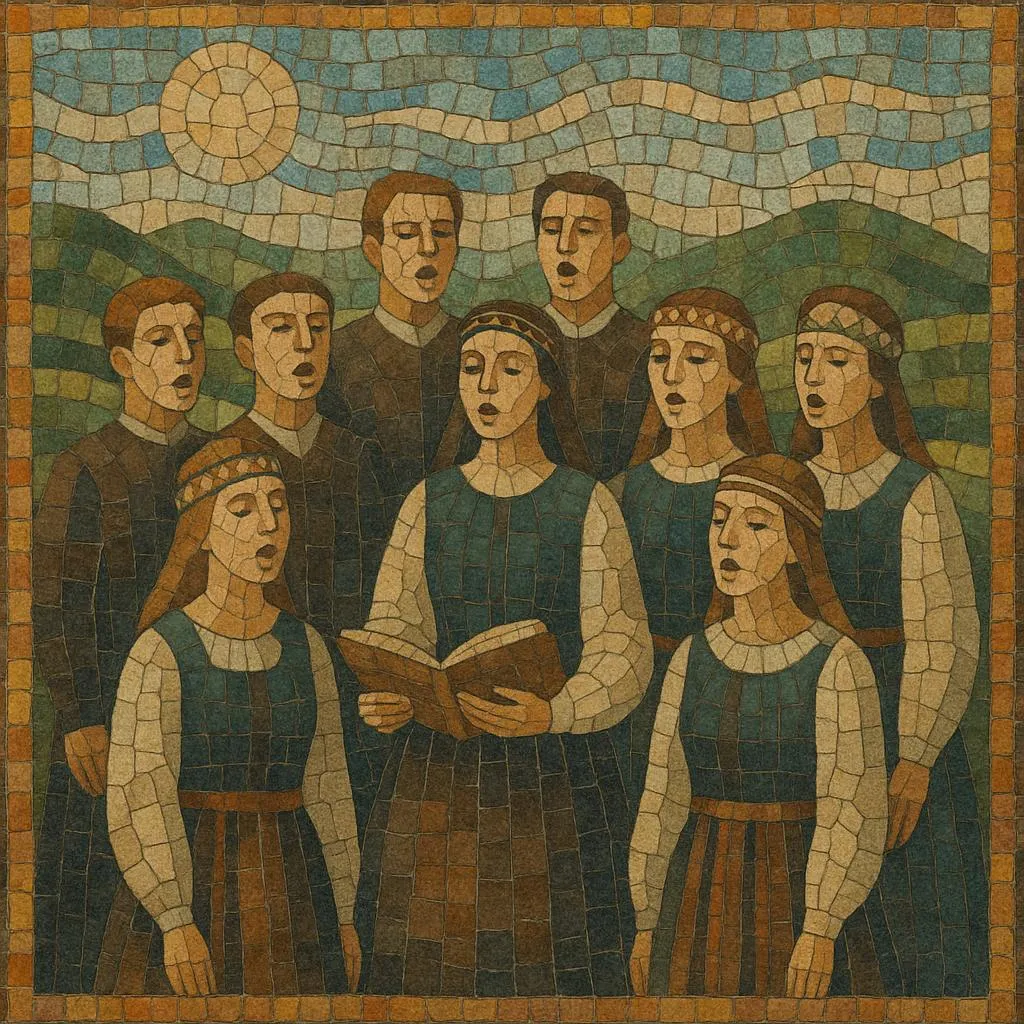
Baltic choir refers to the distinctive choral sound and repertoire of Estonia, Latvia, and Lithuania. It blends centuries-old sacred and folk traditions with modern classical techniques, emphasizing purity of tuning, crystalline textures, and long-breathed melodic arches.
The sound is typically bright yet transparent, often with straight-tone or modest vibrato, finely balanced divisi, and an ear for modal color, drones, and bell-like triads. Contemporary Baltic choral writing frequently juxtaposes chant-like lines with minimalistic patterning, evoking spacious, contemplative atmospheres that can swell into radiant climaxes.
History
The Baltic choral tradition took a modern public form with the mass song festivals of the late 19th century. These festivals, tied to national awakening movements, cultivated large-scale community singing and canonized folk melodies in multi-part choral settings. Alongside Lutheran chorale culture (especially in Estonia and Latvia) and Catholic sacred music (prominent in Lithuania), they established a robust amateur and professional choral ecosystem.
Through the early and mid‑20th century, school, university, and civic choirs proliferated. Even under Soviet rule, choral life persisted in state-backed ensembles and festivals, while composers preserved local languages and folk modalities within officially acceptable idioms. The Baltic “Singing Revolution” (late 1980s) reaffirmed the choir’s central social and symbolic role.
From the 1970s onward, Baltic composers shaped a new choral voice: crystalline textures, modal clarity, triadic sonorities, and chant-like pacing. Techniques associated with “holy minimalism” and tintinnabuli infused sacred and secular texts with luminous austerity. Baltic choirs developed an international reputation for impeccable intonation, timbral unity, and interpretive discipline.
Today, Baltic choir continues to evolve through commissions, cross-genre collaborations, and youth choir excellence. The region’s choirs tour widely, premiere new works, and mentor the next generation, sustaining a repertoire that spans folk reimaginings, liturgical settings, and contemporary concert music while maintaining a recognizable regional aesthetic.



