Genres
Make Music
Artists
Albums
Challenges
Sign in
Sign in
Albums
By Arvo Pärt
Albums
By Arvo Pärt
Tabula rasa; Fratres; Symphony No. 3
January 1, 1999
Listen
1
/5
Genres
Holy Minimalism
Holy minimalism (also called mystic or sacred minimalism) is a strand of late-20th-century classical music that blends the austerity and repetition of minimalism with the devotional focus and modal vocabulary of sacred chant and liturgy. Its soundworld favors slow tempi, diatonic or modal harmony, bell-like triads, long drones and pedal points, and chant-like melodies that unfold with great patience. Silence and resonance are treated as structural materials, and works often center on spiritual texts or wordless vocalise that evoke Orthodox or Catholic rituals. While sharing process-based clarity with American minimalism, holy minimalism is distinct in its overt spiritual intent, its choral emphasis, and its preference for transparent textures, luminous consonance, and contemplative stillness.
Discover
Listen
Minimalism
Minimalism is a style of Western art music that emerged in the United States during the 1960s, characterized by the use of very limited musical materials, steady pulse, and extensive repetition. Composers often build pieces from short cells or motifs that are repeated and slowly transformed through additive or subtractive processes, phase shifting, and gradual changes in harmony, texture, or register. Harmony is typically consonant (often modal or diatonic), though just intonation and extended drones are also common. The result is music that foregrounds process, clarity, audibility of structure, and a hypnotic sense of stasis and flow. Typical ensembles include keyboards, mallet percussion, strings, winds, voices, and electronics or tape. Minimalism influenced a wide array of later styles, from ambient and new age to post-minimalism and minimal techno.
Discover
Listen
Symphony
A symphony is a large-scale composition for orchestra, typically cast in multiple movements that contrast in tempo, key, and character. In the Classical era, the most common layout was four movements: a fast opening movement (often in sonata form), a slow movement, a dance-like movement (minuet or later scherzo), and a fast finale. Over time, the symphony evolved from compact works of the mid-18th century into expansive, architecturally ambitious statements in the 19th and 20th centuries. Composers increasingly treated the symphony as a vehicle for thematic development, cyclical unity, and dramatic narrative—sometimes programmatic, sometimes abstract—using the full coloristic range of the modern orchestra. While rooted in Classical balance and clarity, symphonies incorporate a wide spectrum of harmonic languages and orchestral techniques. From Haydn’s wit and structural innovation to Beethoven’s heroic scope, Mahler’s cosmic breadth, and Shostakovich’s modern intensity, the symphony has remained a central pillar of Western concert music.
Discover
Listen
Concerto
A concerto is a large-scale composition that sets one or more solo instruments in dynamic dialogue with an orchestra. Its core idea is contrast—between soloist and tutti—and the dramatic negotiation of power, color, and thematic responsibility. While Baroque concertos often relied on ritornello form, the Classical era standardized a three-movement plan (fast–slow–fast) with sonata principles in the opening movement. The Romantic period emphasized virtuosity and expressive foregrounding of the soloist, and the 20th–21st centuries broadened the palette with new instruments, harmonies, and formats. Across eras, the concerto remains a showcase for instrumental character, technical brilliance, and the art of orchestral conversation.
Discover
Listen
Classical
Classical music is the notated art-music tradition of Europe and its global descendants, characterized by durable forms, carefully codified harmony and counterpoint, and a literate score-based practice. The term “classical” can refer broadly to the entire Western art-music lineage from the Medieval era to today, not just the Classical period (c. 1750s–1820s). It privileges long-form structures (such as symphonies, sonatas, concertos, masses, and operas), functional or modal harmony, thematic development, and timbral nuance across ensembles ranging from solo instruments to full orchestras and choirs. Across centuries, the style evolved from chant and modal polyphony to tonal harmony, and later to post-tonal idioms, while maintaining a shared emphasis on written notation, performance practice, and craft.
Discover
Listen
Similar albums
1992
Symphony No. 3
Henryk Mikołaj Górecki
1994
Symphony No. 3 (Symphony of Sorrowful Songs); 3 Olden Style Pieces
Henryk Mikołaj Górecki
1999
Alina
Arvo Pärt
1984
Tabula rasa
Arvo Pärt
2006
Da pacem
Arvo Pärt
2018
The Blue Notebooks (15 Years)
Max Richter
2014
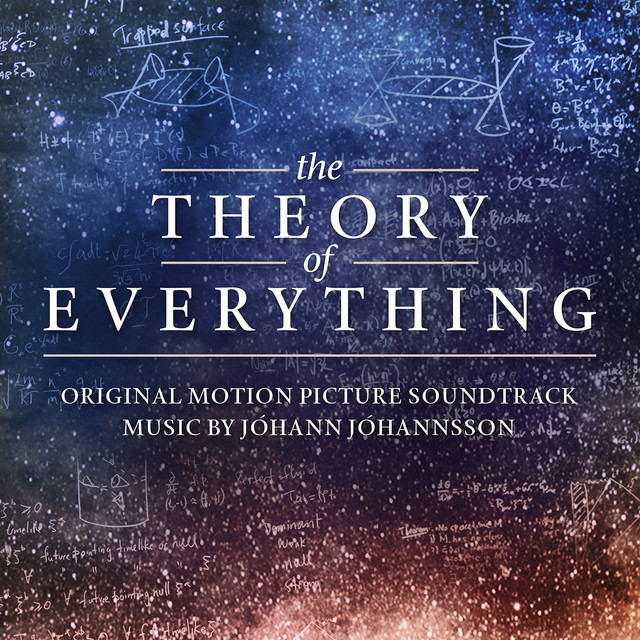
The Theory of Everything (Original Motion Picture Soundtrack)
Jóhann Jóhannsson
1984
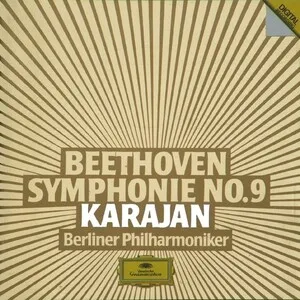
Symphonie No.9
Ludwig van Beethoven / Berliner Philharmoniker / Herbert von Karajan
2010
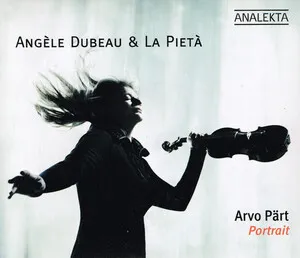
Arvo Pärt: Portrait
Arvo Pärt / Angèle Dubeau & La Pietà
1985
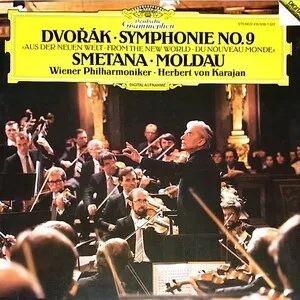
Symphonie No. 9 »Aus der neuen Welt« / Moldau
Antonín Dvořák / Bedřich Smetana
Download our mobile app
Get the Melodigging app and start digging for new genres on the go
Download on the App Store
Get it on Google Play
© 2026 Melodigging
Give feedback
Legal
Melodding was created as a tribute to
Every Noise at Once
, which inspired us to help curious minds keep digging into music's ever-evolving genres.