Genres
Artists
Albums
Make Music
Sign in
Sign in
Artists
Choral
Artists
Choral
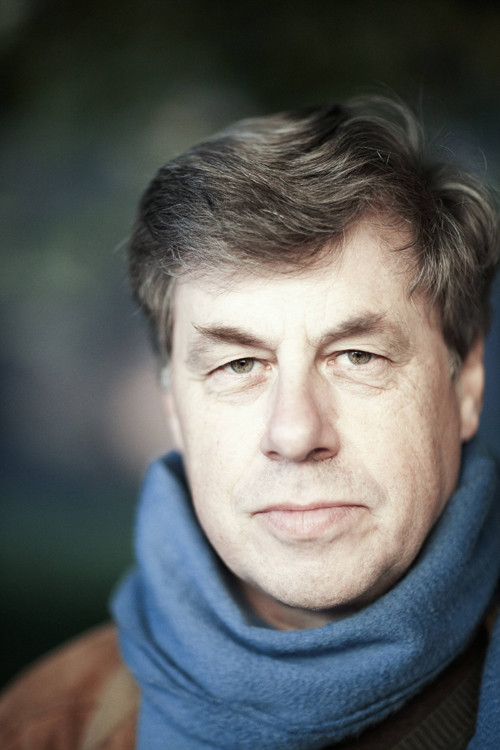
Paul Hillier
1988–2022
·
8 albums
Listen
3
/5
Genres
Holy Minimalism
Holy minimalism (also called mystic or sacred minimalism) is a strand of late-20th-century classical music that blends the austerity and repetition of minimalism with the devotional focus and modal vocabulary of sacred chant and liturgy. Its soundworld favors slow tempi, diatonic or modal harmony, bell-like triads, long drones and pedal points, and chant-like melodies that unfold with great patience. Silence and resonance are treated as structural materials, and works often center on spiritual texts or wordless vocalise that evoke Orthodox or Catholic rituals. While sharing process-based clarity with American minimalism, holy minimalism is distinct in its overt spiritual intent, its choral emphasis, and its preference for transparent textures, luminous consonance, and contemplative stillness.
Discover
Listen
Minimalism
Minimalism is a style of Western art music that emerged in the United States during the 1960s, characterized by the use of very limited musical materials, steady pulse, and extensive repetition. Composers often build pieces from short cells or motifs that are repeated and slowly transformed through additive or subtractive processes, phase shifting, and gradual changes in harmony, texture, or register. Harmony is typically consonant (often modal or diatonic), though just intonation and extended drones are also common. The result is music that foregrounds process, clarity, audibility of structure, and a hypnotic sense of stasis and flow. Typical ensembles include keyboards, mallet percussion, strings, winds, voices, and electronics or tape. Minimalism influenced a wide array of later styles, from ambient and new age to post-minimalism and minimal techno.
Discover
Listen
Process Music
Process music is a movement in which a composition is generated by a clearly defined procedure or rule-set. Sometimes this procedure is made audible—so the listener can follow the gradual changes as they unfold—and sometimes the process remains hidden behind the surface of the sound. Typical processes include phasing (two identical patterns drifting out of sync), additive or subtractive procedures (expanding or contracting a pattern by fixed steps), iterative feedback (repeating an operation so the output becomes the next input), permutations, stochastic or probabilistic rules, or instruction-based performance systems. The aesthetic ranges from hypnotic and pulse-driven to fragile and static, but the core idea remains: the music arises from the process.
Discover
Listen
Indeterminacy
Indeterminacy is a strand of post‑war experimental music in which some aspects of a composition are left to chance or to the free choice of the performer, ensuring that no two realizations are exactly the same. The approach encompasses chance procedures used during composition (e.g., tossing coins or consulting the I Ching), open or mobile forms in which sections may be reordered, graphic or text‑based notation that prompts interpretation rather than strict reading, and time‑bracket techniques that specify durations but not exact synchrony. Closely associated with the New York School (John Cage, Earle Brown, Morton Feldman, Christian Wolff), indeterminacy challenged traditional authorship, fixed works, and score‑bound precision by shifting agency to processes and performers. While often conflated with “aleatoric” music, indeterminacy typically denotes unpredictability at the level of performance/realization (open form, variable notation), whereas chance composition may use randomness to create a fixed score. In practice, many works combine both.
Discover
Listen
Avant-Garde
Avant-garde music is an umbrella term for boundary-pushing practices that challenge prevailing norms of harmony, rhythm, timbre, form, and performance. It privileges experimentation, conceptual rigor, and a willingness to reframe what counts as music at all. Historically tied to early 20th‑century artistic modernism, avant-garde music introduced atonality, the emancipation of noise, and new forms of notation and process. It embraces indeterminacy, extended techniques, electronics, spatialization, and multimedia performance, treating sound as material to be sculpted, questioned, and reinvented.
Discover
Listen
Electronic
Electronic is a broad umbrella genre defined by the primary use of electronically generated or electronically processed sound. It encompasses music made with synthesizers, drum machines, samplers, computers, and studio/tape techniques, as well as electroacoustic manipulation of recorded or synthetic sources. The genre ranges from academic and experimental traditions to popular and dance-oriented forms. While its sonic palette is rooted in electricity and circuitry, its aesthetics span minimal and textural explorations, structured song forms, and beat-driven club permutations. Electronic emphasizes sound design, timbre, and studio-as-instrument practices as much as melody and harmony.
Discover
Listen
Choral Concerto
The choral concerto is a genre of Eastern Orthodox sacred music that emerged in the mid‑seventeenth century in the Russian Empire, particularly through the work of Ukrainian composers and chapel traditions. Written for unaccompanied choir (a cappella), these works are typically multi‑sectional and contrast homophonic, declamatory blocks with brief soloistic or small‑ensemble passages. Texts are drawn from Psalms and other scriptural or festal sources in Church Slavonic. In liturgical practice, choral concertos were sung during the Divine Liturgy at the moment when the clergy took Holy Communion—just before the Communion of the faithful—so they balance contemplative devotion with vivid rhetorical projection. Stylistically, the genre fuses native chant and Orthodox polyphony with Baroque concepts of contrast and sectional articulation. Although concise, many pieces employ double‑choir writing, antiphonal effects, and expressive dynamic “terracing,” all while maintaining the Orthodox prohibition against instruments inside the church.
Discover
Listen
Passion
A Passion is a large‑scale sacred musical genre that sets the Gospel narrative of Christ’s suffering and crucifixion (the Passion) to music. It originated as liturgical chant and evolved into elaborate polyphonic and Baroque oratorio forms. Typical Baroque Passions feature an Evangelist (tenor narrator) who declaims the biblical text in recitative, solo roles for Jesus (Christus) and other characters, congregational-style chorales, reflective arias, and dramatic "turba" choruses representing the crowd. Earlier Renaissance Passions are often austere and predominantly choral, while Catholic traditions favored Latin and Protestant (especially Lutheran) Passions used vernacular German. Passions were historically performed during Holy Week, often in two parts surrounding a sermon, and are among the most revered monuments of Christian sacred music.
Discover
Listen
Requiem
A requiem is a musical setting of the Roman Catholic Mass for the Dead (Missa pro defunctis). Historically rooted in Latin liturgy, it sets movements such as the Introit, Kyrie, (historically) the Sequence Dies irae, Offertory, Sanctus, Agnus Dei, and Communion, and often includes additional responsories like Libera me and In paradisum. While the earliest requiems were monophonic chants, the genre became a showcase for polyphonic and later symphonic choral writing. Renaissance composers wrote austere, modal settings; Classical and Romantic composers expanded the forces and dramatic scope; and 20th–21st century composers reimagined the form with new languages, from neo-modal and impressionistic harmonies to avant‑garde sonorities. Today, requiems appear both in liturgy and as concert works, symbolizing collective mourning, remembrance, and spiritual reflection.
Discover
Listen
Passion Setting
Passion setting is a sacred vocal genre that sets the biblical Passion narrative—the arrest, trial, crucifixion, and burial of Jesus—to music. Originally emerging from medieval chant traditions, it later evolved into elaborate multi-movement works featuring narrator (Evangelist), the words of Christ (Christus), soloists for individual roles, and choral "turba" movements representing the crowd. Across history, passion settings range from austere, unaccompanied chant or Renaissance polyphony to large Baroque oratorio-scale works with orchestra and chorales. While Latin and German are the most common languages (reflecting Catholic and Lutheran traditions), the form has been adapted into many vernaculars in the 20th and 21st centuries. In all cases, the musical rhetoric emphasizes solemn devotion, drama, and theological reflection.
Discover
Listen
Mass
Mass is a large-scale vocal genre that sets the Ordinary of the Roman Catholic liturgy—Kyrie, Gloria, Credo, Sanctus (and Benedictus), and Agnus Dei—most often in Latin. It began as monophonic chant but developed into sophisticated polyphony and later into concert works for choir, soloists, and instruments or full orchestra. Across history, composers have used techniques such as cantus firmus, imitation, paraphrase, and parody to unify movements. The genre spans from austere a cappella writing to monumental symphonic-choral statements, and today is performed both liturgically and in the concert hall. Common subtypes include Missa brevis (short Mass, often omitting the Credo or compact in scale) and Missa solemnis (festal, expansive forces and duration).
Discover
Listen
Classical
Classical music is the notated art-music tradition of Europe and its global descendants, characterized by durable forms, carefully codified harmony and counterpoint, and a literate score-based practice. The term “classical” can refer broadly to the entire Western art-music lineage from the Medieval era to today, not just the Classical period (c. 1750s–1820s). It privileges long-form structures (such as symphonies, sonatas, concertos, masses, and operas), functional or modal harmony, thematic development, and timbral nuance across ensembles ranging from solo instruments to full orchestras and choirs. Across centuries, the style evolved from chant and modal polyphony to tonal harmony, and later to post-tonal idioms, while maintaining a shared emphasis on written notation, performance practice, and craft.
Discover
Listen
Gregorian Chant
Gregorian chant is the central Western tradition of plainchant: a monophonic, unaccompanied sacred song in Latin (and occasionally Greek) used in the Roman Catholic liturgy. It employs free rhythm guided by the prosody of the text rather than by strict meter, and is sung in unison by clerics or scholas. Its melodies are organized by the system of eight church modes, with characteristic finalis (final), tenor/reciting tones, and melodic formulas. Repertoires include the Proper and Ordinary of the Mass (e.g., Introit, Gradual, Alleluia, Offertory, Communion, Kyrie, Gloria, Credo, Sanctus, Agnus Dei) and the Divine Office (e.g., Antiphons, Responsories, Hymns, Psalms). Although legend credits Pope Gregory I, modern scholarship sees Gregorian chant as a Carolingian synthesis of Old Roman and Gallican chants, standardized across Frankish realms and later the broader Latin West.
Discover
Listen
Plainchant
Plainchant (cantus planus) is the monophonic, unaccompanied chant of the Western Christian liturgy. Sung in Latin (with occasional Greek), it uses modal scales rather than major–minor tonality and unfolds in flexible, speech-like rhythms shaped by the sacred text. Melodically, plainchant ranges from simple syllabic formulas for reciting psalms to ornate melismatic lines for processional and festal moments. It is performed in unison by a schola or congregation, often organized antiphonally or responsorially across the liturgical actions of the Mass and the Divine Office. Its austere sonority, modal color, and text-centered phrasing give it a contemplative, timeless quality.
Discover
Listen
Medieval
Medieval music refers to the diverse sacred and secular musical practices of Europe between the fall of the Western Roman Empire and the dawn of the Renaissance. It spans more than eight centuries, from early monophonic chant to the first notated polyphony. Core features include the use of church modes rather than major/minor, extensive reliance on vocal music (Latin sacred chant as well as vernacular song), and the progressive development from unmeasured chant to rhythmic modal notation and, later, mensural notation. Texture evolves from monophony (plainchant, troubadour songs) to organum, conductus, and the motet, culminating in complex isorhythmic works by the late 13th–14th centuries. Secular traditions—troubadours and trouvères in France, Minnesänger in German lands, and the Iberian Cantigas—coexisted with and influenced sacred practice. Instruments such as the vielle, harp, psaltery, recorder, shawm, hurdy-gurdy, and portative organ often doubled or accompanied voices, though much music remained purely vocal.
Discover
Listen
Choral
Choral refers to music written for and performed by a choir—an ensemble of voices organized into sections such as soprano, alto, tenor, and bass (SATB), or same-voice groupings (SSA, TTBB). It encompasses both sacred and secular repertoire and may be sung a cappella or with accompaniment by organ, piano, or full orchestra. Stylistically, choral music ranges from chant-like monophony to intricate polyphony and rich homophonic textures. Texts are drawn from liturgy, scripture, poetry, and vernacular sources, and are set in many languages. Performance contexts include church services, concert halls, and community events, making choral one of the most socially embedded and widely practiced forms of ensemble music. Across history, choral music has served as a laboratory for vocal counterpoint, word painting, and text-driven form, while functioning as a cultural bridge among religious rites, national traditions, and contemporary concert practice.
Discover
Listen
Show all 16 genres
Albums
2022
2
/5
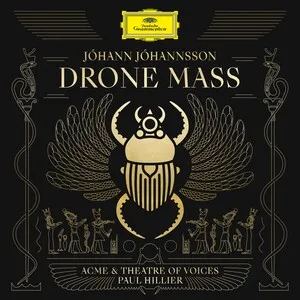
Drone Mass
Jóhann Jóhannsson, Theatre of Voices, Paul Hillier & American Contemporary Musi…
Holy Minimalism
Mass
Classical
2006
2
/5
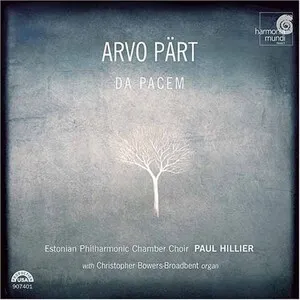
Da pacem
Arvo Pärt
Holy Minimalism
Minimalism
Choral
2006
1
/5
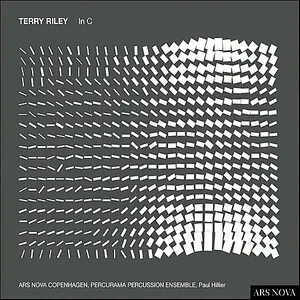
In C
Terry Riley
Process Music
Indeterminacy
Classical
2005
2
/5
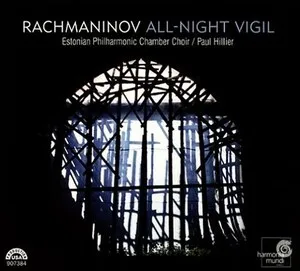
All-Night Vigil
Sergey Rakhmaninov Сергей Рахманинов / Eesti Filharmoonia Kammerkoor / Paul Hil…
Choral Concerto
Classical
2003
1
/5
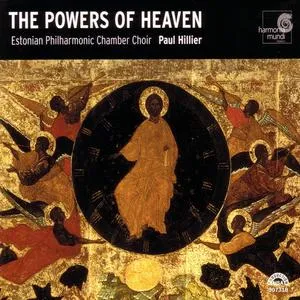
The Powers of Heaven
Eesti Filharmoonia Kammerkoor
Choral Concerto
1998
1
/5
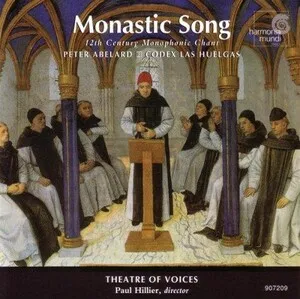
Monastic Song: 12th Century Monophonic Chant
Pierre Abélard / [anonymous]
Plainchant
1996
2
/5
De profundis
Arvo Pärt / Theatre of Voices / Paul Hillier
Holy Minimalism
Minimalism
Choral
1988
1
/5
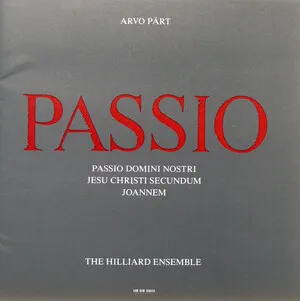
Passio
Arvo Pärt / The Hilliard Ensemble
Passion
Passion Setting
Holy Minimalism
Similar artists
2
/5
Theatre Of Voices
Choral
Minimalism
Avant-Garde
2
/5
Estonian Philharmonic Chamber Choir
Choral
Minimalism
Holy Minimalism
3
/5
Arvo Pärt
Minimalism
Classical
Holy Minimalism
2
/5
Christopher Bowers-Broadbent
Choral
Minimalism
Classical
2
/5
Dawn Upshaw
Classical
Minimalism
Opera
3
/5
Kronos Quartet
Classical
Chamber Music
Latin American Classical Music
1
/5
Various Artists
Afro-Funk
Alternative Rock
Ambient
2
/5
György Ligeti
Avant-Garde
Étude
Minimalism
2
/5
Henryk Górecki
Classical
Minimalism
Holy Minimalism
2
/5
Tõnu Kaljuste
Choral
Holy Minimalism
Minimalism
Download our mobile app
Get the Melodigging app and start digging for new genres on the go
Download on the App Store
Get it on Google Play
© 2026 Melodigging
Give feedback
Legal
Melodding was created as a tribute to
Every Noise at Once
, which inspired us to help curious minds keep digging into music's ever-evolving genres.