Your digging level
Description
Process music is a movement in which a composition is generated by a clearly defined procedure or rule-set. Sometimes this procedure is made audible—so the listener can follow the gradual changes as they unfold—and sometimes the process remains hidden behind the surface of the sound.
Typical processes include phasing (two identical patterns drifting out of sync), additive or subtractive procedures (expanding or contracting a pattern by fixed steps), iterative feedback (repeating an operation so the output becomes the next input), permutations, stochastic or probabilistic rules, or instruction-based performance systems. The aesthetic ranges from hypnotic and pulse-driven to fragile and static, but the core idea remains: the music arises from the process.
History
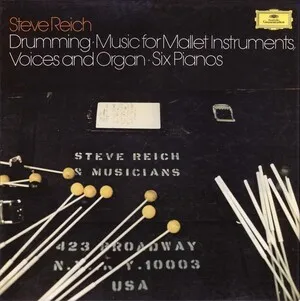
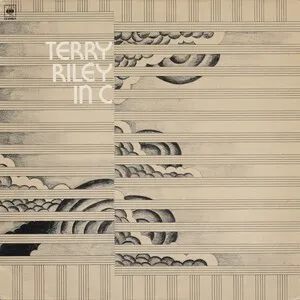
Process music crystallized in the United States in the 1960s, alongside (and overlapping with) musical minimalism. Composers articulated a new priority: design an objective, often simple, procedure and let the piece run. Steve Reich’s manifesto "Music as a Gradual Process" (1968) and works such as It’s Gonna Rain (1965), Come Out (1966), and Piano Phase (1967) made the process audibly traceable through tape-loop and performer phasing. Terry Riley’s In C (1964) established a modular, instruction-based process that performers realize in real time. La Monte Young’s conceptual scores and sustained-tone works introduced durational and instruction-driven systems; Alvin Lucier’s I Am Sitting in a Room (1969) used acoustic feedback as an iterative process.
In Europe, Karlheinz Stockhausen’s “process plan” pieces (e.g., Prozession, Kurzwellen) formalized the idea that transformation rules—not fixed notes—could be a score. Cornelius Cardew and the Scratch Orchestra, as well as systems-oriented British composers, extended instruction and community-based process practices.
Process thinking spread into concert, electroacoustic, and studio practices. Brian Eno’s ambient and generative strategies emphasized long-form systems that unfold with minimal intervention. Michael Nyman popularized the term “systems music,” discussing how audible procedures structure listening.
The process attitude reshaped composition and listening: audiences track change over time rather than event-by-event. It informed ambient and drone aesthetics, sound art and installation, live-electronic and algorithmic practices, and later post-minimal movements (e.g., Totalism). Whether the procedure is overt or covert, process music made “compositional method” a principal musical parameter.
Pick a transparent, repeatable rule the listener can potentially perceive:
• Phasing: run two identical patterns at slightly different speeds and let them drift in/out of alignment. • Additive/Subtractive: add or remove one note/rest each cycle. • Permutation: cycle a fixed pattern through rotations or ordered swaps. • Iteration/Feedback: re-record or re-perform outputs so each pass transforms the previous one (acoustically or electronically). • Stochastic/Rule-based: define probabilities for events, dynamics, or entries.