Your digging level

For this genre
0/8
🏆
Sign in, then listen to this genre to level up

Description

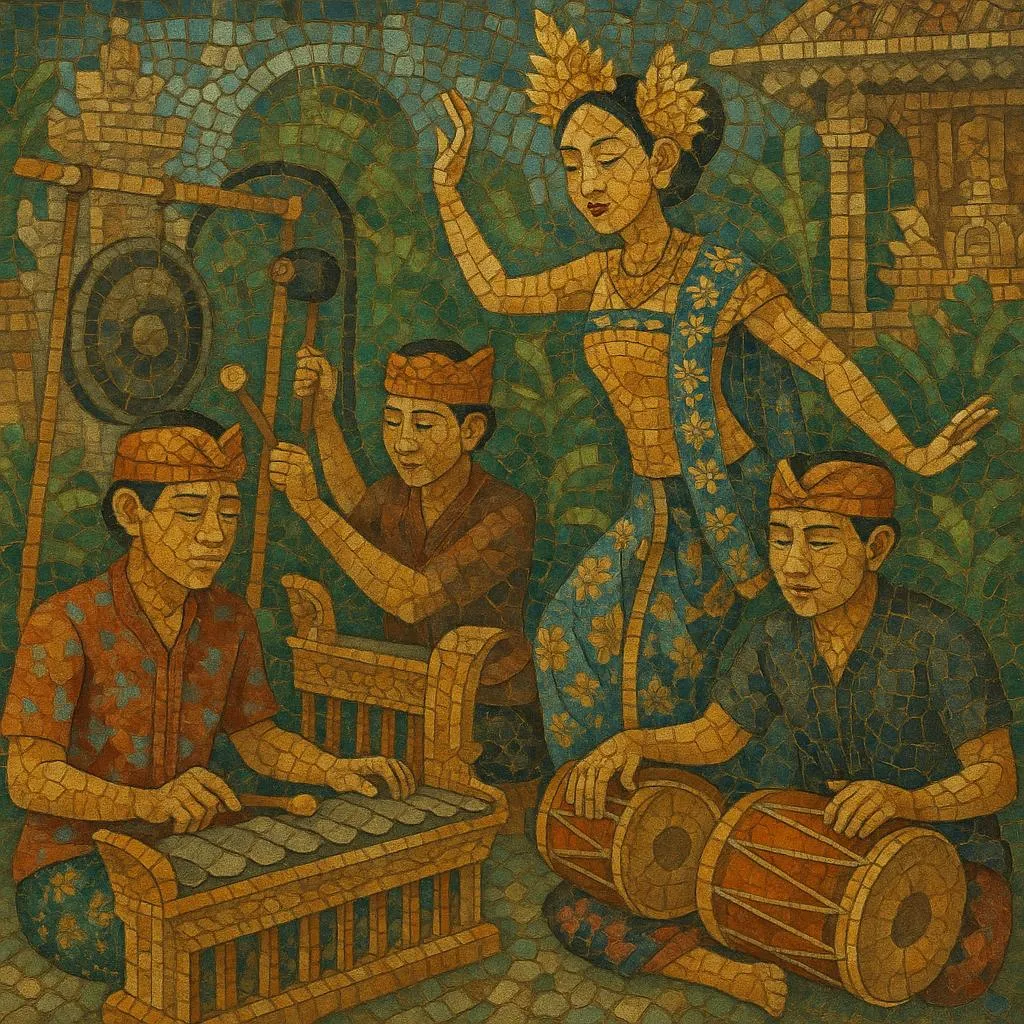
Balinese traditional music refers to the ritual, courtly, and community-based musical arts of Bali, Indonesia, centered on diverse gamelan ensembles and vocal-ritual practices. It is distinguished by brilliant bronze sonorities, interlocking (kotekan) figurations, paired-tuned instruments that create a living “shimmer” (ombak), and a powerful colotomic gong cycle.

Within this umbrella are ancient ceremonial ensembles (e.g., Selonding), refined court genres (Semar Pegulingan, Gong Gede), gender wayang for shadow theater, bamboo orchestras (Joged Bumbung, Jegog), dynamic modern idioms like Gong Kebyar, and trance-chant forms (e.g., Sanghyang and the later stage form Kecak). Music is inseparable from temple cycles, dance-drama, and communal life, with the drum leader (kendang) cueing phrasing, dynamics, and dance-musical accents (angsel).

Sources: Spotify, Wikipedia, Discogs, RYM, MB, user feedback and other online sources

History

Origins (15th–17th centuries)
•   Balinese traditional music crystallized after waves of Javanese court culture arrived during and after the decline of the Majapahit empire (late 15th century). Bronze gamelan technology, Hindu-Buddhist ritual frameworks, and court aesthetics took root in Bali. •   Early ensembles included ancient iron-bronze repertoires like Gamelan Selonding (for temple rites) and refined court sets such as Semar Pegulingan (seven-tone pelog), whose elegant repertories supported legong and other classical dances.
Court and Temple Flourishing (17th–19th centuries)
•   Gamelan Gong Gede became emblematic of noble courts and major temple ceremonies, featuring expansive, stately cycles and dignified tempos (lelambatan). Gender Wayang—small metallophone quartets—accompanied wayang kulit (shadow theater), articulating intricate two-handed techniques and paired tuning. •   Music functioned as a living ritual language, bound to calendrical temple cycles (odalan), life-cycle ceremonies, and processions, with local banjar (neighborhood) ensembles sustaining repertory and instrument upkeep.
Early 20th Century: The Kebyar Revolution
•   Around the 1910s–1920s in North Bali (Buleleng), Gong Kebyar exploded in popularity—brighter timbres, sudden dynamic breaks, dazzling kotekan, and virtuosic reyong/gangsa passages. •   Composer-performers and dance innovators reshaped aesthetics across Bali; kebyar’s theatrical cues (angsel) fused dance and music into tightly synchronized spectacle, while bamboo idioms (Joged Bumbung, later Jegog in Jembrana) developed in parallel.
Mid–Late 20th Century: Education, Preservation, and Global Reach
•   Formal institutions (e.g., Kokar/ISI Denpasar) standardized teaching, preservation, and new composition. Renowned composer-gurus codified styles and expanded repertory while village sekaa gong ensembles continued to anchor ritual life. •   International tours, recordings, and collaborations spread Balinese textures worldwide, inspiring Western minimalists and new gamelan communities abroad.
21st Century: Innovation Within Tradition
•   Contemporary Balinese composers extend kebyar, semara dana (mixed-scale) instrumentation, and experimental forms while sustaining temple functions. Community ensembles remain foundational, with pedagogy that emphasizes memory, collective discipline, and responsive leadership by the kendang.

How to make a track in this genre

Tuning, Ensemble, and Timbre
•   Choose a specific ensemble type (e.g., Gong Kebyar, Semar Pegulingan, Gender Wayang, Selonding, Joged Bumbung/Jegog). Build instrumentation around core families: metallophones (gangsa, ugal, pemade, kantilan), gongs (gong ageng, kempur, kempli), reyong (rack gongs), kendang (double-headed drums), ceng-ceng (cymbals), suling (bamboo flutes), gambang (xylophone), jublag/jegogan (low metallophones), and occasionally rebab. •   Use paired tuning to create ombak (shimmer): each pitch exists as a slightly high (pengisup/sangsih) and low (pemade/polos) pair. •   Select laras and saih (Balinese pelog 7-tone, or 5-tone slendro variants). Make a one-set, fixed-tuning ecology; do not transpose between sets.
Rhythm, Cycles, and Leadership
•   Compose within a colotomic gong cycle: mark structural points with kempli (timekeeper), kempur, and gong. Design phrases to cadence on gong tones. •   Make the kendang lead: write cue patterns (angsel) that coordinate breaks, tempo changes (ngerempel/ngerumpak), and dance accents. Rehearse call-response with the ensemble.
Melody and Texture
•   Outline a central melody (pokok) in the lower instruments (jublag/jegogan). Embellish it through stratified layers. •   Write interlocking kotekan (polos/sangsih) for gangsa and reyong using canonical patterns (e.g., nyog cag, norot, nyecag). Keep lines idiomatic: damp notes precisely (neliti), respect hand alternation, and balance density with clarity. •   Use dynamic blocks characteristic of kebyar: sudden crescendos/decrescendos, unisons, and explosive interjections.
Form and Genre Conventions
•   For ceremonial lelambatan, favor long cycles, dignified tempos, and spacious ornaments. For kebyar, emphasize rapid figuration, sectional contrasts, and virtuosic passages. •   Gender Wayang requires intricate two-handed, cross-rhythmic figuration; compose in paired parts that lock seamlessly.
Notation, Pedagogy, and Practice
•   Compose and teach primarily by ear and memory; cipher or staff notation can aid rehearsal, but internalization is the goal. •   Workshop parts slowly, then integrate full-ensemble balance, cue vocabulary, and dance alignment where relevant.
Modern Extensions
•   For contemporary works, consider semara dana (a flexible instrumentation allowing multiple scales), controlled use of non-traditional timbres, or subtle electronics—while retaining colotomic logic, ombak, and kotekan aesthetics.

Top tracks

Locked
Share your favorite track to unlock other users’ top tracks

Upcoming concerts

in this genre
Influenced by
Has influenced

Download our mobile app

Get the Melodigging app and start digging for new genres on the go
© 2026 Melodigging
Melodding was created as a tribute to Every Noise at Once, which inspired us to help curious minds keep digging into music's ever-evolving genres.
Buy me a coffee for Melodigging