Your digging level

For this genre
0/8
🏆
Sign in, then listen to this genre to level up

Description

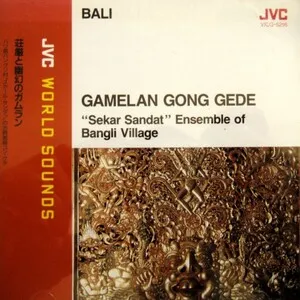
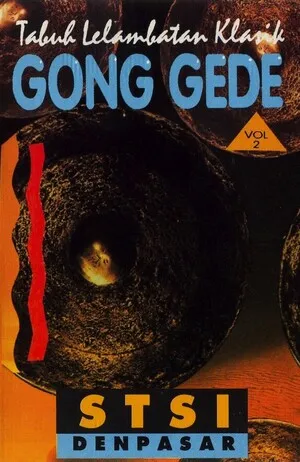
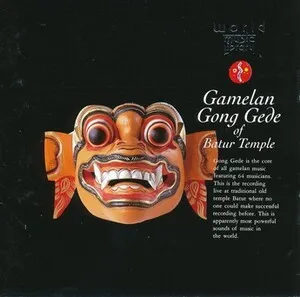
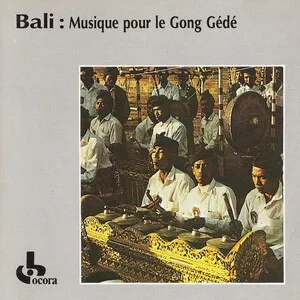
Gamelan gong gede is an older, courtly style of Balinese gamelan noted for its grand, slow, and ceremonially majestic character. The term "gede" (big) refers to the prominent, large gongs that articulate the ends of long musical cycles (gongan).

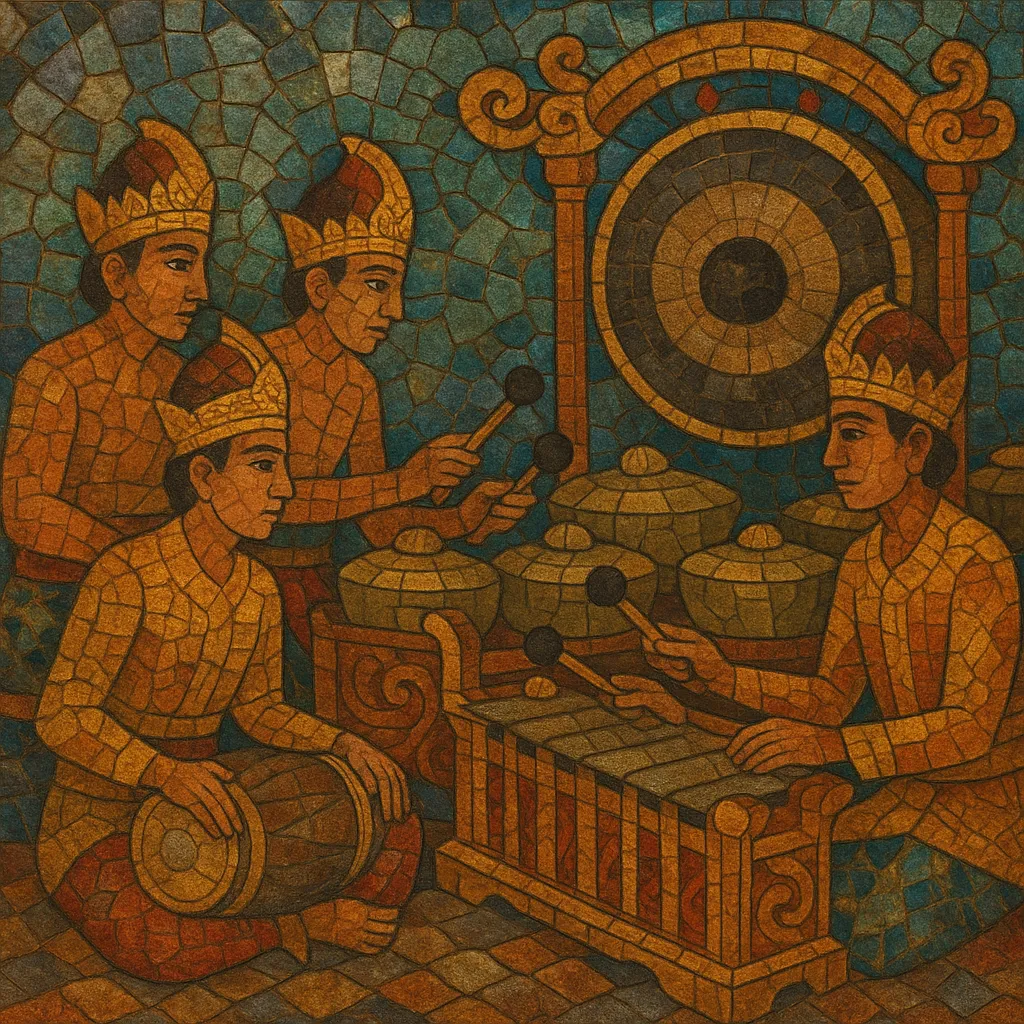
Unlike the later, flashy gong kebyar style, gong gede unfolds at measured tempos with terraced dynamics, stately drum cues, and broadly spaced interlocking patterns (kotekan). The ensemble features ranks of bronze metallophones, deep-resonant gongs, drums, timekeepers, and bamboo flutes (suling), typically tuned in Balinese pelog (saih pitu) with modal subsets. The result is a spacious, shimmering sonority designed for royal and temple ceremonies.


Sources: Spotify, Wikipedia, Discogs, Rate Your Music, MusicBrainz, and other online sources

History

Origins and Courtly Context

Gamelan gong gede crystallized in Bali between the 17th and 19th centuries, flourishing in the courts of kingdoms such as Klungkung and Mengwi. After the fall of the Javanese Majapahit empire, Balinese courts preserved and transformed older gamelan practices into local idioms, cultivating large ensembles whose slow, dignified music suited royal processions, temple odalan ceremonies, and state occasions.

Musical Aesthetics and Function

The style is defined by long colotomic cycles marked by the gong ageng, stately drum leadership, and spacious interlocking textures. Metallophones of various registers (jegogan, jublag, ugal, gangsa) outline layered versions of a core melody (pokok), while timekeepers (kajar/kempli) and punctuation gongs (kempur, kemong, kempul) structure the form. Occasional suling lines add breathy ornamentation. The ceremonial function prioritized grandeur and continuity over virtuosity.

20th Century Shifts and Preservation

In the early 20th century, the more agile and brilliant gong kebyar rose to prominence, often eclipsing gong gede in public performance. Nevertheless, gong gede repertoires persisted in temple contexts and within local sekaa (community ensembles), and were documented by scholars and recordists throughout the mid–late 20th century. Today, cultural institutions and village banjar ensembles maintain the tradition, performing during major religious festivals and heritage events.

Legacy

Gong gede’s large-scale form, colotomic architecture, and ceremonial ethos informed later Balinese genres, including processional and bamboo-based ensembles. Its dignified pacing and structural clarity remain a reference point for understanding Balinese sonic cosmology and ritual soundscapes.

How to make a track in this genre

Instrumentation and Tuning
•   Use a full Balinese bronze gamelan set: jegogan and jublag (low and mid metallophones), ugal and gangsa (lead and higher metallophones), large gongs (gong ageng, kempur, kemong, kempul), timekeepers (kajar/kempli), ceng-ceng (small cymbals), kendang lanang/wadon (paired drums), and suling (bamboo flutes) as optional color. •   Tune in Balinese pelog (saih pitu) and select a 5-tone mode appropriate to the piece. Slight detuning between paired keys (ombak) produces the characteristic shimmering beat.
Form and Rhythm
•   Structure pieces in long colotomic cycles (gongan), typically much longer than kebyar—e.g., phrases of 32, 64, or more beats—punctuated by the gong ageng. •   Maintain a slow to moderate tempo with terraced dynamics. Use kajar/kempli for steady pulse and cue climaxes with kempur/kempul before the main gong. •   Lead with kendang patterns that signal section starts, transitions, and endings. Drumming should be authoritative yet restrained to preserve the music’s ceremonial gravitas.
Texture and Melody
•   Build from a core melody (pokok) articulated by jublag/jegogan. Let ugal and gangsa elaborate the pokok with interlocking kotekan, but keep figures broad and unhurried. •   Employ heterophonic ornamentation and sparse suling lines to add breath and contrast without disrupting the stately flow.
Aesthetics and Performance Practice
•   Favor grandeur, balance, and continuity over rapid brilliance. Dynamics should rise in terraces, with clear cadential signals and spacious phrasing. •   Program pieces suitable for processional or ritual settings; avoid abrupt stops or overly virtuosic breaks. The overall affect should be solemn, luminous, and ceremonial.

Top tracks

Locked
Share your favorite track to unlock other users’ top tracks
Influenced by
Has influenced
Challenges
Digger Battle
Let's see who can find the best track in this genre
© 2026 Melodigging
Melodding was created as a tribute to Every Noise at Once, which inspired us to help curious minds keep digging into music's ever-evolving genres.
Buy me a coffee for Melodigging