Your digging level

For this genre
0/8
🏆
Sign in, then listen to this genre to level up

Description

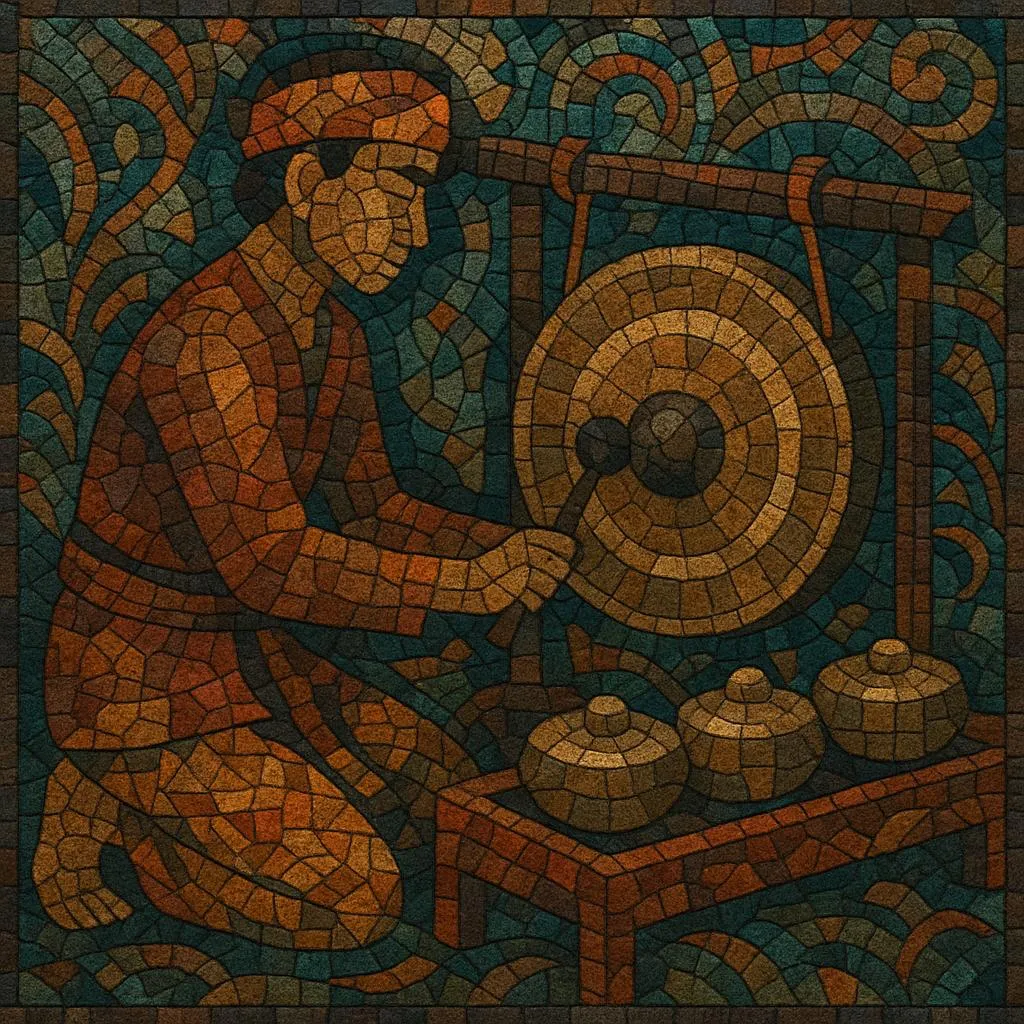
Gong is a broad Southeast Asian ensemble tradition centered on bronze gongs and gong-chimes. It is heard most vividly in Indonesia (Java, Bali, Sunda), the Philippines (kulintang areas of Mindanao and the Sulu Archipelago), and parts of Borneo and Sumatra.

Ensembles are organized around cyclical time marked by large hanging gongs, with layers of interlocking gong-chimes and metallophones creating stratified heterophony. In Indonesia this includes sléndro and pélog tuning systems, colotomic cycles (from brief ketawang to expansive gendhing), and virtuosic interlocking figurations (kotekan in Bali). In the Philippines, kulintang idioms feature an improvising lead gong-chime supported by larger gongs and drum.

Functions range from courtly ceremony and temple ritual to dance, theater, community rites of passage, and modern stage performance. The idiom is at once ancient and continuously renewing, embracing new compositions, theatrical forms, and pedagogies while preserving local lineages and tunings.


Sources: Spotify, Wikipedia, Discogs, Rate Your Music, MusicBrainz, and other online sources

History

Origins and Early Development

Bronze idiophones and gong traditions spread through Mainland and Island Southeast Asia by the first millennium CE, with Indonesia becoming a primary center of casting, organology, and ensemble practice. By the 11th–13th centuries, court sources and temple reliefs in Java and Bali attest to sophisticated gong-chime ensembles. The central musical idea was cyclic: a large gong marked the end/beginning of a cycle while smaller gongs and metallophones articulated inner punctuation and elaboration.

Regional Lineages
•   Java and Sunda (West Java) refined large court gamelan traditions with stratified textures, colotomic structures, and modal systems (pathet) in sléndro and pélog. •   Bali developed highly dynamic ritual and theatrical repertoires and, in the early 20th century, the brilliant, modern style of gong kebyar with explosive contrasts and interlocking kotekan. •   In the southern Philippines and parts of Borneo and Sumatra, kulintang and talempong families cultivated gong-chime improvisation over steady ostinati from supporting gongs and drums, integrating music with dance, oratory, and communal celebrations.
Modern Transformations (1900s–present)

The early 1900s saw the crystallization of Balinese gong kebyar and renewed public competitions that accelerated technical display and new composition. In Java and Sunda, radio, recording, and arts schools formalized pedagogy and expanded repertories. Kulintang/kulingtang communities adapted pieces for the stage and intercultural projects.

Globalization and Preservation

From the late 20th century onward, university ensembles and diaspora troupes around the world popularized gong traditions, fostering new compositions and cross-cultural collaborations. At the same time, local communities maintain lineage-based repertoires, tuning aesthetics, and ritual functions, balancing preservation with innovation.

How to make a track in this genre

Core Concepts and Tuning
•   Choose a tuning system and mode: in Indonesian practice, sléndro (5-tone) or pélog (7-tone subsets). Craft a balungan (core melody) that fits a cyclic colotomic structure (e.g., 8, 16, 32-beat cycles). •   Determine colotomic markers: assign kempul/kenong placements and a final large gong stroke (gong ageng) to define phrase boundaries.
Instrumentation and Texture
•   Foundation: large hanging gong(s) for cadence; medium gongs (kempul/kenong) for sub-phrases; metallophones (saron, gender) for core and elaborative lines; drums (kendang) for tempo, cues, and dance alignment; optional flute (suling), rebab (bowed spike fiddle), and voice. •   Texture: use stratified heterophony—lower instruments outline the core melody while higher instruments elaborate with patterns and figurations.
Interlocking and Elaboration
•   Compose interlocking parts (kotekan in Bali; imbal in Java): split rapid figurations between paired instruments to create composite lines that exceed a single player’s speed. •   Shape dynamics and articulation with sudden unisons and rests (angsel in Balinese practice) coordinated by drum cues.
Kulintang/Talempong Approach
•   Lead gong-chime (kulintang/talempong) improvises within a known piece’s skeletal pathway; supporting gongs (agung, babandil) and drum (dabakan) maintain timeline patterns. •   Balance repetition and variation: cycle recognizable motives while introducing turnarounds, neighbor tones, and cadential ornaments to signal section changes and dancer cues.
Form, Rhythm, and Performance Practice
•   Build forms from linked cycles (A–A’–B–C…), increasing density and tempo for climaxes and relaxing for cadences. •   Keep groove steady but breathing; microtiming and damping (technique of stopping resonance) are crucial to clarity. •   Rehearse sectional entrances and cadences under the kendang leader; rehearse tutti accents and breakpoints to synchronize angsel/phrase cues.
Notation and Transmission
•   Compose by ear within modal constraints; if needed, use cipher notation (kepatihan) for rehearsal. Prioritize communal listening, memorization, and incremental layering of parts over purely written composition.

Top tracks

Locked
Share your favorite track to unlock other users’ top tracks
Influenced by
Has influenced
Challenges
Digger Battle
Let's see who can find the best track in this genre

Download our mobile app

Get the Melodigging app and start digging for new genres on the go
© 2026 Melodigging
Melodding was created as a tribute to Every Noise at Once, which inspired us to help curious minds keep digging into music's ever-evolving genres.
Buy me a coffee for Melodigging