Genres
Artists
Albums
Make Music
Sign in
Sign in
Artists
Classical
Artists
Classical
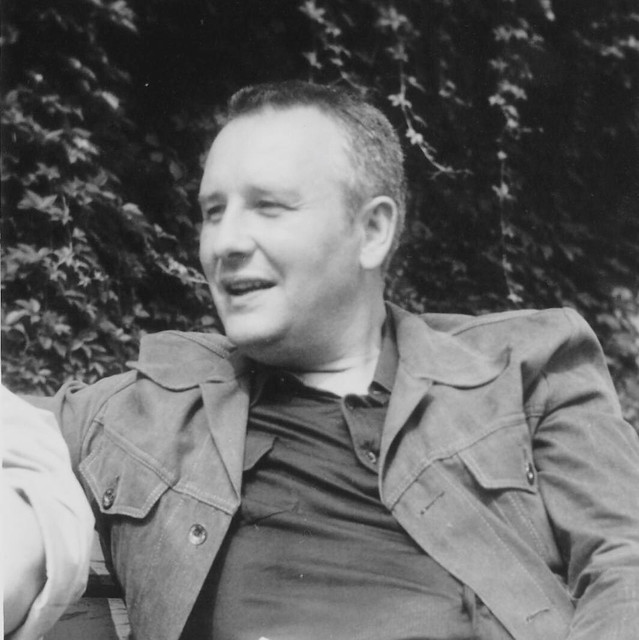
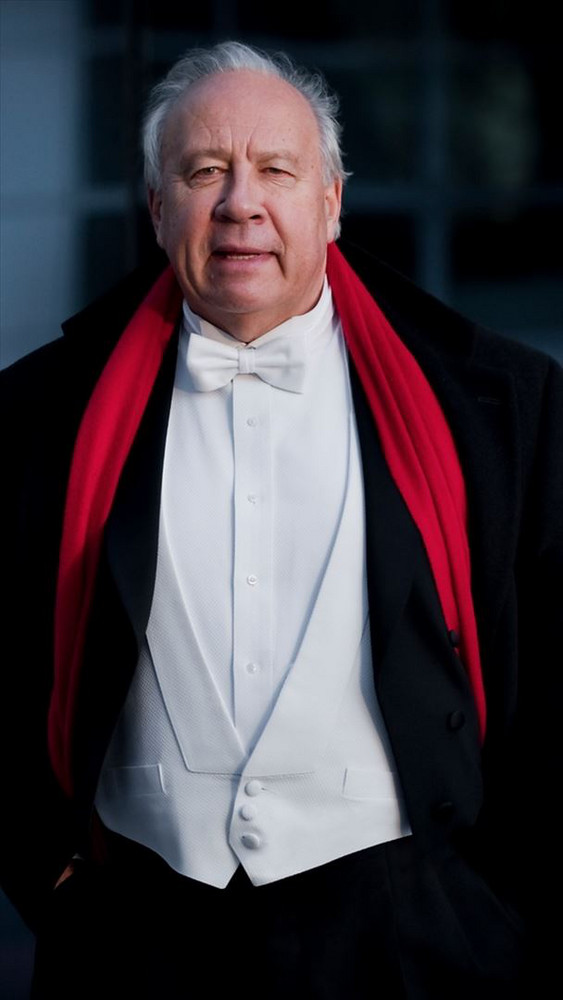
Henryk Górecki
1992–2005
·
4 albums
Listen
2
/5
Genres
Modern Classical
Modern classical is a contemporary strand of instrumental music that applies classical composition techniques to intimate, cinematic settings. It typically foregrounds piano and strings, is sparsely orchestrated, and embraces ambience, repetition, and timbral detail. Rather than the academic modernism of the early 20th century, modern classical as used today refers to accessible, mood-driven works that sit between classical, ambient, and film music. Felt pianos, close‑miked string quartets, tape hiss, drones, soft electronics, and minimal harmonic movement are common, producing a contemplative, emotionally direct sound that translates well to headphones, streaming playlists, and screen media.
Discover
Listen
Holy Minimalism
Holy minimalism (also called mystic or sacred minimalism) is a strand of late-20th-century classical music that blends the austerity and repetition of minimalism with the devotional focus and modal vocabulary of sacred chant and liturgy. Its soundworld favors slow tempi, diatonic or modal harmony, bell-like triads, long drones and pedal points, and chant-like melodies that unfold with great patience. Silence and resonance are treated as structural materials, and works often center on spiritual texts or wordless vocalise that evoke Orthodox or Catholic rituals. While sharing process-based clarity with American minimalism, holy minimalism is distinct in its overt spiritual intent, its choral emphasis, and its preference for transparent textures, luminous consonance, and contemplative stillness.
Discover
Listen
Minimalism
Minimalism is a style of Western art music that emerged in the United States during the 1960s, characterized by the use of very limited musical materials, steady pulse, and extensive repetition. Composers often build pieces from short cells or motifs that are repeated and slowly transformed through additive or subtractive processes, phase shifting, and gradual changes in harmony, texture, or register. Harmony is typically consonant (often modal or diatonic), though just intonation and extended drones are also common. The result is music that foregrounds process, clarity, audibility of structure, and a hypnotic sense of stasis and flow. Typical ensembles include keyboards, mallet percussion, strings, winds, voices, and electronics or tape. Minimalism influenced a wide array of later styles, from ambient and new age to post-minimalism and minimal techno.
Discover
Listen
Contemporary Classical
Contemporary classical is the broad field of Western art music created after World War II. It embraces an array of aesthetics—from serialism and indeterminacy to minimalism, spectralism, electroacoustic practices, and post‑tonal lyricism—while retaining a concern for notated composition and timbral innovation. Unlike the unified styles of earlier eras, contemporary classical is pluralistic. Composers freely mix acoustic and electronic sound, expand instrumental techniques, adopt non‑Western tuning and rhythm, and explore new forms, from process-based structures to open and graphic scores. The result is a music that can be rigorously complex or radically simple, technologically experimental or intimately acoustic, yet consistently focused on extending how musical time, timbre, and form can be shaped.
Discover
Listen
Orchestral Song
Orchestral song is an art-song tradition in which a solo voice is accompanied by a full orchestra rather than piano or a small chamber ensemble. It preserves the intimate, text-led focus of lieder and mélodie while expanding the expressive palette with orchestral color, timbral contrast, and large-scale dynamic shaping. Unlike opera, it is not staged and typically sets discrete poems or groups of poems, often assembled into cycles. Forms range from strophic to through-composed, and the style spans late-Romantic tonal idioms to early modernist harmonies. Central to the genre is the careful balance between textual clarity and orchestral richness, with the orchestra acting as a commentator and colorist—introducing motives, painting imagery, and framing the vocal line with preludes, interludes, and postludes.
Discover
Listen
Art Song
Art song is an intimate, concert-music genre in which a poetic text is set for solo voice with an equally integral piano accompaniment. Unlike popular song, it is composed for attentive listening in the recital hall or salon, and unlike opera, it does not require staging or multiple characters. The genre privileges prosody, word-painting, and subtle harmonic color to illuminate imagery and emotion in the poem. Forms range from strophic and modified strophic to fully through-composed designs, and the piano often supplies prelude, interludes, and a telling postlude that extends or reframes the text’s sentiment. German Lieder, French mélodie, and English-language art song are the best-known national currents within this tradition.
Discover
Listen
Symphony
A symphony is a large-scale composition for orchestra, typically cast in multiple movements that contrast in tempo, key, and character. In the Classical era, the most common layout was four movements: a fast opening movement (often in sonata form), a slow movement, a dance-like movement (minuet or later scherzo), and a fast finale. Over time, the symphony evolved from compact works of the mid-18th century into expansive, architecturally ambitious statements in the 19th and 20th centuries. Composers increasingly treated the symphony as a vehicle for thematic development, cyclical unity, and dramatic narrative—sometimes programmatic, sometimes abstract—using the full coloristic range of the modern orchestra. While rooted in Classical balance and clarity, symphonies incorporate a wide spectrum of harmonic languages and orchestral techniques. From Haydn’s wit and structural innovation to Beethoven’s heroic scope, Mahler’s cosmic breadth, and Shostakovich’s modern intensity, the symphony has remained a central pillar of Western concert music.
Discover
Listen
Classical
Classical music is the notated art-music tradition of Europe and its global descendants, characterized by durable forms, carefully codified harmony and counterpoint, and a literate score-based practice. The term “classical” can refer broadly to the entire Western art-music lineage from the Medieval era to today, not just the Classical period (c. 1750s–1820s). It privileges long-form structures (such as symphonies, sonatas, concertos, masses, and operas), functional or modal harmony, thematic development, and timbral nuance across ensembles ranging from solo instruments to full orchestras and choirs. Across centuries, the style evolved from chant and modal polyphony to tonal harmony, and later to post-tonal idioms, while maintaining a shared emphasis on written notation, performance practice, and craft.
Discover
Listen
Western Classical
Western classical is the notated art-music tradition that developed in Europe from medieval Christian chant into the large-scale secular and sacred forms of the Baroque, Classical, Romantic, and modern eras. It is characterized by staff notation, evolving systems of modality and tonality, and forms such as symphony, sonata, concerto, mass, opera, and chamber music. Across its history, Western classical established an extensive theory of harmony and counterpoint, refined orchestration across strings, winds, brass, and percussion, and cultivated performance practices from a cappella chant to full symphonic and operatic forces. Its repertoire, pedagogy, and institutions (conservatories, orchestras, opera houses) made it a global reference point for compositional craft and instrumental technique.
Discover
Listen
Show all 9 genres
Albums
2005
1
/5
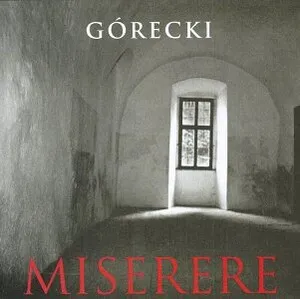
Miserere
Henryk Mikołaj Górecki
Holy Minimalism
1995
1
/5
Symphony No. 3
Henryk Mikołaj Górecki
Orchestral Song
Art Song
Holy Minimalism
1994
1
/5
Symphony No. 3 (Symphony of Sorrowful Songs); 3 Olden Style Pieces
Henryk Mikołaj Górecki
Holy Minimalism
Minimalism
Symphony
1992
3
/5
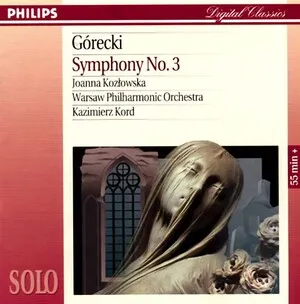
Symphony No. 3
Henryk Mikołaj Górecki
Art Song
Holy Minimalism
Minimalism
Similar artists
2
/5
Dawn Upshaw
Classical
Minimalism
Opera
3
/5
London Sinfonietta
Classical
Minimalism
Chamber Music
3
/5
David Zinman
Classical
Art Song
Holy Minimalism
4
/5
Philip Glass
Classical
Minimalism
Modern Classical
3
/5
Arvo Pärt
Minimalism
Classical
Holy Minimalism
2
/5
Reinbert de Leeuw
Classical
Classical Piano
Impressionism
4
/5
London Symphony Orchestra
Classical
Ballet
Concerto
3
/5
Neeme Järvi
Classical
Orchestral
Concerto
3
/5
Antoni Wit
Classical
Requiem
Choral Symphony
2
/5
Philip Glass Ensemble
Minimalism
Avant-Garde
Classical
Download our mobile app
Get the Melodigging app and start digging for new genres on the go
Download on the App Store
Get it on Google Play
© 2026 Melodigging
Give feedback
Legal
Melodding was created as a tribute to
Every Noise at Once
, which inspired us to help curious minds keep digging into music's ever-evolving genres.