Your digging level
Description
Sufi chant refers to the vocal devotional practices (dhikr, ḥadra, inshād, ilāhī, samaʿ) used by Sufi orders to remember God through the repetition of divine names, litanies, and poetic texts.
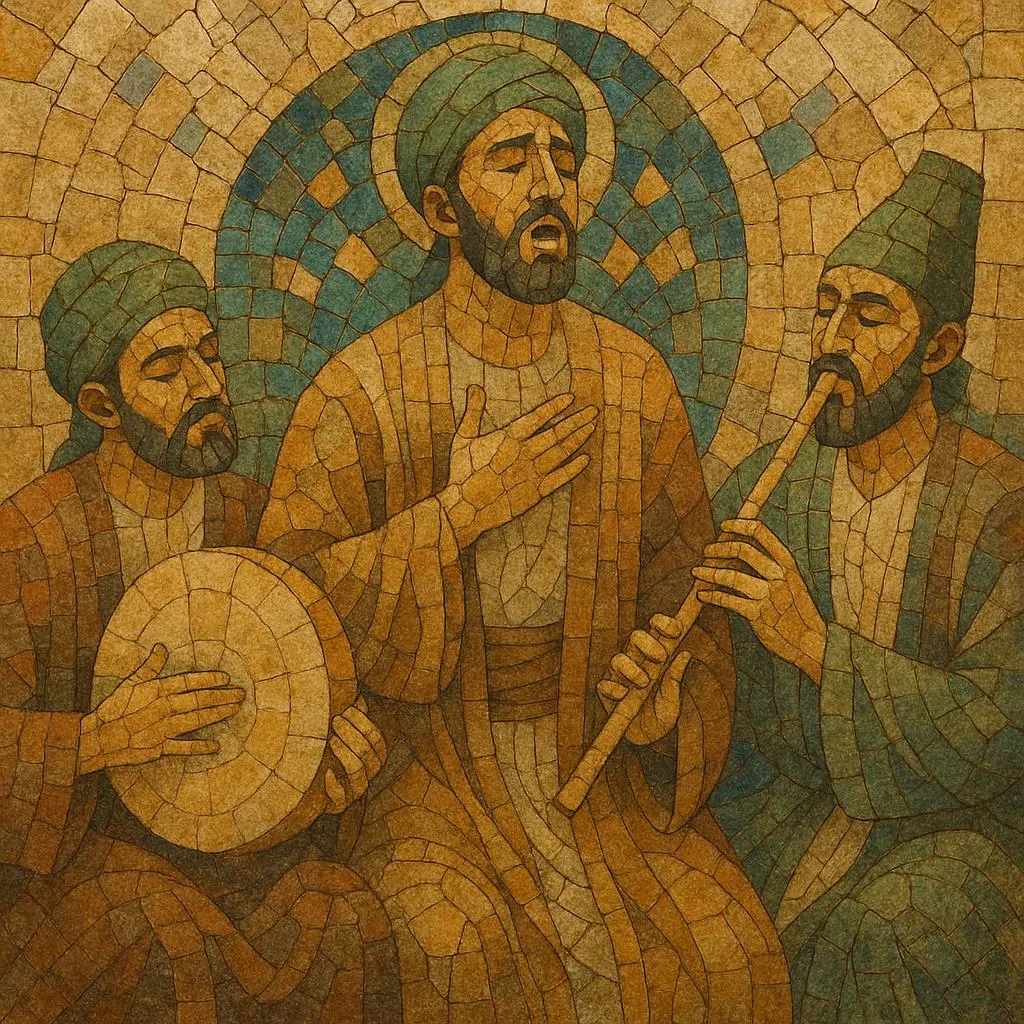
It is primarily voice-led, often unaccompanied or supported by sparse percussion (frame drum/duff, riqq) and occasionally by modal instruments (ney, oud). Melodies draw on regional modal systems (e.g., maqam in the Middle East, dastgah in Iran, raga/raga-like frameworks in South Asia) and are delivered with melismatic ornamentation and flexible rhythm that intensifies toward ecstatic climax.
Chant can be responsorial (call-and-response between a leader and a chorus) or communal unison. Its texts range from Qurʾanic invocations and the Beautiful Names of God to Sufi poetry by figures such as Rumi, Hafez, and al-Busiri (e.g., Qaṣīdat al-Burda). Though styles vary from Egypt to Turkey, Morocco, Iran, and South Asia, the shared aim is spiritual remembrance and transformation through sound.
History
Sufi chant emerged from the earliest mystical currents of Islam, when ascetics in Basra and Baghdad practiced vocal remembrance (dhikr) and intoned litanies and Qurʾanic passages to cultivate presence. As Sufi thought matured, collective practices of dhikr and samaʿ (spiritual audition) coalesced, using voice as a vehicle for contemplation and ecstasy.
The rise of formal ṭuruq (orders)—such as the Qadiriyya (Baghdad), the Shadhiliyya (North Africa), the Mevlevi (Anatolia), and later the Chishtiyya (South Asia)—standardized ritual structures and repertories. Each region adapted chant to local modal theory and prosody: Arabic maqam practices in the Levant and Egypt; Ottoman-Turkish Mevlevi ceremonies integrating ilāhī and naʿt; Persian devotional poetry within dastgah; and South Asian samaʿ framed by Hindustani aesthetics.
Brotherhoods like the ʿAissawa and Hamadsha in Morocco developed powerful group dhikr with polyrhythmic percussion and antiphonal chants. In Egypt and Syria, mosque-based munshidīn refined inshād with virtuosic melisma. Across the Ottoman domains, Mevlevi ceremonies formalized liturgical sequences, while Persian and Central Asian circles blended poetic recitation with chant-like melodic declamation.
Field recordings, festivals, and intercultural ensembles (e.g., Syrian and Turkish groups, Moroccan brotherhoods on international stages) carried Sufi chant worldwide. Contemporary munshidīn and ensembles perform traditional litanies in concert spaces, while some artists fuse chant with contemporary instrumentation. Despite modernization, the core remains devotional: repetitive, text-centered vocal music that guides participants from stillness to communal ecstasy.