Your digging level
Description
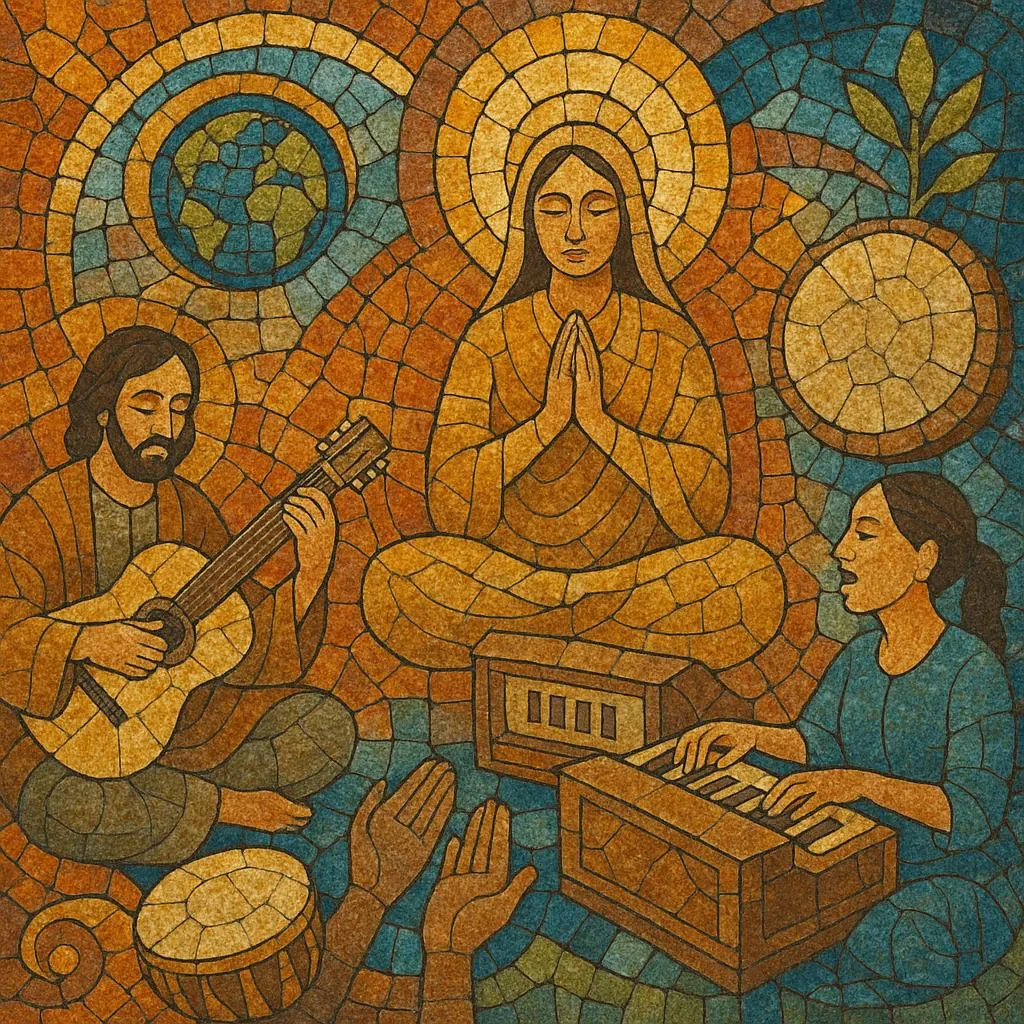
World devotional is a contemporary, globally minded devotional music style that blends sacred chant traditions from multiple cultures (such as Sanskrit mantras, Sikh shabad, Sufi zikr, and Buddhist prayers) with modern acoustic, ambient, and world-fusion production. It is typically performed in yoga studios, retreat centers, spiritual gatherings, and intimate concert settings, and is crafted to encourage contemplation, group singing, and a sense of shared spiritual presence.
Stylistically, the genre pairs drones (tanpura, harmonium, synth pads) and cyclical percussion (tabla, frame drums, cajón, handclaps) with modal melodies, warm acoustic guitars, bansuri or duduk lines, and liberal use of space and reverberation. Call-and-response vocals and extended mantra repetitions are common, creating trance-like crescendos that can move from whispery meditations to celebratory, danceable codas.
History
Long before the label “world devotional” existed, devotional music flourished across cultures—Hindu bhajan and kirtan, Sikh shabad kirtan, Sufi qawwali and zikr, Buddhist chant, Christian hymnody, and Jewish nigunim. In the late 20th century, the global circulation of recordings and the rise of world-fusion and new age scenes made these practices increasingly audible to international audiences.
In the 1990s, Western yoga and meditation communities—especially in North America and Europe—began embracing live mantra singing as a social, participatory practice outside of strictly liturgical contexts. Artists rooted in Indian devotional forms, alongside world-fusion and new age producers, experimented with acoustic drones, gentle grooves, and long-form chants. This period established the performance template—harmonium-led call-and-response, simple refrains in Sanskrit or Gurmukhi, and inclusive sing-alongs.
By the 2000s, a recognizable, transnational style had coalesced. Independent labels, yoga festivals, and retreat circuits helped formalize a market for recordings and tours. Production aesthetics matured: lush reverbs, layered choirs, bansuri or duduk counter-melodies, and tasteful hand percussion supported extended mantra cycles designed for both contemplative listening and community singing.
The streaming era amplified the genre’s reach through editorial yoga/meditation playlists, while international kirtan gatherings and conscious music festivals provided live hubs. Cross-pollination with ambient, folk, and singer‑songwriter traditions widened the palette: fingerstyle guitar, cinematic pads, and spacious mixes complemented traditional drones and tablas, making the sound accessible to listeners beyond spiritual communities.
Today, world devotional thrives as an ecumenical practice: multi-faith texts, inclusive performance settings, and hybrid instrumentation. Artists collaborate across cultures, emphasizing respectful sourcing, pronunciation, and context for sacred texts while embracing modern production and distribution.