Your digging level
Description
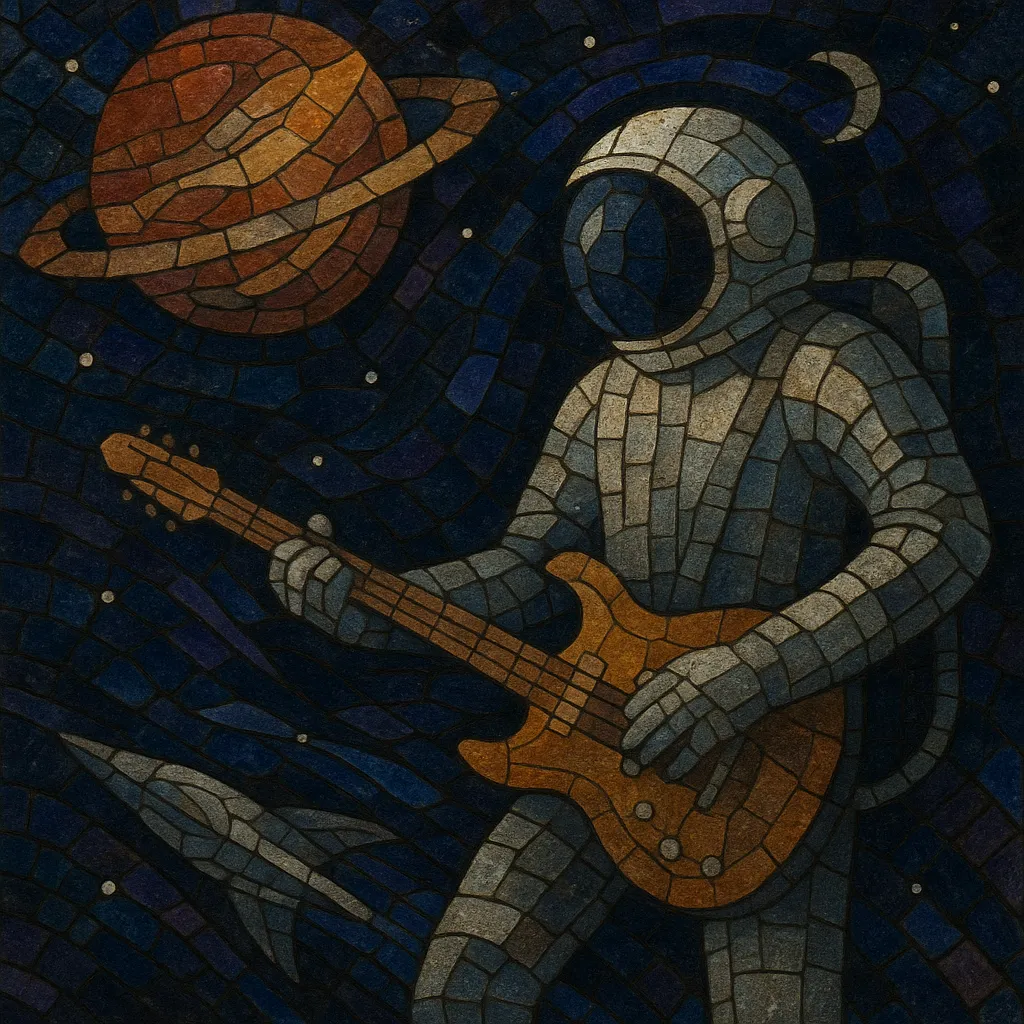
Space rock is a psychedelic branch of rock characterized by long-form, hypnotic grooves, swirling guitars awash in delay and reverb, and prominent analog synthesizers that evoke cosmic or interstellar imagery. The music often emphasizes texture and atmosphere over conventional song structures, creating expansive soundscapes that feel weightless and otherworldly.
Emerging in late-1960s Britain from the overlap of psychedelic rock, early progressive rock, and experimental electronics, space rock frequently employs motorik-leaning rhythms, modal or drone-based harmony, and science-fiction themes. Extended improvisations, phased and fuzz-drenched timbres, and tape or echo effects are common, encouraging a sense of forward drift and cosmic exploration.
History
Space rock coalesced in the United Kingdom at the end of the 1960s as psychedelic rock acts expanded their palettes with extended improvisations, effects-heavy guitars, and early synthesizers. Pink Floyd’s early work, alongside the propulsive, sci‑fi‑themed jams of Hawkwind and the whimsical, cosmic suites of Gong, helped set the template: repetition and trance-inducing rhythms; modal harmony and drones; and a fascination with outer space, technology, and the future.
During the 1970s, space rock absorbed ideas from progressive rock and krautrock (notably the motorik drive and minimalist repetition), while integrating analog synths, Mellotron, and spacey tape delays. Albums like Hawkwind’s "Space Ritual" and Gong’s Radio Gnome trilogy cemented a performance and studio aesthetic based on immersion and transportive atmosphere.
After punk’s rise, space rock resurfaced through neo‑psychedelia and drone‑oriented acts. Spacemen 3 and, subsequently, Spiritualized distilled the style into slow‑burning, euphoric crescendos and meditative repetition, while Ozric Tentacles explored instrumental, synth-forward odysseys. Elements of space rock seeped into shoegaze, post‑rock, and alternative rock, informing texture-first approaches across scenes.
A revival and cross‑pollination continued into the 2000s and 2010s, with artists drawing on the genre’s hypnotic repetition, expansive production, and cosmic thematics. Space rock’s DNA now threads through contemporary psych rock, stoner rock/metal, dream pop, and post‑rock, and it remains a live staple for bands favoring immersive, audiovisual journeys.