
Your digging level for this genre

0/8
🏆
Sign in, then listen to this genre to level up

Description

Australian psych is a regional strand of psychedelic music that blends fuzzed‑out guitars, hypnotic grooves, and a sun‑bleached sense of space with the DIY energy of Australia’s indie and garage scenes.

It typically draws on classic 1960s psychedelic rock and acid rock while embracing motorik pulses, desert‑drift atmospheres, microtonal or modal colors, and an affection for tape‑warm, reverb‑rich production. In the 2010s it also absorbed dream‑pop sheen and electronic textures, yielding a spectrum that runs from jam‑heavy psych rock to bright, melodic psych‑pop.

Scene hubs in Perth, Melbourne, and Brisbane helped shape a distinctive sound: expansive yet direct, adventurous yet hook‑savvy—equally ready for head‑down improvisation and sing‑along choruses.

History

Origins (1960s–1970s)

Australia’s first wave of psychedelia emerged alongside the global movement in the late 1960s, as local beat and garage bands flirted with fuzz tones, studio experimentation, and mind‑bending imagery. Early psych currents ran through acts adjacent to Australian beat, progressive, and blues‑rock, laying a template for heavier riffs, exploratory jams, and a taste for textural effects.

Underground continuity and neo‑psych (1980s–2000s)

After the classic era waned, the spirit lived on through post‑punk and alternative circles, feeding into Australia’s neo‑psychedelia and indie scenes. Bands brought chiming guitars, spacious production, and trance‑leaning rhythms to a new audience, keeping psychedelia’s exploratory ethos active as a cult current that mingled with jangle, shoegaze, and space rock.

Global breakout (2010s)

The 2010s saw a dramatic resurgence. Artists from Perth and Melbourne in particular fused classic psych with motorik grooves, synths, and pop‑forward songwriting. International touring, festival circuits, and tightly knit label ecosystems helped the scene reach a worldwide audience. The period balanced two poles: heavy, jam‑centric bands exploring microtonality and polymeter, and luminous psych‑pop acts refining hook craft and immersive production.

Diversification and cross‑pollination (2020s–)

In the 2020s, Australian psych continues to sprawl: microtonal rock experiments coexist with silky synth‑psych and surf‑tinted bliss, while collaborations with electronic producers, indie pop writers, and jazz‑leaning improvisers broaden the palette. The result is a flexible, exportable sound—a regional identity that now feeds back into global psych and mainstream indie pop alike.

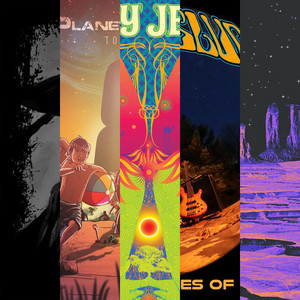
How to make a track in this genre

Sound palette
•   Guitars: use fuzz, overdrive, phaser, tape echo, spring reverb; try 12‑strings or semi‑hollows for shimmer. Layer rhythm and lead to blend riffs with drones or pedal‑tone figures. •   Keys/Synths: analog or analog‑modeled synths (pads, arps, Mellotron‑style flutes/strings) to add warmth and psychedelia. •   Bass/Drums: round bass with slight saturation; drums that are roomy and live, often with tape or plate ambience.
Harmony and form
•   Favor modal centers (Dorian, Mixolydian) and static or vamp‑based progressions that invite groove and texture. •   Use colorful chords (add9, sus2/4, extended 7ths) and occasional key shifts for lift. •   Alternate concise, hook‑led song forms with expanded codas or instrumental sections for lift‑off.
Rhythm and groove
•   Mid‑tempo head‑nod feels (90–120 BPM) or motorik 4/4 pulses; experiment with polymeter or additive figures for tension. •   Percussion layers (tambourine, shakers) to enhance propulsion without cluttering the mix.
Melody and vocals
•   Dreamy, doubled, or lightly saturated vocals that sit inside the mix rather than on top; generous plate or tape echo. •   Melodies that balance sing‑along simplicity with hazy contours; use call‑and‑response guitars/synths to echo vocal hooks.
Production approach
•   Tape‑like saturation, gentle wow/flutter emulation, and stereo imaging (auto‑panning, chorus, ADT) to create movement. •   Sound design via pedals (phaser, flanger, rotary) on buses; print effects for commitment and character. •   Allow headroom for dynamic swells; automate ambience to open up in choruses and codas.
Ensemble tips
•   Rehearse transitions between tight songcraft and open improvisation. •   If exploring microtonality, commit to a tuning (e.g., 24‑TET) across guitars/keys, and craft riffs that emphasize new intervals. •   Live, build sets that arc from hypnotic vamps to explosive peaks for a cathartic payoff.

Top tracks

Locked
Share your favorite track to unlock other users’ top tracks
Influenced by
Has influenced
Challenges
Digger Battle
Let's see who can find the best track in this genre
© 2025 Melodigging
Melodding was created as a tribute to Every Noise at Once, which inspired us to help curious minds keep digging into music's ever-evolving genres.
Buy me a coffee for Melodigging