Your digging level for this genre

0/8
🏆
Sign in, then listen to this genre to level up

Description

Deep space rock is an expansive, atmospheric branch of space rock that emphasizes long-form structures, weightless textures, and a sense of cosmic scale.

Guitars are drenched in delay and reverb (often with fuzz for lift-offs), synthesizers provide drifting pads and cosmic bleeps, and rhythm sections lock into hypnotic, steady patterns that evoke forward motion through the void.

The style sits at the crossroads of classic space rock, krautrock’s motorik pulse, progressive rock’s dynamics, shoegaze’s textural wash, and ambient music’s headroom, creating immersive, cinematic journeys rather than song-centered vignettes.

History

Origins (1970s)

Deep space rock grows out of the United Kingdom’s early space rock movement, where bands like Pink Floyd and Hawkwind stretched rock forms with long instrumental passages, expansive production, and science‑fiction imagery. In parallel, German krautrock and the Berlin School of electronic music contributed motorik rhythms, analog synth timbres, and a minimalist, trance‑inducing approach that became foundational to the "deeper" space aesthetic.

Expansion and Textures (1980s–1990s)

Neo‑psychedelia, shoegaze, and post‑rock added thicker guitar atmospheres, wider dynamic arcs, and a shift from vocal hooks to texture and mood. Artists embraced pedal‑driven sound design, modal harmony, and slow builds, further differentiating deep space rock from more riff‑driven hard/stoner variants.

Heavier Orbits and Jam Constellations (2000s–2010s)

Instrumental psych and stoner jam bands pushed the cosmic jam model—extended improvisations, monolithic drums-and-bass engines, and soaring lead guitars—while European and Japanese underground scenes nurtured heavier, fuzz‑saturated interpretations alongside airy, ambient‑leaning works. Festivals and boutique labels helped codify the sound with high‑fidelity live recordings.

Contemporary Presence (2020s–)

Modern acts fuse classic motorik, shoegaze shimmer, and progressive dynamics with modern production (wide stereo fields, deep low‑end, tasteful saturation). The style remains album‑ and performance‑oriented, favoring immersive journeys, thematic suites, and live improvisation that can scale from intimate drone passages to epic, rocket‑booster climaxes.

How to make a track in this genre

Core Instrumentation
•   Guitars: Strat/offset with delay, reverb, and fuzz; volume pedal for swells; eBow or slide for sustained, "zero‑gravity" lines. •   Synths/Keys: Analog or emulations for pads, arpeggios, modular bleeps, and filter‑swept drones. •   Rhythm Section: Bass with round, sustained tone; drums with steady 4/4 (motorik) or slow-mid grooves; minimal fills that prioritize trance over flash.
Harmony, Melody, and Form
•   Harmony: Modal centers (Dorian, Aeolian), suspended chords (sus2/sus4), pedal points; avoid frequent functional cadences. •   Melody: Long, lyrical lines that evolve slowly; use pentatonic or modal motifs that can repeat and morph. •   Form: 6–12+ minute pieces with gradual build-ups, plateaus, and decompression; alternate between drone passages and climactic lift-offs.
Rhythm and Tempo
•   Tempi: 70–120 BPM; motorik 4/4 at ~110 BPM works well for forward momentum. •   Grooves: Keep kick on every beat or a solid 1–3 pulse; hi-hats or rides provide continuous, propulsive texture.
Sound Design and Production
•   Chains: Guitar (compressor → fuzz/overdrive → delay(s) → reverb); parallel a second delay with longer feedback for cosmic trails. •   Synth Patches: Slow-attack pads with gentle LFO on filter/pitch; tape-echo/space echo emulations for repeats. •   Mixing: Wide stereo pads and guitars, mono-solid bass and kick; automate long crescendos; use reverbs with long decay and modulation; manage low‑end with high‑pass filters on ambient layers.
Lyrics and Aesthetics
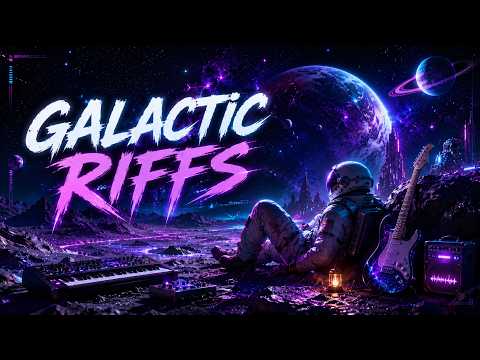
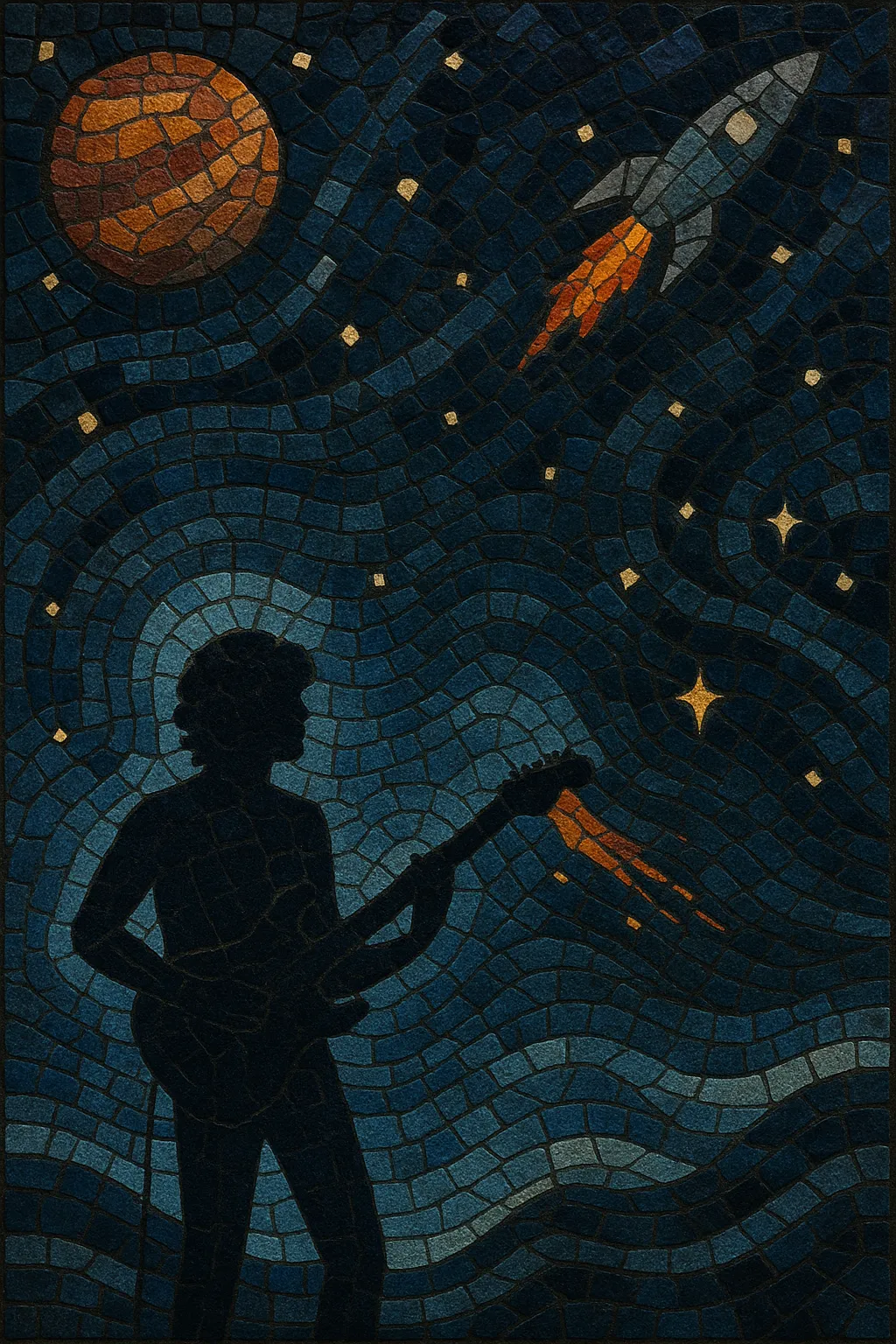
•   If used, lyrics are sparse and evocative—cosmology, exploration, isolation, and wonder; consider spoken word or vocoder for a futuristic sheen. •   Artwork and live visuals often feature celestial imagery, starfields, and abstract motion to reinforce immersion.

Top tracks

Locked
Share your favorite track to unlock other users’ top tracks
Influenced by
Has influenced
Challenges
Digger Battle
Let's see who can find the best track in this genre
© 2025 Melodigging
Melodding was created as a tribute to Every Noise at Once, which inspired us to help curious minds keep digging into music's ever-evolving genres.
Buy me a coffee for Melodigging