Your digging level

For this genre
0/8
🏆
Sign in, then listen to this genre to level up

Description

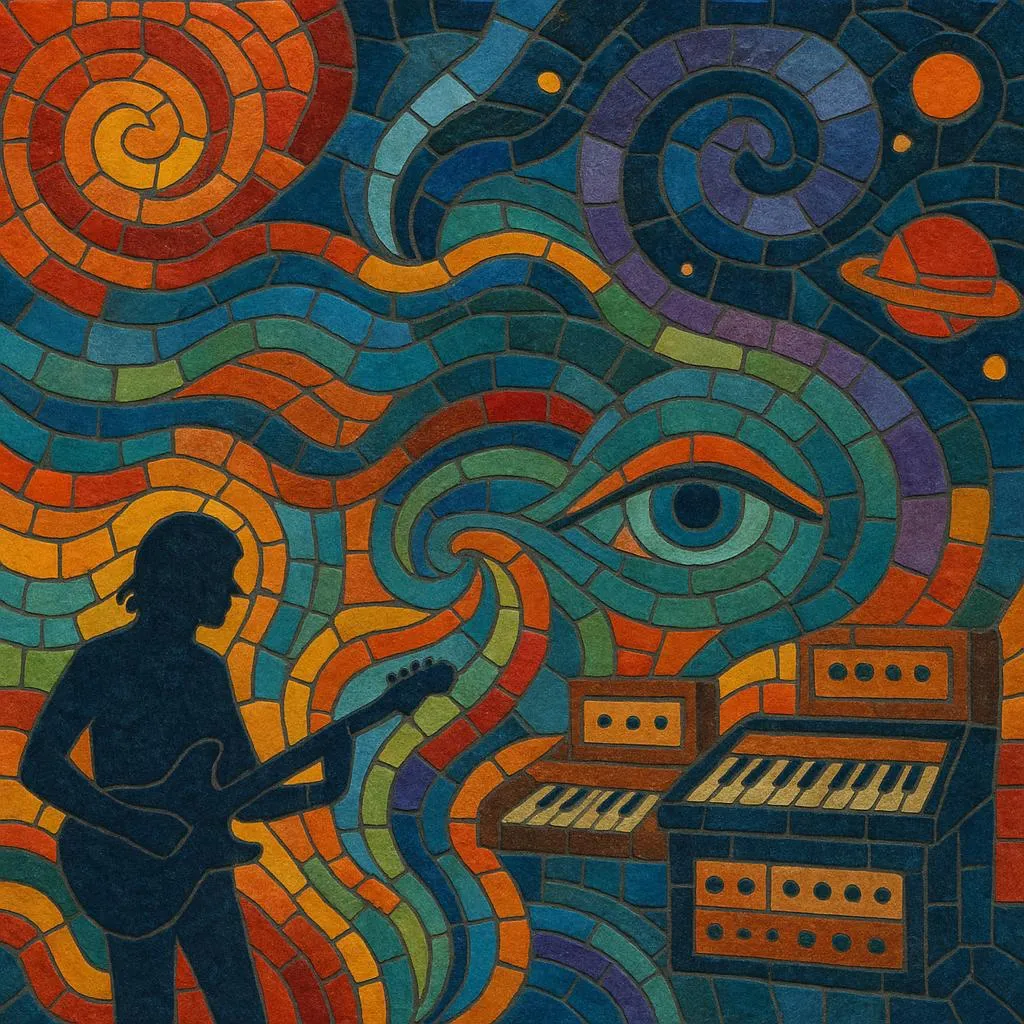
Indie psychedelic rock blends the DIY aesthetics and melodic sensibilities of indie rock with the textures, timbral experimentation, and exploratory spirit of 1960s–70s psychedelic music.

Expect saturated guitars (fuzz, phaser, tremolo), tape-like delays, spring reverbs, vintage keyboards (Mellotron, organs, analog synths), and cyclical grooves that favor trance over virtuosity. Songs often balance hooky, indie-style choruses with expansive instrumental passages, drones, or motorik pulses.

Lyrically, the style favors surreal imagery, inner journeys, and cosmic metaphors, delivered through intimate, close-mic’d vocals that sit within a dense, coloristic mix. The result is guitar-driven, kaleidoscopic music that feels both retro-analog and forward-looking.


Sources: Spotify, Wikipedia, Discogs, Rate Your Music, MusicBrainz, and other online sources

History

Roots and Precursors (1960s–1980s)

Indie psychedelic rock traces its roots to 1960s psychedelic rock and its kin—West Coast psych, British freakbeat, and the drone- and raga-inflected experiments of the era. In the 1970s, German krautrock and space rock added motorik rhythm and cosmic expansiveness. The 1980s indie underground (college radio, DIY labels) folded those ideas into post-punk and jangle scenes, while early neo‑psychedelia kept the kaleidoscopic palette alive outside the mainstream.

Emergence as an Indie Idiom (1990s)

By the 1990s, a distinctly indie reading of psychedelia cohered. Lo‑fi recording, cassette culture, and small labels enabled bands to pair hook-driven indie songwriting with fuzzed-out tone, tape echo, and therapeutic repetition. Scenes cross-pollinated with shoegaze and dream pop, emphasizing texture and atmosphere as musical protagonists.

2000s–2010s Expansion and Globalization

The 2000s brought higher-fidelity home studios, boutique pedals, and affordable analog gear, allowing richer sound design on modest budgets. The 2010s globalized the sound via festivals, Bandcamp ecosystems, and psych-oriented micro‑labels, while the live circuit embraced long-form jams and immersive light shows reminiscent of classic psych, reframed by modern indie songwriting.

2020s: Hybridization and Scene Resilience

In the 2020s, the style remains vibrant across regional scenes. Artists fuse motorik grooves with shoegaze density, psychedelic pop hooks, and post‑rock dynamics. Tape-saturated mixes, modular synth accents, and hypnotic riff cycles continue to define a sound that is simultaneously nostalgic and exploratory.

How to make a track in this genre

Instrumentation & Sound Design
•   Guitars: Use fuzz/overdrive into phaser, tremolo, and tape/analog-style delays. Layer 12‑string or baritone guitars for shimmer and low growl. Explore reverse guitar, EBow, and slide for sustained, vocal-like lines. •   Keys: Mellotron/rompler flutes and strings, combo organs, and analog polysynth pads to fill spectral gaps. Filter sweeps and gentle LFO vibrato evoke motion without crowding the midrange. •   Rhythm Section: A steady, hypnotic 4/4 (motorik) works well; alternate with loping, half-time grooves. Keep bass lines droning on pedal tones or outlining modal centers. •   Effects & Space: Spring reverb, plate reverbs, slapback and multi-head (tape) delays. Use gentle chorus/flanger for color; experiment with feedback swells and dub-style sends.
Harmony, Melody, and Form
•   Harmony: Favor modal centers (Dorian, Mixolydian, Lydian). Use droned roots and pedal points; move between bVI–bVII–I or IV–I with suspended extensions for a euphoric, hovering feel. •   Melody: Vocals sit inside the texture—double-track softly, compress lightly, and roll off highs for a dreamlike intimacy. Melodic hooks should be simple and cyclical. •   Form: Verse–chorus with extended instrumental bridges or codas. Allow sections to vamp and evolve through layering rather than chord changes.
Rhythmic Language
•   Tempos: Mid (90–120 BPM) for trance; faster (125–135) for driving, kraut-informed cuts. Maintain pocket with consistent hi-hat or tambourine; use tom patterns for ceremonial lift. •   Grooves: Motorik (straight 8ths), lazy shuffles, or syncopated patterns that leave space for delays and drones.
Lyrics & Themes
•   Imagery: Surreal, cosmic, and introspective—nature metaphors, liminal states, and dream sequences. Keep lines suggestive rather than literal.
Production Approach
•   Tracking: Blend DI and mic’d amps; capture room mics for depth. Embrace mild tape saturation or plugin equivalents for glue. •   Mixing: Prioritize texture—arrange parts in complementary registers; automate delays and reverbs as expressive, rhythmic elements. Pan guitars and keys to create a moving stereo field. •   Mastering: Preserve transients and headroom; avoid over‑limiting so the ambience breathes.
Practice Tips
•   Build a song from a single hypnotic riff and add layers (counter‑melodies, percussive shakers, synth pads) every 8–16 bars. •   Start with a motorik drum loop and improvise guitar textures on top; commit to longer takes to capture organic evolutions.

Top tracks

Locked
Share your favorite track to unlock other users’ top tracks
Influenced by
Has influenced
Challenges
Digger Battle
Let's see who can find the best track in this genre

Download our mobile app

Get the Melodigging app and start digging for new genres on the go
© 2026 Melodigging
Melodding was created as a tribute to Every Noise at Once, which inspired us to help curious minds keep digging into music's ever-evolving genres.
Buy me a coffee for Melodigging