Your digging level
Description
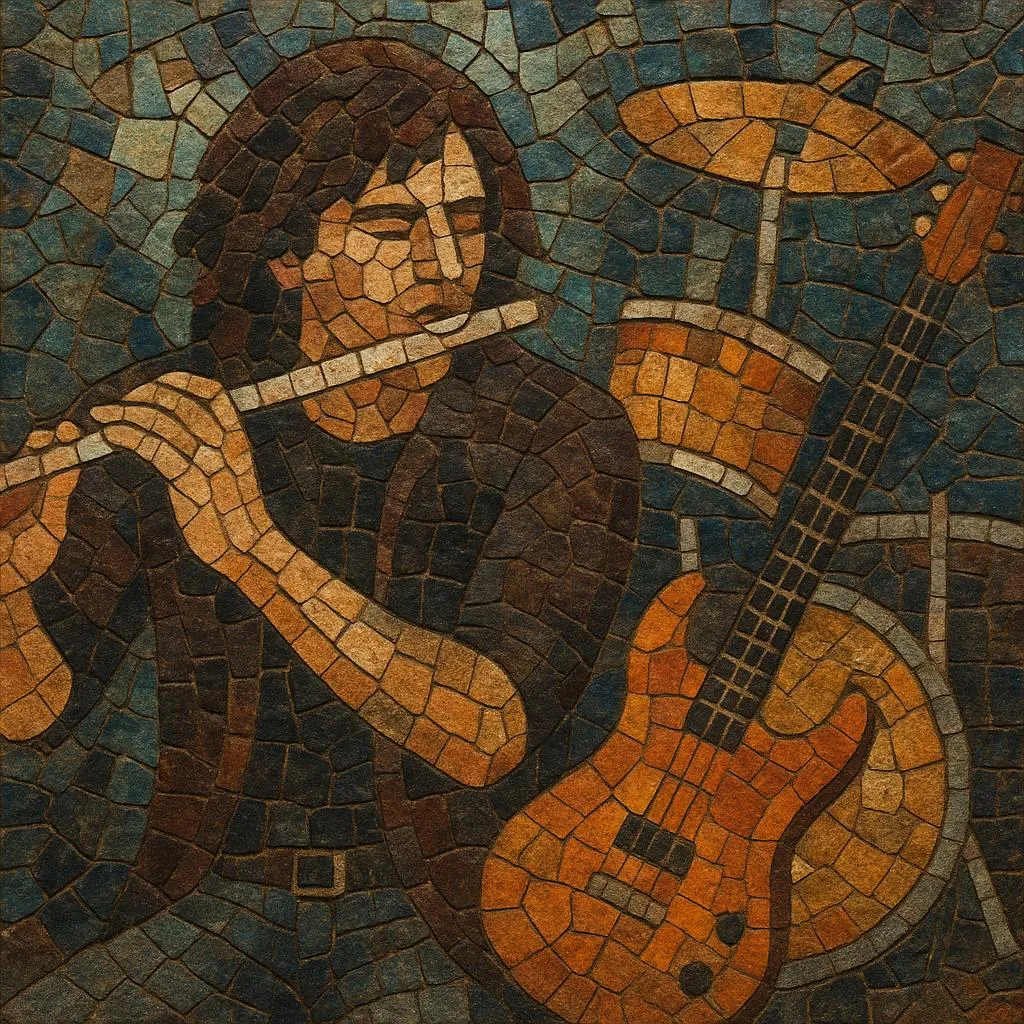
Flute rock is a branch of rock in which the concert flute (and related woodwinds) is elevated from coloristic ornament to a lead, riff‑carrying instrument alongside guitar, bass, and drums.
Emerging from the psychedelic and progressive turns of late‑1960s British rock, it fuses blues‑rock rhythm sections, folk modalities, and jazz/classical phrasing with the timbral brightness and agility of the Boehm‑system flute. Hallmarks include memorable flute riffs, extended solos using blues, modal, or pentatonic vocabulary, odd meters borrowed from progressive rock, and dynamic contrasts that move from pastoral, airy passages to explosive, overblown climaxes.
History
As British rock embraced psychedelia and exploratory arranging, the flute—long present in jazz and classical contexts—found a starring role in electric bands. Rock groups began to feature the instrument for its vocal‑like phrasing and ability to cut through amplified textures. The shift coincided with an appetite for modal harmony, folk inflections, and extended improvisation.
In the 1970s, flute rock crystallized inside progressive and symphonic rock scenes. UK acts popularized the percussive, overblown, and vocalized techniques that gave the rock flute its signature bite. On the Continent, Dutch and Italian progressive bands integrated virtuosic flute into complex suites, while some outfits from South America blended Andean flutes with electric instrumentation, broadening the idiom’s palette.
Although synthesizers and saxophone often displaced flute in mainstream rock of the 1980s, the instrument persisted in neo‑prog, art‑rock, and space/psych currents. Indie and post‑progressive circles of the 1990s–2000s revived woodwinds for texture and counter‑melody, sometimes pairing flute with Mellotron/organ to evoke pastoral or cinematic moods.
Modern progressive rock and folk‑metal acts continue to spotlight flute—both concert and alto varieties—while producers in psych, space rock, and cinematic post‑rock use it for timbral contrast, layering lyrical lines over polyrhythmic drums and saturated guitars. The instrument’s portability across acoustic and amplified settings keeps "flute rock" an enduring color within broader rock practice.