Your digging level for this genre

0/8
🏆
Sign in, then listen to this genre to level up

Description

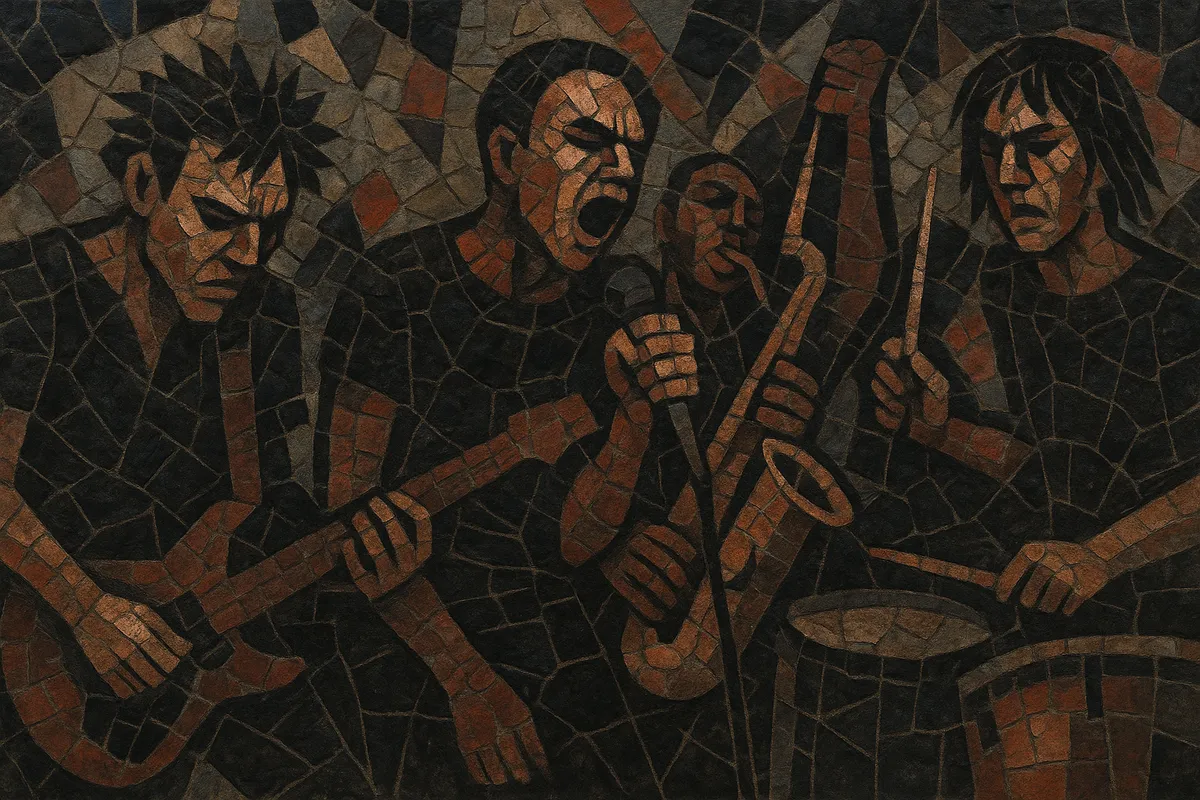
No wave is a late-1970s New York City underground movement that rejected the orthodoxies of punk, rock, and pop in favor of abrasive sonics, anti-virtuosic playing, and an art-forward, confrontational attitude.

Its sound ranges from skronky, free-jazz-influenced sax blasts and scraping, detuned guitars to rigid, mechanical rhythms and stark, minimal song structures. Lyrics are often spoken, shouted, or declaimed in a deadpan or feral style, addressing urban anxiety, alienation, and cultural decay.

More than a fixed style, no wave was a short, intense rupture: a scene of musicians and artists who intentionally dismantled conventional harmony, groove, and song form to foreground texture, noise, and performance as critique.

History

Origins (Late 1970s NYC)

No wave emerged in downtown Manhattan in the late 1970s as an antagonistic response to both mainstream rock and the codifying of punk. Centered around lofts, galleries, and small venues (Artists Space, CBGB, Max’s Kansas City, The Kitchen), the scene shared more DNA with the art world than with traditional music circuits. Artists borrowed from avant-garde and minimalism, performance art, free jazz, and the brutal immediacy of punk, but rejected punk’s stylistic formulas.

No New York (1978–1979)

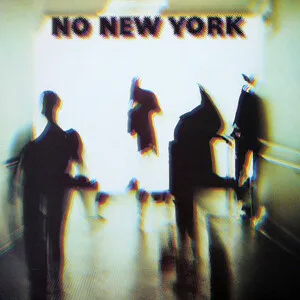
In 1978, Brian Eno produced the compilation “No New York,” featuring James Chance and the Contortions, Teenage Jesus and the Jerks, Mars, and DNA. The record crystallized the scene’s sound: razor-wire guitars, skittering/noisy drums, shredding sax, and severely reduced song forms. It quickly became the movement’s defining document and a reference point for artists worldwide.

Expansion and Cross-Pollination (1979–1981)

The scene expanded to include figures like Glenn Branca and Rhys Chatham, whose massed-guitar works fused no wave intensity with minimalist processes and prepared/detuned instruments. Parallel strands folded in funk and disco rhythms (e.g., Liquid Liquid, ESG on the periphery), while others embraced extreme noise and improvisation. DIY labels (ZE, Lust/Unlust, Neutral) and zines captured the ferment.

Dissolution and Aftermath (1982–1990s)

By the early 1980s, the original cluster had largely dissolved, but its shockwaves shaped subsequent NYC sounds. Alumni and fellow travelers seeded or influenced noise rock, post-punk’s artier edge, dance-punk hybrids, industrial abrasiveness, and post-rock’s extended forms. Sonic Youth and Swans (early 80s downtown) translated no wave’s tunings, textures, and anti-structure into longer-lived bands.

Legacy

Though brief, no wave remains a touchstone for artists seeking to strip music to gesture, texture, and confrontation. Its emphasis on timbre over harmony, performance-as-critique, and the fusion of gallery aesthetics with band formats continues to inform experimental rock, noise, industrial approaches, and rhythm-forward art-punk and dance-punk.

How to make a track in this genre

Setup and Instrumentation
•   Guitars: detune or use alternative tunings; emphasize open strings, behind-the-bridge scraping, and prepared elements (screwdrivers, clips). Use solid-state or overdriven amps for brittle, cutting timbre. •   Rhythm section: tom-heavy drums played with a stiff, mechanical feel; minimal cymbals. Bass can be single-note, percussive, or dub-thin, sometimes swapped for floor tom or no bass at all. •   Brass/Winds: an intentionally harsh, skronking alto/tenor sax (à la free jazz) works well for puncturing textures.
Harmony and Melody
•   Avoid conventional chord progressions. Use clusters, semitone grinds, and tritones. •   Prioritize texture and register over melody; repetitive two-note cells can become motifs. •   Treat dissonance as the norm; silence and sudden drop-outs are structural tools.
Rhythm and Form
•   Favor rigid, motoric grooves or spasmodic, start–stop patterns. •   Structures are short, block-like, or collage-based; repetition functions as tension rather than release. •   Embrace asymmetry: odd lengths (e.g., 7 or 9 bars), unison hits, or deliberately misaligned parts.
Vocals and Lyrics
•   Delivery: spoken, shouted, or deadpan; avoid ornamentation and vibrato. •   Content: urban fragmentation, body politics, media noise; cut-up or slogan-like lines. •   Use negative space; let words clash with rhythm rather than sit comfortably on it.
Sound Design and Production
•   Keep it dry and close-miked; let room harshness and amp noise be part of the music. •   Allow feedback, clipping, and accidental artifacts; treat them as performance events. •   Live takes over overdubs; mistakes can be material, not errors.
Performance Practices
•   Emphasize physicality and confrontation; use gesture and stance as compositional elements. •   Consider gallery-style presentation: stark lighting, minimal staging, abrupt set endings. •   Short sets and short songs heighten intensity.
Modern Tips
•   Hybridize with tight funk/dance patterns for no wave–funk (rigid groove + abrasive top end). •   Build massed-guitar drones inspired by minimalism (à la Branca/Chatham) for larger forms. •   When in doubt, remove harmony and increase timbre contrast; let rhythm and texture carry the piece.

Related labels

Top tracks

Locked
Share your favorite track to unlock other users’ top tracks
Influenced by
Has influenced
Challenges
Digger Battle
Let's see who can find the best track in this genre
© 2025 Melodigging
Melodding was created as a tribute to Every Noise at Once, which inspired us to help curious minds keep digging into music's ever-evolving genres.
Buy me a coffee for Melodigging