Your digging level
Description
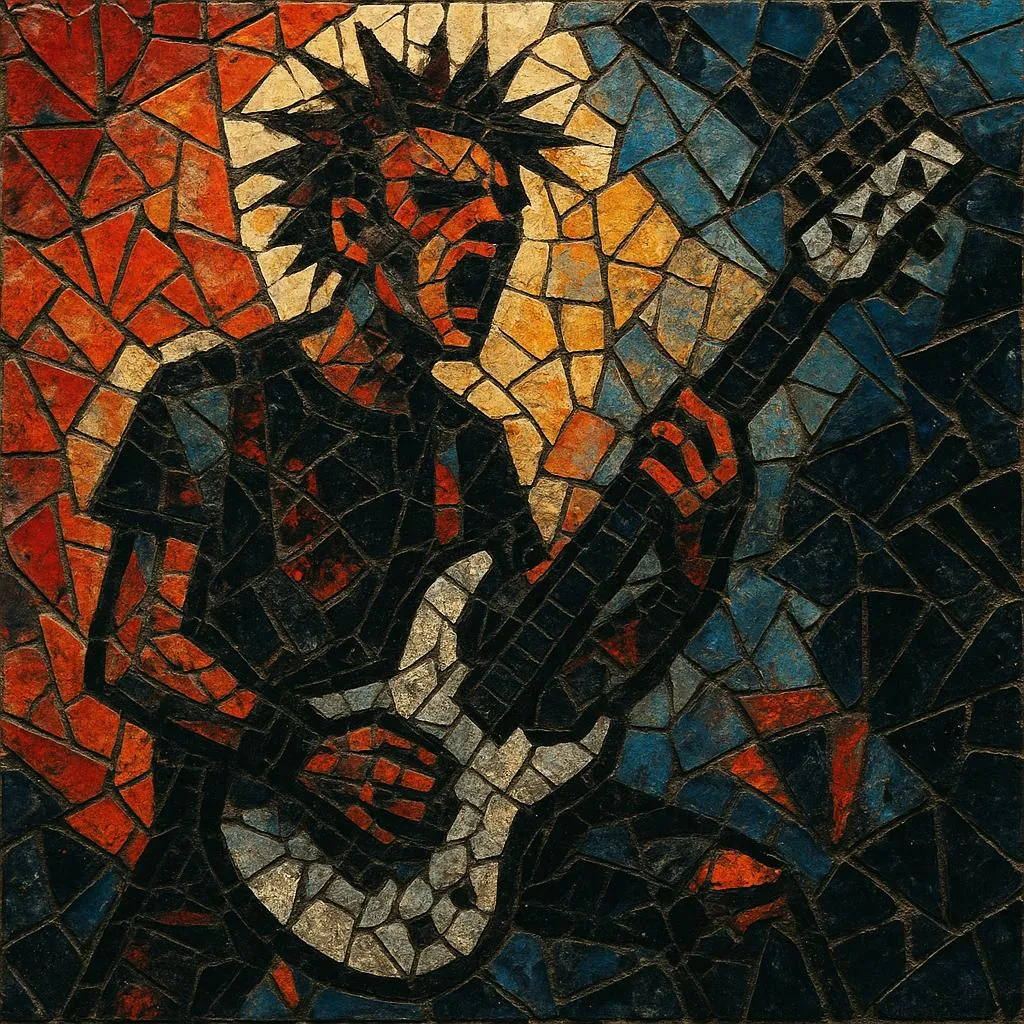
Noise punk is a confrontational fusion of punk’s speed and antagonism with the harsh sonics of noise rock and no wave. It emphasizes abrasive textures—feedback howl, pedal-saturated guitars, sputtering electronics—over virtuosity, while retaining punk’s direct, cathartic impact.
Songs are often short, repetitive, and physically forceful. Vocals tend toward shouted, barked, or distorted deliveries; drums punch and lurch between stomping mid-tempos and frantic blasts; bass is overdriven and percussive. The overall aesthetic is raw, chaotic, and purposefully unruly, privileging texture, volume, and attitude as musical parameters in their own right.
History
Noise punk emerged from the same crucible that birthed no wave and noise rock in the late 1970s United States, especially in New York and the American Midwest. Punk had demonstrated that immediacy and attitude could trump polish; no wave and noise rock pushed that idea further by weaponizing dissonance, feedback, and non-traditional song structure. Early outliers in US punk scenes began to incorporate sheets of noise, broken rhythm, and confrontational performance tactics that set the blueprint.
In the 1980s, US underground bands expanded these ideas: midwestern and West Coast acts slowed hardcore’s sprint into a menacing stomp, detuned their instruments, and made feedback an active part of the arrangement. Independent labels and DIY venues fostered a community where raw recording, antagonistic stagecraft, and sonic extremity were not just accepted but expected. Across the Atlantic, European groups with a fixation on repetition, bleak themes, and crude distortion paralleled the American trajectory, cementing noise punk as a recognizable strain within the wider punk family.
Through the 1990s and 2000s, regional scenes (Chicago, Providence, San Diego, the Pacific Northwest, Scandinavia) and boutique labels cultivated the sound’s permutations—from sludgier, dirge-like variants to jittery, hyper-speed blasts. Noise punk frequently overlapped with adjacent movements (noise rock, post-hardcore, grind-influenced punk), while keeping its signature reliance on texture, volume, and antagonism front and center.
In the 2010s and beyond, noise punk hybridized with industrial, electronic noise, and even hip hop aesthetics. The production palette widened (side-chained drum machines, harsh digital clipping, sampler feedback), but the core identity remained: short, punishing tracks, serrated timbres, and a performative intensity aimed at destabilizing both player and listener. The genre now exists as a living conduit between punk energy and the broader experimental noise underground.

Best playlists

![Reconsideration - Noise Addicts E.P. [Full 7" EP· 2015] Noise Punk](https://i.ytimg.com/vi/BRaC6DcSYKg/hqdefault.jpg)