Your digging level
Description
Jazzcore is a high‑intensity fusion of free jazz’s open improvisation with the velocity, distortion, and confrontational aesthetics of hardcore punk and noise rock.
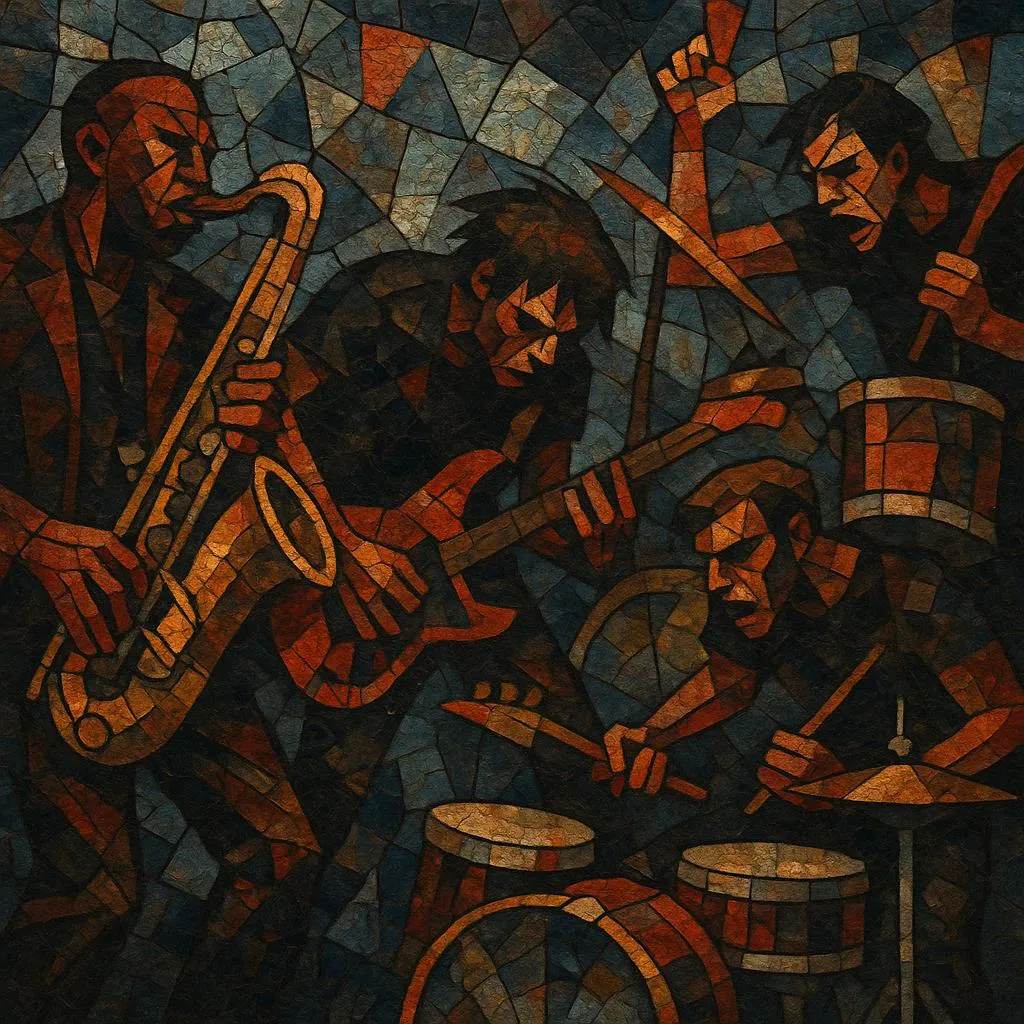
Typically built around saxophone, electric guitar, electric bass, and drum kit, it leans into atonality, sudden dynamic lurches, odd meters, and blast‑beat or punk tempos. Extended techniques (multiphonics, feedback, prepared instruments), sharp stop‑start edits, and collage-like forms are common, producing music that can pivot from spacious abstraction to ferocious walls of sound in seconds.
Where jazz fusion polished virtuosic interplay, jazzcore emphasizes abrasion and urgency while retaining improvisational freedom—placing skronking saxes and freely shifting rhythms inside the body language of punk.
History
Jazzcore emerged in the late 1980s, largely in the United States, as downtown New York’s free‑jazz and no wave communities cross‑pollinated with hardcore punk and noise rock. Players steeped in the vocabularies of free improvisation began adopting punk’s speed, volume, and anti‑polish attitude, using distortion and extreme dynamics while preserving jazz’s spontaneity and interaction.
Through the 1990s, the idiom hardened into a recognizable approach: short, explosive forms alternating with open improvisation; “skronk” saxophone textures against heavily overdriven guitars; and a rhythmic language equally comfortable in swing fragments, odd meters, and blast‑beats. Scenes in Japan and Europe paralleled the New York current, generating touring circuits and small independent labels that championed noise‑leaning jazz and jazz‑leaning hardcore alike.
In the 2000s, jazzcore’s DNA threaded into math‑inclined undergrounds and avant‑metal. Bands embraced through‑composed riff mazes alongside open sections, while saxophones re‑entered heavy music with renewed prominence. Production aesthetics ranged from raw, room‑mic grit to surgical studio edits, but the live ethos remained viscerally physical and improvisation-forward.
Jazzcore persists as a specialized but fertile language, shaping jazz‑metal projects, mathcore’s rhythmic extremity, and noise‑adjacent free improvisation. Its legacy is audible wherever ferocity, freedom, and virtuosity intersect—especially in ensembles that put the saxophone back into heavy amplified contexts without softening either side of the collision.