Your digging level
Description
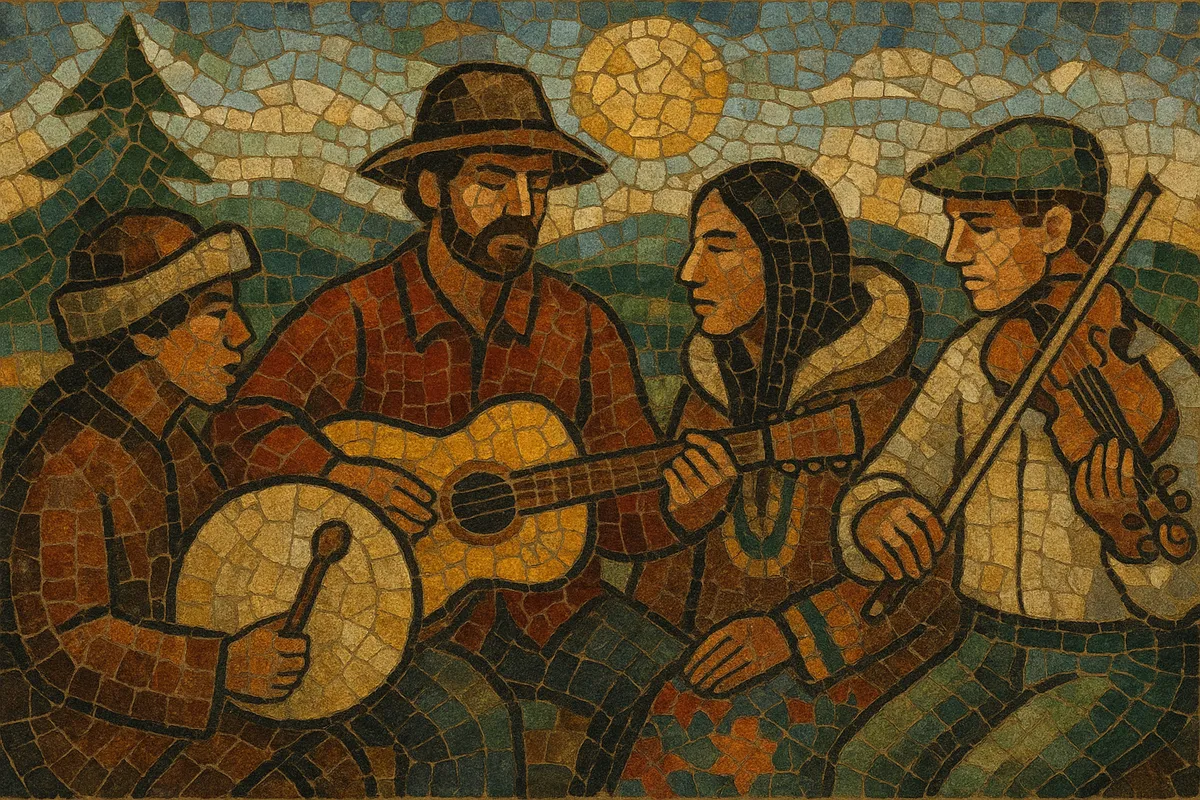
Canadian folk music encompasses the traditional and contemporary songs, dances, and instrumental styles that took shape among Canada’s diverse peoples, including First Nations, Inuit, and Métis communities, French-Canadian settlers, and English-, Scottish-, and Irish-descended populations. It blends Indigenous vocal and drum traditions, French-Canadian call-and-response songs and dance tunes, and Anglo-Celtic ballads, jigs, and reels into a distinctive mosaic.
The genre is marked by strong regional flavors: the driving fiddle music of Cape Breton and the Atlantic provinces; the call-and-response and foot-tapping (podorythmie) of Québécois reels; the social dance and fiddle traditions of the Prairies and the Métis Red River heritage; and the vocal, drum, and throat-singing practices of Arctic Inuit communities. In the 20th century, Canadian singer-songwriters brought these roots into modern folk, shaping a poetic, introspective style known worldwide.
History
Canadian folk music coalesced in the 19th century as Indigenous musical practices interacted with songs and dances brought by French and British settlers. Sea shanties and ballads circulated along the Atlantic, while voyageurs and lumber camps spread call-and-response songs inland. Fiddle-led dance music (reels, jigs, and strathspeys) became central in many communities.
A national folk revival paralleled U.S. and U.K. movements. Coffeehouses and festivals (e.g., Mariposa) nurtured artists who adapted traditional repertoire and cultivated a literary singer-songwriter voice. This era produced internationally influential figures whose work blended local imagery, social commentary, and refined poetry.
Canadian folk diversified: Franco-Canadian ensembles brought tight arrangements and horns to traditional reels; maritime groups popularized sea songs; and Indigenous artists asserted cultural resurgence in folk forms. Singer-songwriters achieved global stature, bridging folk with pop, rock, and jazz while maintaining a distinctly Canadian sense of place.
Today, Canadian folk remains vibrant in festivals and community settings, with renewed interest in Indigenous languages and traditions, collaborative cross-cultural projects, and a thriving roots/indie-folk circuit. Archival work and education have helped preserve regional repertoires while new artists continue to innovate.