Your digging level

For this genre
0/8
🏆
Sign in, then listen to this genre to level up

Description

NL folk (Newfoundland and Labrador folk) is the traditional and popular song-and-dance idiom of Canada’s easternmost province. It blends Irish, English, and Scottish balladry and dance tunes with local sea songs, work chants, and comic narratives shaped by outport life, fishing, seafaring, and communal celebrations.

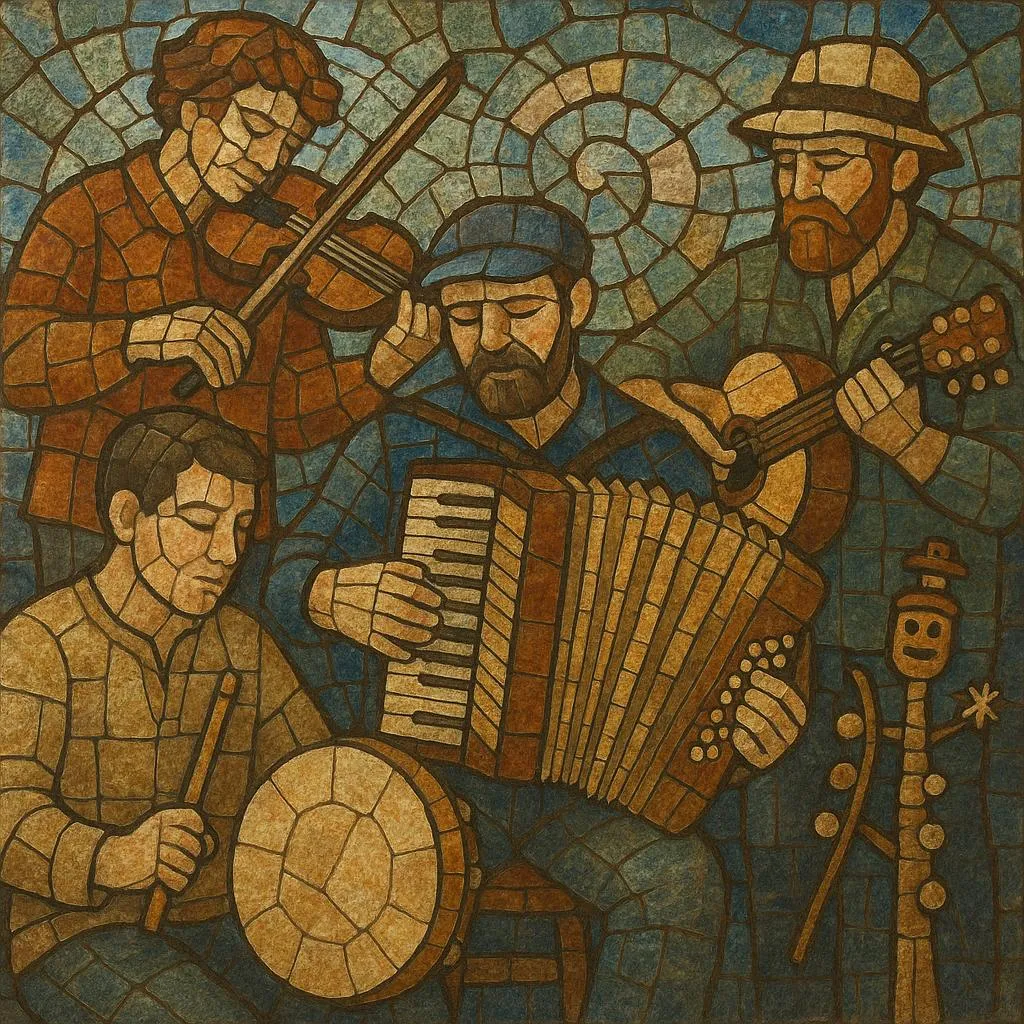
Typical sound features fiddles and diatonic button accordion, backed by guitar, mandolin/bouzouki, bodhrán, spoons, and the region’s iconic “ugly stick.” Reels, jigs, polkas, and waltzes sit alongside narrative ballads and call‑and‑response choruses that invite group singing. Melodies often remain modal (Dorian/Mixolydian), and arrangements range from kitchen‑party acoustic to rock‑energized folk ensembles.


Sources: Spotify, Wikipedia, Discogs, RYM, MB, user feedback and other online sources

History

Early Roots (19th century)

Newfoundland and Labrador’s folk tradition grew from the songs and dance tunes carried by Irish, English (especially West Country), and Scottish settlers in the 18th–19th centuries. In isolated outports, oral transmission kept ballads, sea songs, and dance music alive, while local lyrics and dialect shaped distinct regional variants. House parties (“times”) and community dances fostered a participatory, ensemble-based style with fiddle and accordion at its core.

Documentation and Revival (20th century)

The early–mid 20th century saw a surge of collecting and publication. Gerald S. Doyle’s widely circulated Newfoundland songbooks (beginning in 1927) preserved and popularized local repertoire. Ethnomusicologists such as Kenneth Peacock (Songs of the Newfoundland Outports, 1965) and MacEdward Leach (extensive 1950s recordings) documented hundreds of songs that anchored the canon.

From the late 1960s into the 1970s, a revival intersected with contemporary folk and rock: university scenes and folk clubs thrived; ensembles modernized arrangements without losing dance‑tune drive or communal choruses. The 1970s–80s brought touring groups and national broadcasts that carried NL folk beyond the province.

Popular Breakthrough (1990s–present)

In the 1990s and 2000s, high‑energy ensembles blended traditional sets with pop/rock instrumentation, bringing kitchen‑party exuberance to mainstream stages. Festivals, academic archives (notably at Memorial University), and community sessions continue to sustain the tradition, while younger artists revive field‑collected songs, write new material in local idioms, and arrange tune sets that travel comfortably between intimate pubs and large festivals.

How to make a track in this genre

Core Instrumentation
•   Melody: fiddle and diatonic button accordion carry reels, jigs, and polkas; tin whistle and mandolin/bouzouki add color. •   Rhythm: bodhrán, hand percussion (spoons), foot‑stomps, and the local “ugly stick” supply the pulse; acoustic guitar provides strumming and backbeat. •   Modern blends: add bass, drum kit, and electric/acoustic guitars for folk‑rock energy without overwhelming the tune.
Rhythm, Form, and Groove
•   Tune types: reels and polkas in 2/2 or 2/4; jigs in 6/8; waltzes in 3/4; marching song/shanty feels in 4/4. •   Tempos: jigs/reels commonly 105–125 BPM; singalong choruses slightly slower for clarity. •   Structures: alternate instrumental tune sets (AABB forms are common) with verse–chorus songs. Use call‑and‑response or big gang choruses for communal feel.
Melody and Harmony
•   Modal flavor: favor Dorian and Mixolydian (especially in D/G/A) to sit well on fiddle/accordion. •   Harmony: keep it simple and strong—primarily I–IV–V with occasional ii or flat‑VII in modal contexts. Let drones or pedal tones underpin dance sets. •   Ornamentation: fiddle cuts, rolls, and trebles; accordion bellows accents and grace notes; whistle cuts and taps—borrowed from Irish/Scottish technique.
Lyrics and Storytelling
•   Topics: fishing, boats, storms, outport life, emigration/return, humorous tall tales, toasts, and place‑name pride. •   Diction: sprinkle local turns of phrase and dialect (judiciously) for authenticity; balance humor with pathos. •   Choruses: write big, memorable refrains designed for pub singalongs; use echo lines or easy harmonies.
Arrangement Tips
•   Start with a solo voice or unison melody, then add parts each verse; save the full band for choruses. •   Create medleys: pair a jig with a reel (or two reels) in related keys, modulating for lift near the end. •   Record ambience: capture some room sound or clapping/foot‑stomps to evoke the kitchen‑party atmosphere.
Performance Practice
•   Encourage audience participation (call‑backs, claps, step‑dance breaks). •   Keep the backline supportive—rhythm must serve danceability and chorus clarity. •   Live, end sets with accelerating finales or a return to the catchiest refrain for a rousing close.

Top tracks

Locked
Share your favorite track to unlock other users’ top tracks

Upcoming concerts

in this genre
Influenced by
Has influenced

Download our mobile app

Get the Melodigging app and start digging for new genres on the go
© 2026 Melodigging
Melodding was created as a tribute to Every Noise at Once, which inspired us to help curious minds keep digging into music's ever-evolving genres.
Buy me a coffee for Melodigging