Your digging level
Description
Folk québécois is the traditional folk music of French-speaking Quebec, shaped by centuries of oral transmission among settlers, voyageurs, and lumber-camp singers. It blends French balladry and dance forms with strong Celtic (Irish and Scottish) fiddle traditions and local North American adaptations.
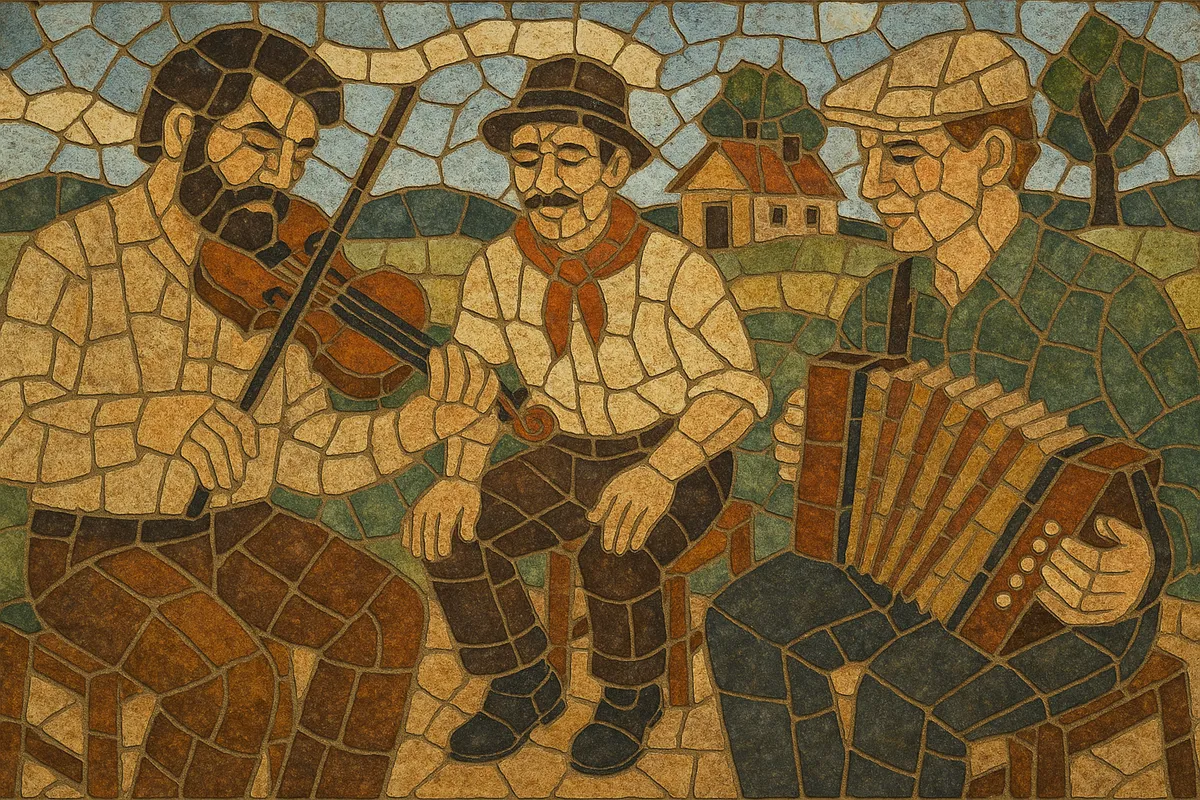
The sound is driven by fiddle and diatonic button accordion, anchored by podorythmie (seated foot-tapping used as percussion), call-and-response chansons à répondre, and lively dance tunes such as reels, jigs, and quadrilles. Lyrics are typically in French (often with joual dialect), celebrating village life, work, love, humor, and legends, and often feature mouth-music refrains (turlutte).
History
Folk québécois grew from the repertoires of French settlers in New France, who brought ballads, dance tunes, and call-and-response songs. In the 18th and 19th centuries, intense contact with Irish and Scottish immigrants infused the music with Celtic fiddle styles, reels, and jigs. Work contexts—voyageurs’ river travel and bûcherons’ (lumberjacks’) camps—helped spread chansons à répondre and reinforced rhythmic practices like podorythmie to replace scarce percussion.
The tradition continued in family gatherings, kitchens, parish halls, and veillées. Early stars such as La Bolduc popularized turlutte (mouth music) and humorous songs on record and radio, bridging vernacular tradition with mass media. Dances (rigodon, quadrille, contredanse, waltz) and step-dancing persisted alongside fiddle and accordion dominance.
The 1960s–70s folk revival in Quebec professionalized the style. Groups like Le Rêve du Diable and La Bottine Souriante modernized ensemble arrangements, added brass and piano at times, and toured internationally. The revival intersected with a rising Quebec cultural identity and the chanson québécoise movement, which borrowed narrative and melodic elements from trad repertory.
A new generation—Le Vent du Nord, Genticorum, De Temps Antan—has balanced archival research with new compositions, tight harmony singing, and virtuosic podorythmie. Festivals (e.g., Mémoire et Racines), community sessions (veillées), and dedicated labels have sustained a vibrant ecosystem. The music thrives both as participatory dance culture and as concert music, influencing néo-trad fusions and crossovers.