Genres
Artists
Albums
Make Music
Sign in
Sign in
Artists
Jazz
Artists
Jazz
Tony Bennett
1952–2018
·
57 albums
Listen
4
/5
Genres
Queer Country
Queer country is a contemporary movement within country and Americana that centers LGBTQ+ voices, stories, and aesthetics while keeping strong ties to classic country songwriting, instrumentation, and vocal styles. Musically, it often draws from traditional country, outlaw country, honky-tonk, and folk-country, but its defining feature is lyrical perspective: songs about queer love, gender expression, chosen family, rural/working-class life, and the tension between tradition and belonging. Rather than being a single fixed sound, queer country is best understood as a scene and cultural re-framing of country music—one that challenges the genre’s historic heteronormativity while celebrating its narrative power and community roots.
Discover
Listen
Lilith
Lilith is a mood-driven, internet-native microgenre that blends dark, feminine alternative pop with elements of trip hop, dream pop, witch house, and ethereal wave. It favors breathy or intimate vocals drenched in reverb, slow to mid-tempo grooves, spectral pads, and cinematic, minor-key harmonies that evoke occult, gothic, or mythic imagery. The overall sound is bass-forward yet gauzy: sub-heavy 808s or dusty breakbeats sit under shimmering guitars, distant choirs, and textural synths. Lyrically, Lilith leans into vulnerability, power, hauntings, and desire—frequently framed through confessional writing and ritual or nocturnal symbolism. It’s less a scene tied to a single city than a streaming-era aesthetic, cohering through playlists and social media communities.
Discover
Listen
Pov: Indie
"pov: indie" is a social-media-native microstyle built around short, cinematic indie-pop/indie-rock snippets designed to accompany a first-person (POV) narrative. Instead of being defined by a single new musical technique, it is defined by context: the music is chosen or written to feel like the soundtrack to a specific moment (a crush, a late-night walk, moving to a new city, seasonal nostalgia). Sonically it typically uses bright but soft guitars or synths, intimate vocals, simple memorable hooks, and production that reads clearly on phone speakers. The emotional tone is often wistful, tender, and “coming-of-age,” with lyrics that can be understood quickly in a 10–30 second clip.
Discover
Listen
Classify
Classify is a streaming-era microgenre that blends light classical technique with contemporary pop repertoire, typically presented as unobtrusive instrumental covers. It prioritizes soft dynamics, gentle tempos, and intimate recording to create a calm, elegant backdrop suitable for studying, working, or events. Most arrangements are for solo piano, string quartet, cello/piano duos, or small chamber ensembles. Harmonies remain diatonic and consonant, melodies are clearly voiced, and textures favor arpeggios, ostinati, and sustained legato lines. The overall aesthetic borrows from modern classical and new age moods while retaining the familiarity of pop song forms.
Discover
Listen
Souldies
Souldies is a modern revival of classic lowrider “oldies” soul—slow, tender ballads rooted in 1960s and early-’70s sweet soul and doo‑wop aesthetics, reimagined by a new generation of largely Chicano/Latinx artists in Southern California. Characterized by warm, analog-leaning production, mellow backbeats, honeyed vocal harmonies, and heart‑on‑sleeve lyricism, the style favors mid‑slow tempos, tape‑like saturation, spring/plate reverb, and minimalist yet expressive arrangements. English and Spanish (or Spanglish) lyrics often explore love, longing, devotion, and cruising/lowrider culture. Souldies sits at the intersection of classic soul, rhythm & blues, northern soul selections, and Latin soul, offering a contemporary, community‑centered sound that feels both timeless and newly personal.
Discover
Listen
Contemporary Jazz
Contemporary jazz is an umbrella term for post-1970 jazz that absorbs advances from post‑bop, fusion, free jazz, modern classical, and global traditions while retaining the core values of improvisation and interaction. It favors a flexible rhythmic feel (from straight‑8 to polyrhythms), modal and post‑tonal harmony, and a producer’s ear for space, texture, and sound design. Unlike earlier era labels tied to a single movement, contemporary jazz denotes a living, evolving practice. It ranges from intimate acoustic trios to electronics‑enhanced ensembles, often using odd meters, ambient timbres, and song forms that move beyond the 32‑bar standard. The result is a wide spectrum—from lyrical, ECM‑influenced spaciousness to groove‑forward, rhythmically intricate music influenced by funk and world traditions.
Discover
Listen
Post-Bop
Post-bop is a modern jazz style that emerged in the early-to-mid 1960s as a synthesis of bebop, hard bop, modal jazz, cool jazz, third stream ideas, and the experimental impulses of the avant‑garde. It typically features acoustic small ensembles (often trumpet, saxophone, piano, bass, and drums) interacting with highly flexible time, non-functional or modal harmony, and motivic development rather than relying strictly on bebop chord cycles. Its sound balances structure and freedom: forms are clearly composed and often intricate, but improvisers stretch time feels, reharmonize on the fly, and use advanced harmonic colors such as quartal voicings, pedal points, and chromatic planing. Canonical touchstones include Miles Davis’s mid‑’60s Second Great Quintet (e.g., E.S.P., Nefertiti), Wayne Shorter’s Speak No Evil, Herbie Hancock’s Maiden Voyage, Andrew Hill’s Point of Departure, and many mid‑’60s Blue Note recordings that pushed beyond hard bop.
Discover
Listen
Pop
Pop is a broad, hook-driven style of popular music designed for wide appeal. It emphasizes memorable melodies, concise song structures, polished vocals, and production intended for radio, charts, and mass media. While pop continually absorbs elements from other styles, its core remains singable choruses, accessible harmonies, and rhythmic clarity. Typical forms include verse–pre-chorus–chorus, frequent use of bridges and middle-eights, and ear-catching intros and outros. Pop is not defined by a single instrumentation. It flexibly incorporates acoustic and electric instruments, drum machines, synthesizers, and increasingly digital production techniques, always in service of the song and the hook.
Discover
Listen
Easy Listening
Easy listening is a lush, melodic, and unobtrusive style of popular orchestral music designed to be pleasant in the foreground and effortless in the background. It favors smooth textures, lyrical melodies, and gentle rhythms over virtuosic display or dense complexity. Typical arrangements feature string sections, woodwinds, soft brass, vibraphone, harp, piano, subtle Latin or light swing percussion, and sometimes wordless choirs. Repertoire often consists of standards, film and television themes, and instrumental covers of contemporary hits, presented with polished studio production and wide stereo imaging. The mood ranges from romantic and sentimental to breezy and exotic, prioritizing warmth, clarity, and relaxed pacing. Improvisation, if present, is restrained, with harmony that leans on jazzy extensions while staying consonant and approachable.
Discover
Listen
Traditional Pop
Traditional pop is the pre–rock and roll mainstream of American popular song, centered on the Great American Songbook and the crooner/orchestral style that dominated radio, records, and film musicals from the 1930s through the 1950s. It favors memorable melodies, elegant lyrics (often about romance), and lush arrangements for strings, woodwinds, and big band rhythm sections. Singers use close‑mic "crooning" to deliver expressive, legato phrasing over jazz‑tinged harmonies and steady, unhurried grooves. Typical forms include the 32‑bar AABA standard, with sophisticated but accessible harmony (secondary dominants, ii–V–I cycles, tasteful modulations) and an emphasis on interpretation—how the vocalist shades timing, dynamics, and diction to make a familiar song feel personal.
Discover
Listen
Adult Standards
Adult standards is a song-based popular style and later radio format centered on the Great American Songbook and pre-rock era pop. It emphasizes sophisticated vocal performances, memorable melodies, and lush arrangements drawn from Broadway, Hollywood musicals, big bands, and jazz-influenced traditional pop. Typical recordings feature rich orchestration (strings, woodwinds, and brass), a polished rhythm section, and crooner-style vocals delivered with close-mic intimacy. Harmonies often include jazz chords, secondary dominants, and modulations, supporting elegant, urbane lyrics that focus on love, longing, and everyday romance. Although it predates rock ’n’ roll in repertoire, adult standards also encompasses later revivals and reinterpretations by contemporary singers who keep the classic songbook alive through modern recordings and live performances.
Discover
Listen
Swing
Swing is a jazz style centered on a buoyant, danceable groove created by a walking bass, four-to-the-bar rhythm guitar, a backbeat emphasis on 2 and 4, and a lilted “swung” eighth-note feel. Typically performed by big bands (saxes, trumpets, trombones, and a rhythm section) as well as small combos, it balances written arrangements with improvised solos. Hallmarks include call-and-response between horn sections, riff-based melodies, shout choruses that build intensity near the end of an arrangement, and rich sectional voicings grounded in blues language and ii–V–I harmonic motion. Tempos range from medium to brisk, serving social dances like the Lindy Hop and Jitterbug. Swing’s expressive phrasing, dance-floor focus, and sophisticated arranging made it the dominant popular music of the late 1930s and early 1940s.
Discover
Listen
Vocal Jazz
Vocal jazz is a jazz tradition in which the human voice is treated as an instrument—matching the phrasing, articulation, and timbral nuance of horns or piano. Singers often improvise melodically and rhythmically, including using scat singing (nonsense syllables) to emulate instrumental solos. At the same time, many vocal‑jazz performances favor traditional, pop‑leaning song structures and clear lyric delivery, reducing the overall role of extended improvisation compared with small‑group instrumental jazz. Repertoires frequently draw from Tin Pan Alley and Broadway standards (the Great American Songbook), rendered with swing, ballad, or Latin feels.
Discover
Listen
Big Band
Big band is a large-ensemble style of jazz and popular dance music built around brass, reed, and rhythm sections playing arranged parts. Typical instrumentation includes five saxophones (often doubling clarinet/flute), four trombones, four trumpets, and a rhythm section of piano, guitar, upright bass, and drum set. The music emphasizes swing rhythms, call-and-response between sections, riff-based writing, and dramatic shout choruses, while leaving space for improvised solos. Born in American ballrooms and theaters, big band became the sound of the Swing Era, providing both music for dancing and a platform for sophisticated arranging and orchestration that shaped much of 20th‑century jazz and popular music.
Discover
Listen
Standards
Standards refers to the shared core repertoire of widely known songs in American popular music, especially those from the Great American Songbook. These pieces became "standards" because they have been performed, recorded, and reinterpreted across decades by countless singers and jazz instrumentalists. Typically originating from Tin Pan Alley, Broadway, and Hollywood films of the early–mid 20th century, standards are marked by memorable melodies, refined lyric craft, and harmonically rich progressions that invite interpretation and improvisation. Many use 32‑bar song forms (AABA or ABAC), employ circle‑of‑fifths motion, secondary dominants, and occasional key changes, and work equally well as ballads or swinging uptempo pieces. Today, standards function as a common language for jazz and traditional pop musicians, anchoring jam sessions, vocal recitals, and crossover projects while continuing to inspire new arrangements and recordings.
Discover
Listen
Jazz
Jazz is an improvisation-centered music tradition that emerged from African American communities in the early 20th century. It blends blues feeling, ragtime syncopation, European harmonic practice, and brass band instrumentation into a flexible, conversational art. Defining features include swing rhythm (a triplet-based pulse), call-and-response phrasing, blue notes, and extended harmonies built on 7ths, 9ths, 11ths, and 13ths. Jazz is as much a way of making music—spontaneous interaction, variation, and personal sound—as it is a set of forms and tunes. Across its history, jazz has continually hybridized, from New Orleans ensembles and big-band swing to bebop, cool and hard bop, modal and free jazz, fusion, and contemporary cross-genre experiments. Its influence permeates global popular and art music.
Discover
Listen
Blues
Blues is an African American musical tradition defined by expressive "blue notes," call-and-response phrasing, and a characteristic use of dominant-seventh harmony in cyclical song forms (most famously the 12‑bar blues). It is as much a feeling as a form, conveying sorrow, resilience, humor, and hard-won joy. Musically, blues commonly employs the I–IV–V progression, swung or shuffled rhythms, and the AAB lyric stanza. Melodies lean on the minor/major third ambiguity and the flattened fifth and seventh degrees. Core instruments include voice, guitar (acoustic or electric), harmonica, piano, bass, and drums, with slide guitar, bends, and vocal melismas as signature techniques. Over time the blues has diversified into regional and stylistic currents—Delta and Piedmont country blues, urban Chicago and Texas blues, West Coast jump and boogie-woogie—while profoundly shaping jazz, rhythm & blues, rock and roll, soul, funk, and much of modern popular music.
Discover
Listen
Electronic
Electronic is a broad umbrella genre defined by the primary use of electronically generated or electronically processed sound. It encompasses music made with synthesizers, drum machines, samplers, computers, and studio/tape techniques, as well as electroacoustic manipulation of recorded or synthetic sources. The genre ranges from academic and experimental traditions to popular and dance-oriented forms. While its sonic palette is rooted in electricity and circuitry, its aesthetics span minimal and textural explorations, structured song forms, and beat-driven club permutations. Electronic emphasizes sound design, timbre, and studio-as-instrument practices as much as melody and harmony.
Discover
Listen
Ballad
A ballad is a narrative song form that tells a story in simple, singable stanzas, traditionally using quatrains in ballad meter (alternating lines of iambic tetrameter and trimeter with an ABCB rhyme scheme). Ballads typically recount dramatic events—love, betrayal, tragedy, murder, the supernatural—or notable historical incidents. Early ballads were often sung unaccompanied or with minimal accompaniment, carried by memorable, modal melodies and refrains that aided oral transmission. Over time, the term also came to describe slow, sentimental popular songs in the 20th century, but the core of the genre remains the storytelling focus and strophic, easily learned structure. Ballads are central to the English- and Scots-language folk traditions, migrated to North America where they flourished in Appalachian singing, and continue to be performed, adapted, and reinterpreted in contemporary folk and roots scenes.
Discover
Listen
Christmas Music
Christmas music is a body of sacred and secular repertoire associated with the celebration of Christmas and the winter season. It spans medieval carols, liturgical hymns, and oratorios through to 20th‑century Tin Pan Alley standards, crooner ballads, jazz‑swing arrangements, pop hits, gospel renditions, and contemporary acoustic or R&B interpretations. Stylistically it is diverse but often shares warm, nostalgic melodies, memorable choruses, and lyrics that reference the Nativity story, peace and goodwill, family gatherings, winter imagery, and figures like Santa Claus. Sleigh bells, choirs, strings, brass, and glockenspiel/celesta are common coloristic touches, while harmony ranges from simple I–IV–V progressions to richer jazz voicings. Its seasonal recurrence has made it a cultural tradition that reappears annually across radio, streaming, film, advertising, and public spaces.
Discover
Listen
Classical
Classical music is the notated art-music tradition of Europe and its global descendants, characterized by durable forms, carefully codified harmony and counterpoint, and a literate score-based practice. The term “classical” can refer broadly to the entire Western art-music lineage from the Medieval era to today, not just the Classical period (c. 1750s–1820s). It privileges long-form structures (such as symphonies, sonatas, concertos, masses, and operas), functional or modal harmony, thematic development, and timbral nuance across ensembles ranging from solo instruments to full orchestras and choirs. Across centuries, the style evolved from chant and modal polyphony to tonal harmony, and later to post-tonal idioms, while maintaining a shared emphasis on written notation, performance practice, and craft.
Discover
Listen
Show all 21 genres
Albums
2018
Love Is Here to Stay
Tony Bennett & Diana Krall with The Bill Charlap Trio
Jazz
2016
2
/5
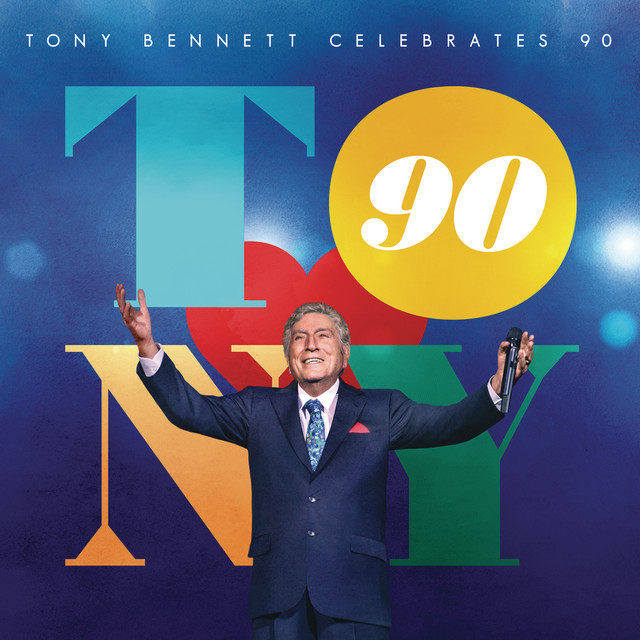
Tony Bennett Celebrates 90
k.d. lang
Queer Country
Classical
Jazz
2015
The Silver Lining: The Songs of Jerome Kern
Tony Bennett & Bill Charlap
Jazz
Pop
Post-Bop
2012
Viva Duets
Tony Bennett
Jazz
Vocal Jazz
2011
Duets II
Tony Bennett
Jazz
Standards
Vocal Jazz
2008
A Swingin’ Christmas
Tony Bennett featuring The Count Basie Big Band
Big Band
Christmas Music
Easy Listening
2006
Duets: An American Classic
Tony Bennett
Jazz
Standards
Vocal Jazz
2004
The Art of Romance
Tony Bennett
Big Band
Easy Listening
Jazz
2002
A Wonderful World
Tony Bennett & k.d. lang
Big Band
Jazz
2002
Hallmark Presents Christmas with Tony Bennett and the London Symphony Orchestra
Tony Bennett and the London Symphony Orchestra
Christmas Music
2001
Playin’ With My Friends: Bennett Sings the Blues
Tony Bennett
Blues
Jazz
Pop
1999
Bennett Sings Ellington: Hot & Cool
Tony Bennett
Contemporary Jazz
Jazz
Swing
1999
Sings Rodgers & Hart Songs
Tony Bennett
Classical
Jazz
Queer Country
1998
The Playground
Tony Bennett
Jazz
Traditional Pop
Vocal Jazz
1997
On Holiday
Tony Bennett
Jazz
Vocal Jazz
1995
Here’s to the Ladies
Tony Bennett
Jazz
Pop
Vocal Jazz
1995
Something
Tony Bennett
Vocal Jazz
1994
Tony Bennett & Count Basie Big Band
Tony Bennett & Count Basie Big Band
Classical
Jazz
Queer Country
1993
Steppin’ Out
Tony Bennett
Jazz
Pop
1992
Perfectly Frank
Tony Bennett
Easy Listening
Jazz
Vocal Jazz
1990
Astoria: Portrait of the Artist
Tony Bennett
Vocal Jazz
1987
Bennett / Berlin
Tony Bennett
Vocal Jazz
1986
The Art of Excellence
Tony Bennett
Jazz
1977
Together Again
Tony Bennett and Bill Evans
Jazz
1977
Tony Bennett / The McPartlands And Friends Make Beautiful Music
Tony Bennett
Jazz
Pop
1975
Life Is Beautiful
Tony Bennett
Jazz
Pop
Traditional Pop
1975
The Tony Bennett / Bill Evans Album
Tony Bennett and Bill Evans
Jazz
Vocal Jazz
1973
Listen Easy
Tony Bennett
Easy Listening
Jazz
Pop
1972
The Good Things in Life
Tony Bennett
Pop
Vocal Jazz
1972
Summer of ’42
Tony Bennett
Electronic
Pop
Vocal Jazz
1971
Love Story
Tony Bennett
Jazz
Pop
1970
Tony Sings the Great Hits of Today
Tony Bennett
Jazz
Pop
Vocal Jazz
1968
Yesterday I Heard the Rain
Tony Bennett
Jazz
Pop
Vocal Jazz
1968
Snowfall: The Tony Bennett Christmas Album
Tony Bennett
Christmas Music
Jazz
Pop
1967
For Once in My Life
Tony Bennett
Vocal Jazz
1966
Movie Song Album
Tony Bennett
Jazz
Vocal Jazz
1966
A Time for Love
Tony Bennett
Ballad
Jazz
Pop
1965
If I Ruled the World: Songs for the Jet Set
Tony Bennett
Blues
Jazz
1964
Who Can I Turn To
Tony Bennett
Easy Listening
Jazz
Vocal Jazz
1964
When Lights Are Low
Tony Bennett with The Ralph Sharon Trio
Jazz
Pop
Vocal Jazz
1964
The Many Moods of Tony
Tony Bennett
Jazz
Pop
Vocal Jazz
1963
I Wanna Be Around
Tony Bennett
Jazz
Traditional Pop
1962
At Carnegie Hall Recorded Live June 9, 1962
Tony Bennett with Ralph Sharon and His Orchestra
Ballad
Jazz
Pop
1962
I Left My Heart in San Francisco
Tony Bennett
Jazz
Pop
Traditional Pop
1961
I’ve Grown Accustomed to Her Face
Tony Bennett, Al Tornello
Big Band
Jazz
1961
Tony Bennett Sings for Two
Tony Bennett
Jazz
Vocal Jazz
1960
Sings a String of Harold Arlen
Tony Bennett
Pop
1960
Alone Together
Tony Bennett
Easy Listening
Jazz
Pop
1959
Count Basie and His Orchestra Swings / Tony Bennett Sings
Basie / Bennett
Big Band
Jazz
Vocal Jazz
1959
Hometown, My Town
Tony Bennett
Pop
1958
Long Ago and Far Away
Tony Bennett with Frank DeVol and His Orchestra
Jazz
Pop
Vocal Jazz
1958
Blue Velvet
Tony Bennett
Pop
Traditional Pop
Vocal Jazz
1957
Tony
Tony Bennett
Jazz
1957
The Beat of My Heart
Tony Bennett
Jazz
1955
Cloud 7
Tony Bennett featuring Chuck Wayne
Jazz
1955
Alone at Last with Tony Bennett
Tony Bennett
Pop
Vocal Jazz
1952
Because of You
Tony Bennett
Big Band
Jazz
Vocal Jazz
Similar artists
4
/5
Frank Sinatra
Big Band
Jazz
Swing
1
/5
Various Artists
Afro-Funk
Alternative Rock
Ambient
4
/5
Dean Martin
Big Band
Easy Listening
Adult Standards
4
/5
Nat King Cole
Swing
Vocal Jazz
Adult Standards
4
/5
Billie Holiday
Harlem Renaissance
Jazz
Swing
4
/5
Louis Armstrong
Dixieland
Harlem Renaissance
Jazz Trumpet
5
/5
Hans Zimmer
Country Dawn
Soundtrack
Classical
4
/5
Bing Crosby
Adult Standards
Christmas Music
Easy Listening
3
/5
Keely Smith
Swing
Big Band
Vocal Jazz
3
/5
Tommy Dorsey
Tin Pan Alley
Dixieland
Adult Standards
Download our mobile app
Get the Melodigging app and start digging for new genres on the go
Download on the App Store
Get it on Google Play
© 2026 Melodigging
Give feedback
Legal
Melodding was created as a tribute to
Every Noise at Once
, which inspired us to help curious minds keep digging into music's ever-evolving genres.