Your digging level
Description
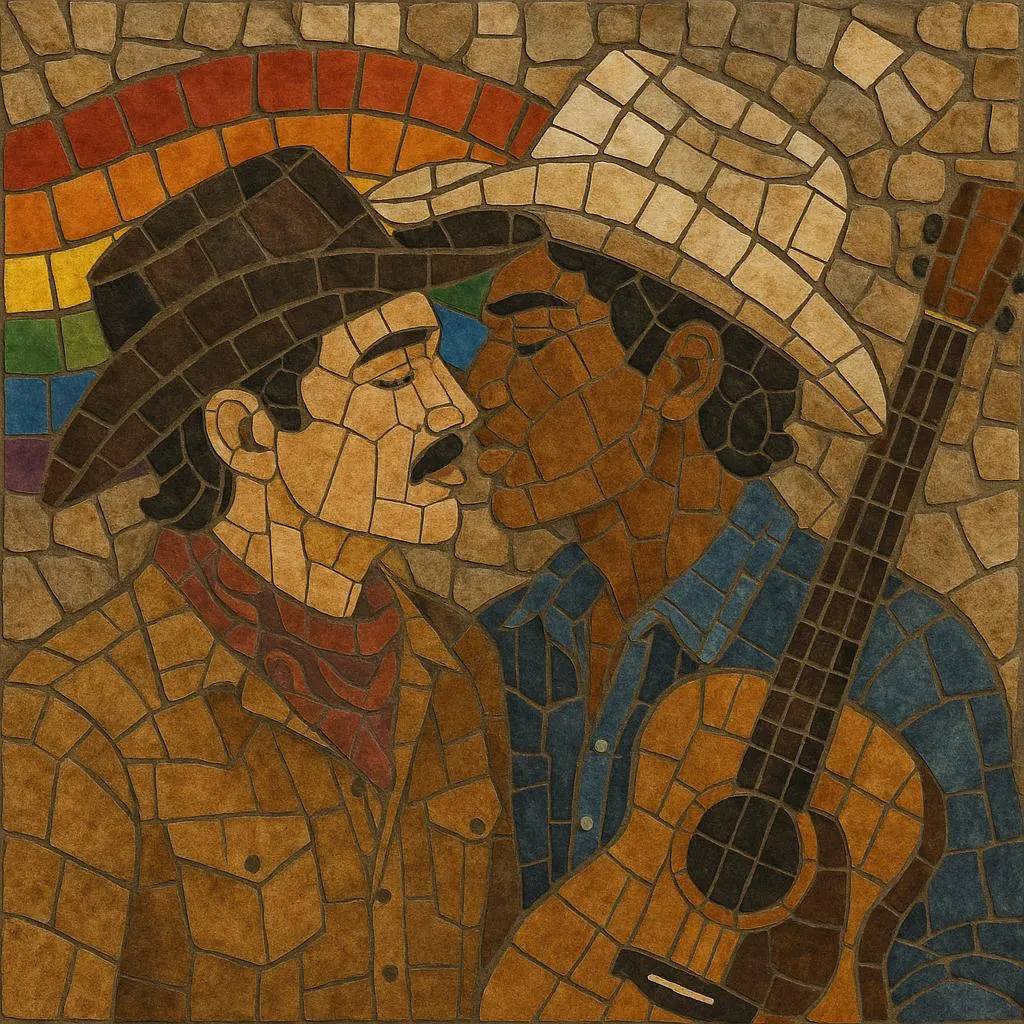
Queer country is a contemporary movement within country and Americana that centers LGBTQ+ voices, stories, and aesthetics while keeping strong ties to classic country songwriting, instrumentation, and vocal styles.
Musically, it often draws from traditional country, outlaw country, honky-tonk, and folk-country, but its defining feature is lyrical perspective: songs about queer love, gender expression, chosen family, rural/working-class life, and the tension between tradition and belonging.
Rather than being a single fixed sound, queer country is best understood as a scene and cultural re-framing of country music—one that challenges the genre’s historic heteronormativity while celebrating its narrative power and community roots.


History
Country music has long contained coded or marginalized queer presence, but those stories were often indirect due to industry and social pressures.
In the 2010s, independent country and Americana infrastructure (small labels, festivals, DIY touring, streaming) made it easier for openly LGBTQ+ artists to build audiences without mainstream Nashville gatekeeping.
The term "queer country" became a useful umbrella for audiences, press, and promoters to describe a set of artists and events centered on LGBTQ+ country music, helping the scene cohere across regions.
By the 2020s, queer country gained broader cultural visibility through high-profile releases, touring circuits, and increased media coverage, while still largely operating through indie channels and Americana networks.
Use a classic country palette: acoustic guitar and/or Telecaster-style electric guitar, pedal steel or lap steel, fiddle, bass, and brushed drums.
Additions like banjo, mandolin, or harmonica work well when you want a more folk or roots-forward sound.
Write in common country feels: 2/4 or 4/4 with a train beat, a shuffling honky-tonk groove, or a slow ballad.
Keep the pocket steady and vocal-forward; most arrangements leave space for the lyric to land clearly.
Rely on functional, song-first progressions (I–IV–V, vi–IV–I–V, I–V–vi–IV) with occasional secondary dominants for lift.
Melodies typically sit comfortably in the singer’s conversational range, with memorable hooks at phrase ends.
Prioritize narrative clarity and detail (place, time, work, weather, small-town scenes), but tell them from explicitly queer perspectives.
Common approaches include: coming-out and self-definition stories, queer love songs in country settings, gender exploration, chosen family, church/small-town tension, and reclaiming rural identity.
A direct, emotional vocal delivery is central; natural accents and country phrasing are welcome.
On stage, lean into country tradition (band interplay, steel/fiddle featured lines) while presenting queer visibility confidently through storytelling, fashion, and audience engagement.
For a traditional sound, use warm, organic recording with minimal tuning and audible room tone.
For a modern crossover feel, keep the country core but tighten drums/bass and add pop hooks—still letting the lyric remain the focal point.

Top albums