Genres
Artists
Albums
Make Music
Sign in
Sign in
Artists
Breakcore
Artists
Breakcore
Starjunk 95
2021–2025
·
4 albums
Listen
3
/5
Genres
Hypertrance
Hypertrance is an internet-native fusion of modern trance and the maximalist, ultra-glossy aesthetics of the hyperpop ecosystem. It emphasizes euphoric supersaw leads, soaring pads, huge risers, and hard side‑chained kick–bass grooves, while borrowing hyperpop’s pitch‑shifted vocals, clipped loudness, and playful, self‑aware sound design. Typical tempos sit around 140–160 BPM with a 4/4 pulse, bright major‑key hooks, and breakdowns that explode into short, high‑impact drops. Producers frequently combine trance signifiers (gated pads, anthemic builds, arpeggios, 303/acid flourishes) with internet-era techniques (OTT compression, aggressive clipping, formant play, nightcore‑style vocal edits). The result feels at once nostalgic and futuristic: a rave ecstasy updated for the post‑SoundCloud, post‑PC Music generation.
Discover
Listen
Rally House
Rally house is a high-energy, festival-oriented strain of house music engineered to rally large crowds in arenas, stadiums, and mainstage settings. It blends the punchy four-on-the-floor of big-room and electro house with anthem-like melodic hooks, noisy risers, and explosive drops meant to trigger mass call-and-response. Typical productions sit around 126–130 BPM, feature supersaw leads, hard-hitting kicks with strong sidechain pumping, and dramatic, tension-building breakdowns that bloom into maximal, chant-ready drops. Producers frequently use crowd chants, claps, brass stabs, snare rolls, white-noise sweeps, and simple, triumphant chord progressions to maximize immediacy and impact.
Discover
Listen
Gaming Edm
Gaming EDM is a bright, hook‑driven branch of electronic dance music tailored for online gaming, streaming, and creator culture. It blends festival‑ready drops and sidechained supersaws with melodic, video‑game–friendly timbres (arpeggiated leads, chip/8‑bit flourishes) and clean royalty-friendly production that sits well under voice chat or commentary. The songs are typically concise, high‑energy, and instantly catchy, engineered to loop well on streams and to sync to highlight reels and esports content.
Discover
Listen
Shib
Shib is an internet-born microgenre that blends lo‑fi hip hop, cloud rap, and alt‑R&B sensibilities into short, emotionally direct songs. It favors intimate vocals (sung, whispered, or half‑rapped), warm and dusty textures, and compact forms optimized for streaming and social media discovery. Typical productions feature looped guitar or piano motifs, soft trap drums, vinyl crackle or room noise, and reverbs/delays that create a late‑night, confessional atmosphere. Lyrically, shib gravitates toward nostalgia, heartbreak, and private reflection—music made to sound like messages recorded in a bedroom at 2 a.m.
Discover
Listen
Speedrun
Speedrun is a gaming-adjacent EDM microgenre designed for adrenaline, focus, and momentum. It blends hyper-energetic drops with catchy, game-like melodies and rapid switch‑ups that mirror the pace and tension of timed gameplay. Typically sitting between 140–175+ BPM, the style pivots between half‑time dubstep weight, electro/complextro riffing, glitchy fills, and drum & bass acceleration. Producers favor bright, synthetic leads (often with chiptune flourishes), tightly sidechained supersaws, and animated bass design that stays clean and punchy for streaming. The mood is triumphant, high‑octane, and “level‑up” cinematic—made to keep speedrunners and viewers locked in.
Discover
Listen
Ukg Revival
UKG revival refers to the modern resurgence of UK garage (UKG) aesthetics after the style’s early‑2000s decline. It recasts classic 2‑step swing, rubbery sub‑bass, chopped R&B vocals, and organ/piano stabs with contemporary production, club formats, and pop sensibilities. Typical tracks sit around 128–135 BPM, with syncopated, skippy drum programming and swung hi‑hats, soulful chord colors, and prominent, rolling basslines. The revival often blends speed‑garage grit, bassline energy, and house polish, while borrowing contemporary topline writing and social‑media‑driven hooks for wider crossover appeal. Culturally, the movement connects today’s audiences to late‑’90s/early‑’00s UKG heritage (pirate radio, MC culture, and champagne‑garage euphoria) through fresh artists, labels, and events that foreground inclusivity, DIY distribution, and festival‑ready anthems.
Discover
Listen
Vaporwave
Vaporwave is an internet-born microgenre and visual aesthetic that repurposes late‑20th‑century commercial sound—mu zak, smooth jazz, soft rock, synth‑pop, city pop, and corporate training tapes—into hazy, slowed, and looped collages. Its sound foregrounds pitched‑down samples, heavy reverb, tape hiss, vinyl crackle, and dreamy pads to evoke a mood between satire and sincere nostalgia. Beyond music, vaporwave is inseparable from its graphic language: Greco‑Roman busts, Japanese text, retro operating systems, chrome logos, palm trees, neon gradients, and “mall culture” architecture. The result feels like a haunted shopping mall: part critique of consumer capitalism, part wistful memory of media and retail spaces from the 1980s–2000s. Tempos are typically slow (roughly 60–90 BPM), harmonies tend toward lush seventh and extended chords, and rhythms range from barely perceptible loops to minimal, gated drum programming. Many tracks are short, vignette‑like studies in texture and mood.
Discover
Listen
Seapunk
Seapunk is an early-2010s internet-born microgenre and multimedia aesthetic that fuses retro-rave sonics with Y2K-era, ocean-themed visuals. Its sound blends 1990s house and trance riffs, chopped-and-screwed and vaporwave-adjacent sampling, splashy 808/909 drums, and glossy, “watery” synth textures. The visual world is as important as the music: turquoise/teal palettes, 3D chrome dolphins, coral gradients, pixel seas, and GIF-era net art. Together, these define a playful, nostalgic, and cyber-aquatic identity that celebrates both rave euphoria and web-native DIY culture.
Discover
Listen
Kawaii Future Bass
Kawaii future bass is a Japanese-born microgenre that blends the sidechained, chord-heavy drops of future bass with the cheery melodies, cute sound design, and pop sensibilities of J-pop, anime music, and game-inspired chiptune. It typically features bright supersaw stacks, bell and mallet plucks, high-pitched vocal chops (often from Vocaloid or J-pop/utaite sources), and sugary melodies in major or Lydian modes. Drums follow a half-time trap groove with crisp snares on beat three, while heavy sidechain compression creates a buoyant, bouncy feel. The aesthetic emphasizes “kawaii” (cute) culture—pastel tones, playful samples, and whimsical ear-candy—resulting in upbeat, feel-good tracks that are as much about personality and texture as they are about harmony and rhythm.
Discover
Listen
Vapor Twitch
Vapor twitch is a glossy, internet-born strain of indie electronic that fuses the dreamy nostalgia of vaporwave and chillwave with the punchy, "twitchy" rhythms of trap-leaning future bass. Expect airy pads, pastel synth palettes, chopped-and-pitched vocal bits, and sidechained chords that "breathe" against half-time 808 drums. Where vaporwave leans into looped détournement, vapor twitch favors original songwriting and drop-centric arrangements, keeping the vapor-era wistfulness but aiming for a more kinetic, festival-ready glow.
Discover
Listen
Chill Breakcore
Chill breakcore is a micro-style that softens the jagged edges of classic breakcore with lush ambience, dreamy pads, and emotive melodies. It retains the genre’s telltale chopped Amen breaks, granular edits, and breakneck rhythmic vocabulary, but tempers them with downtempo moods, lo‑fi textures, and vaporous sound design. Producers often work at drum-and-bass or breakcore tempos (typically 150–175 BPM) while shaping the overall feel to be intimate, melancholic, and relaxed—sometimes even half‑time—so the beats feel intricate but weightless. The result sits somewhere between atmospheric jungle, IDM, and vaporwave: breakbeats that shimmer instead of bludgeon, and harmony that leans nostalgic rather than abrasive.
Discover
Listen
Kawaii Edm
Kawaii EDM is a Japanese-born microgenre of electronic dance music that blends bright, "cute" pop aesthetics with modern club production. It emphasizes sparkling timbres, buoyant melodies, and animated sound design (glissando "chirps," toy-like mallets, chip-bleeps, and airy vocal chops) while keeping EDM’s sidechained punch and dance-floor momentum. Stylistically, it sits at the intersection of J‑pop songwriting and future-bass/EDM frameworks: major or Lydian-leaning harmonies, jazzy 7ths/9ths, catchy hooks, and half‑time drops with supersaw stacks or bell/pluck arpeggios. Visually and culturally, it is inseparable from anime, doujin/otaku culture, and internet netlabel communities, pairing sugar‑rush optimism with a polished, hyper-detailed mix.
Discover
Listen
Vapor House
Vapor house is a micro-genre that fuses the hazy nostalgia and sample-based aesthetics of vaporwave with the groove and structure of deep/lo‑fi house. It favors softened transients, tape-like saturation, and dreamy pads over a four‑on‑the‑floor pulse, often at mid-tempo house speeds. Producers lean on chopped-and-screwed samples from 1980s–1990s muzak, R&B, smooth jazz, and corporate media, then filter, detune, and time-stretch them into wistful loops. The result feels simultaneously club-ready and memory-soaked—dance music that sounds like it’s playing from a worn VHS tape or mall PA system.
Discover
Listen
Future Funk
Future funk is an internet-born dance microgenre that fuses the sample-heavy ethos of vaporwave with the upbeat grooves of disco, funk, and Japanese city pop. Producers typically chop and pitch up catchy hooks from late-1970s and 1980s records, loop them over four-on-the-floor drums, and apply filter sweeps and sidechain compression in the spirit of French house. The result is a sparkling, high-energy sound that feels both retro and forward-looking. Visually and culturally, the scene leans into neon-soaked, anime-tinged aesthetics and nostalgic party energy, turning classic pop and boogie flavors into compact, danceable edits tailored for the web era.
Discover
Listen
Glitch Hop Edm
Glitch hop EDM is a bass-heavy, midtempo offshoot of glitch and hip-hop that adopts the large-scale sound design, drops, and festival-ready structures of contemporary EDM. It typically runs around 90–115 BPM with a swung or syncopated hip-hop groove, while employing stutter edits, tape stops, bitcrushing, buffer repeats, granular chops, and intricate automation to create the characteristic "glitched" feel. Tracks often feature thick, modulated basslines; punchy, off-kilter drums; chopped vocals and foley; and harmonies that borrow from jazz, funk, and soul, all arranged in EDM-style buildups and drops.
Discover
Listen
Nightrun
Nightrun is a synthwave-adjacent microgenre built for the sensation of cruising through a neon-lit city at night. It blends retro-’80s analog synth timbres, melodramatic minor-key harmonies, and steady four-on-the-floor or motorik grooves with a glossy, cinematic finish. Compared to broader synthwave, nightrun tends to be slightly leaner and more driving: pulsing bass arpeggios, gated snares, and shimmering pads frame soaring lead melodies that evoke nocturnal highways, sodium lights, and distant horizons. Tempos typically sit in the midtempo range (about 85–110 BPM), with arrangements that rise and fall like a night drive—quiet intros, long cruising sections, and cathartic choruses. Aesthetically, it borrows the neon futurism of 1980s action and thriller soundtracks, while adopting modern production sheen and sidechain pumping. The result is danceable yet reflective electronic music tailored to late-night motion and nostalgic escapism.
Discover
Listen
Glitchbreak
Glitchbreak is a late‑2010s, internet‑native microgenre that blends atmospheric drum‑and‑bass and jungle breakbeats with the abrasive, error‑as‑a‑texture ethos of glitch. Tracks typically deploy chopped Amen/Think breaks, granular or buffer‑stutter edits, bitcrushing, and timestretch artifacts under moody pads and wistful melodies. Compared with classic breakcore, the tempo and editing are often less manic, leaning toward a melancholic, introspective vibe tied to anime/Y2K net‑aesthetics and glitch art.
Discover
Listen
Deep Euro House
Deep Euro House is a European-bred, melodically rich branch of deep house that blends club-ready four‑on‑the‑floor grooves with warm, emotive sound design and pop-aware songcraft. It favors lush pads, silky basslines, soft piano or guitar stabs, and subtly processed vocals, often in minor keys with bittersweet chord changes. Compared with classic Chicago deep house, Deep Euro House leans more cinematic and refined: filtered synth swells, sidechained textures, airy reverbs, and clean, modern low end. Tempos typically sit around 118–124 BPM, with grooves that feel unhurried yet propulsive—equally at home on late-night dancefloors and in headphone listening. The "Euro" aspect reflects not only its geography (Germany, Switzerland, France, the Netherlands, Austria, Belgium) but also a melodic sensibility shaped by European club culture, indie electronica, and Balearic moods: wistful, romantic, and polished without losing house’s foundational swing.
Discover
Listen
Vapor Pop
Vapor pop is a glossy, internet-native strain of alternative pop that blends vaporwave’s hazy nostalgia with contemporary synth-pop and dream-pop songwriting. It favors soft-focus textures, clean but slightly detuned synths, breathy vocals, and gently pulsing beats that evoke late‑night drives, neon cityscapes, and digital romance. Where vaporwave deconstructs and slows down archival media, vapor pop translates that vaporous, retro-futurist palette into concise, hook-forward songs. The result is sleek and melancholic yet accessible: pop structures and earworm choruses wrapped in gauzy ambience, 80s/90s timbral references, and modern streaming-era minimalism.
Discover
Listen
Breakcore
Breakcore is a high-intensity electronic music genre built around hyper-edited breakbeats, extreme dynamics, and a deliberately transgressive, collage-like approach to sampling. It prioritizes rhythmic complexity, abrupt structural shifts, and heavy sound design over smooth continuity. Typical tempos range from 160 to 220 BPM (and beyond), with the Amen break, Think break, and other classic breakbeats chopped into micro-fragments, re-sequenced, and processed with distortion, compression, and glitch edits. The palette freely fuses elements from jungle and drum and bass with gabber kicks, industrial noise, classical or choral snippets, ragga vocals, metal guitar samples, and odd-meter patterns. More than a single “sound,” breakcore is a methodology: confrontational energy, maximalist editing, and anti-formalist structures that often subvert dance-music expectations. It thrives in DIY scenes, warehouse parties, and netlabel cultures, where forward-pushing experimentation and boundary-blurring sampling are central values.
Discover
Listen
J-Pop
J-pop (Japanese pop) is a broad umbrella for mainstream Japanese popular music that blends Western pop/rock, dance, and R&B with distinctly Japanese songwriting, vocal delivery, and industry practices. It is characterized by strong hooks, polished production, bright synths and guitars, frequent key changes and modulatory bridges, and chorus-first or chorus-centric structures. J-pop spans idol groups, singer-songwriters, band-oriented pop-rock, electronic dance-pop, and R&B ballads, while remaining closely tied to television, advertising, video games, and anime tie-ins (anisong).
Discover
Listen
Tech House
Tech house is a dancefloor-focused fusion of techno’s precision and house music’s groove. It emphasizes stripped‑back, percussive rhythms, rolling basslines, and clean, punchy drums, typically in the 120–130 BPM range. Compared to straight techno, tech house is funkier and more shuffle-oriented; compared to classic or deep house, it is darker, more minimal, and more machine-driven. Tracks often feature long DJ‑friendly intros/outros, subtle automation, sparse vocals or chopped one‑shots, and a strong emphasis on groove continuity over big melodic moments. Sound design favors tight 909/808-style drums, crisp open hats, snappy claps, subby or mid‑bass riffs, and understated stabs or chords. Modern tech house has broadened from its 1990s underground UK roots to global festival and club contexts, retaining its core identity of percussive drive and streamlined arrangements.
Discover
Listen
House
House is a dance music genre that emerged in Chicago in the early 1980s, defined by a steady four-on-the-floor kick drum, off-beat hi-hats, soulful or hypnotic vocals, and groove-centric basslines. Typical tempos range from 118–130 BPM, and tracks are structured in DJ-friendly 16–32 bar phrases designed for seamless mixing. Drawing on disco’s celebratory spirit, electro-funk’s drum-machine rigor, and Italo/Hi-NRG’s synth-led sheen, house prioritizes repetition, tension-and-release, and communal energy on the dancefloor. Its sound palette often includes 808/909 drums, sampled or replayed disco/funk elements, filtered loops, piano/organ stabs, and warm, jazzy chords. Over time, house diversified into many substyles—deep house, acid house, French house, tech house, progressive house, and more—yet it remains a global foundation of club culture, known for emphasizing groove, inclusivity, and euphoria.
Discover
Listen
Electronic
Electronic is a broad umbrella genre defined by the primary use of electronically generated or electronically processed sound. It encompasses music made with synthesizers, drum machines, samplers, computers, and studio/tape techniques, as well as electroacoustic manipulation of recorded or synthetic sources. The genre ranges from academic and experimental traditions to popular and dance-oriented forms. While its sonic palette is rooted in electricity and circuitry, its aesthetics span minimal and textural explorations, structured song forms, and beat-driven club permutations. Electronic emphasizes sound design, timbre, and studio-as-instrument practices as much as melody and harmony.
Discover
Listen
Show all 24 genres
Albums
2025
2
/5
State Your Name
Starjunk 95
Rally House
Breakcore
2025
3
/5
Beat Keep Rockin'
Starjunk 95
Rally House
Breakcore
Electronic
2024
3
/5
Spectra Ocean Dream Circuit
Starjunk 95
Breakcore
Rally House
House
2021
3
/5
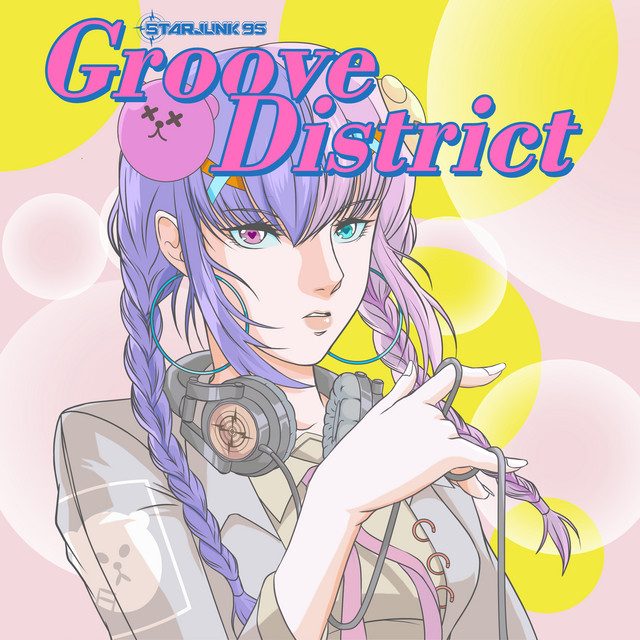
Groove District
Starjunk 95
Rally House
Breakcore
House
Similar artists
1
/5
Various Artists
Afro-Funk
Alternative Rock
Ambient
4
/5
wiv
Jungle
Chill Breakcore
Breakcore
3
/5
Rory in early 20s
Breakcore
Lolicore
Jungle
3
/5
LNRT
Rally House
Doomshop Phonk
Gaming Edm
3
/5
Berserk
Breakcore
Lo-Fi House
Rally House
3
/5
Zorrovian
Breakbeat
Breakcore
Jungle
3
/5
Vierre Cloud
Breakcore
Weirdcore
Etherpop
3
/5
Woodcamp
House
Rally House
Ukg Revival
4
/5
Tim Sanders
House
Rally House
Deep Big Room
3
/5
prod. DTM
Rally House
Doomshop Phonk
Gaming Edm
Download our mobile app
Get the Melodigging app and start digging for new genres on the go
Download on the App Store
Get it on Google Play
© 2026 Melodigging
Give feedback
Legal
Melodding was created as a tribute to
Every Noise at Once
, which inspired us to help curious minds keep digging into music's ever-evolving genres.