Your digging level

For this genre
0/8
🏆
Sign in, then listen to this genre to level up

Description

Glitch hop EDM is a bass-heavy, midtempo offshoot of glitch and hip-hop that adopts the large-scale sound design, drops, and festival-ready structures of contemporary EDM.

It typically runs around 90–115 BPM with a swung or syncopated hip-hop groove, while employing stutter edits, tape stops, bitcrushing, buffer repeats, granular chops, and intricate automation to create the characteristic "glitched" feel.

Tracks often feature thick, modulated basslines; punchy, off-kilter drums; chopped vocals and foley; and harmonies that borrow from jazz, funk, and soul, all arranged in EDM-style buildups and drops.


Sources: Spotify, Wikipedia, Discogs, Rate Your Music, MusicBrainz, and other online sources

History

Origins (late 2000s)

Glitch hop EDM emerged from the meeting point of US West Coast glitch/bass culture and hip-hop-influenced beat scenes, absorbing techniques from IDM and breakbeat. Early adopters brought experimental editing and sound-mangling into a midtempo, head-nodding format that felt like hip-hop engineered with club-scale synthesis.

Rise in the 2010s

In the early-to-mid 2010s, the style crystallized as artists folded EDM’s festival architecture—intros, tension-building risers, and emphatic drops—into glitchy, hip-hop grooves. Advances in software synthesizers and effects (granular, stutter, and multi-FX) enabled increasingly elaborate bass design and rhythmic micro-editing, helping the sound spread across clubs, festivals, and online bass-music communities.

A Mature Bass-Music Branch

By the late 2010s, glitch hop EDM had become a recognized midtempo branch of bass music, influencing neurohop, midtempo bass, and hybrid trap. The genre continues to pull from funk, jazz, and cinematic textures while retaining its core traits: swung hip-hop rhythms, detailed edits, and prominent, sculpted low end.

How to make a track in this genre

Tempo, Groove, and Rhythm
•   Aim for 90–115 BPM (often ~100–110) with a hip-hop-leaning, swung feel. Use syncopation, ghost notes, and occasional triplet fills to keep drums elastic and funky. •   Layer punchy kicks and crisp snares; complement with tight hats and shuffled percussion. Leave space for bass transients.
Sound Design and Editing
•   Craft a centerpiece bass using modern synths (e.g., Serum, Phase Plant, Massive) with layered wavetable/frequency modulation, distortion, and multiband dynamics. Keep subs clean and mono below ~90 Hz. •   Employ glitch processes: stutter edits, buffer repeats, time-stretch artifacts, tape stops, granular chops, bitcrushing, and gate sequences (Effectrix, Stutter Edit, Beat Repeat, or manual editing). •   Use foley (rustles, clicks, mechanical noises) and chopped vocal one-shots for rhythmic punctuation and ear candy.
Harmony and Melody
•   Favor minor modes, Dorian, and blues/pentatonic colors. Add jazzy extensions (7ths/9ths/11ths) on keys or guitar for warmth. •   Lead lines can be short, call-and-response motifs that interplay with bass movements.
Arrangement and Structure
•   Borrow EDM structure: intro → buildup → drop → breakdown → second drop. Contrast sections by switching bass timbres, drum patterns, or chord voicings. •   Automate filter cutoff, formant, distortion, and stereo image to create evolving drops and satisfying transitions.
Mixing and Feel
•   Prioritize kick–bass relationship with sidechain compression and careful EQ slotting. Saturate drums and bus groups for cohesion. •   Balance precision with swing: quantize selectively and nudge hits for a human, head-nod groove.
Performance
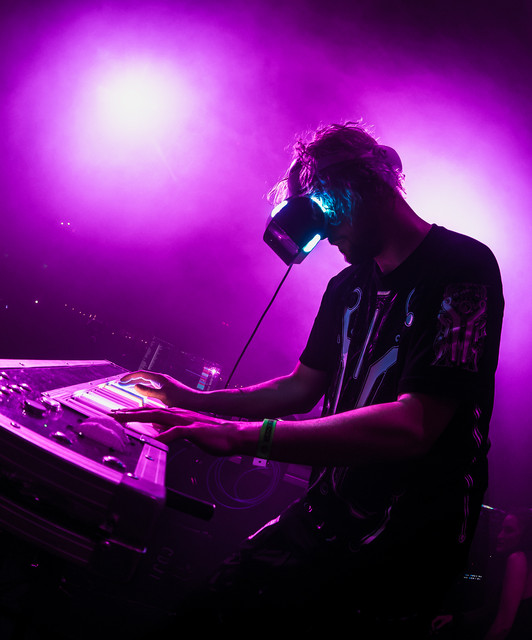
•   Translate edits to controller performance (e.g., finger drumming on Push/Launchpad) and use live FX for on-the-fly stutters and mutes.

Top tracks

Locked
Share your favorite track to unlock other users’ top tracks
Influenced by
Has influenced
Challenges
Digger Battle
Let's see who can find the best track in this genre
© 2026 Melodigging
Melodding was created as a tribute to Every Noise at Once, which inspired us to help curious minds keep digging into music's ever-evolving genres.
Buy me a coffee for Melodigging