Your digging level

For this genre
0/8
🏆
Sign in, then listen to this genre to level up

Description

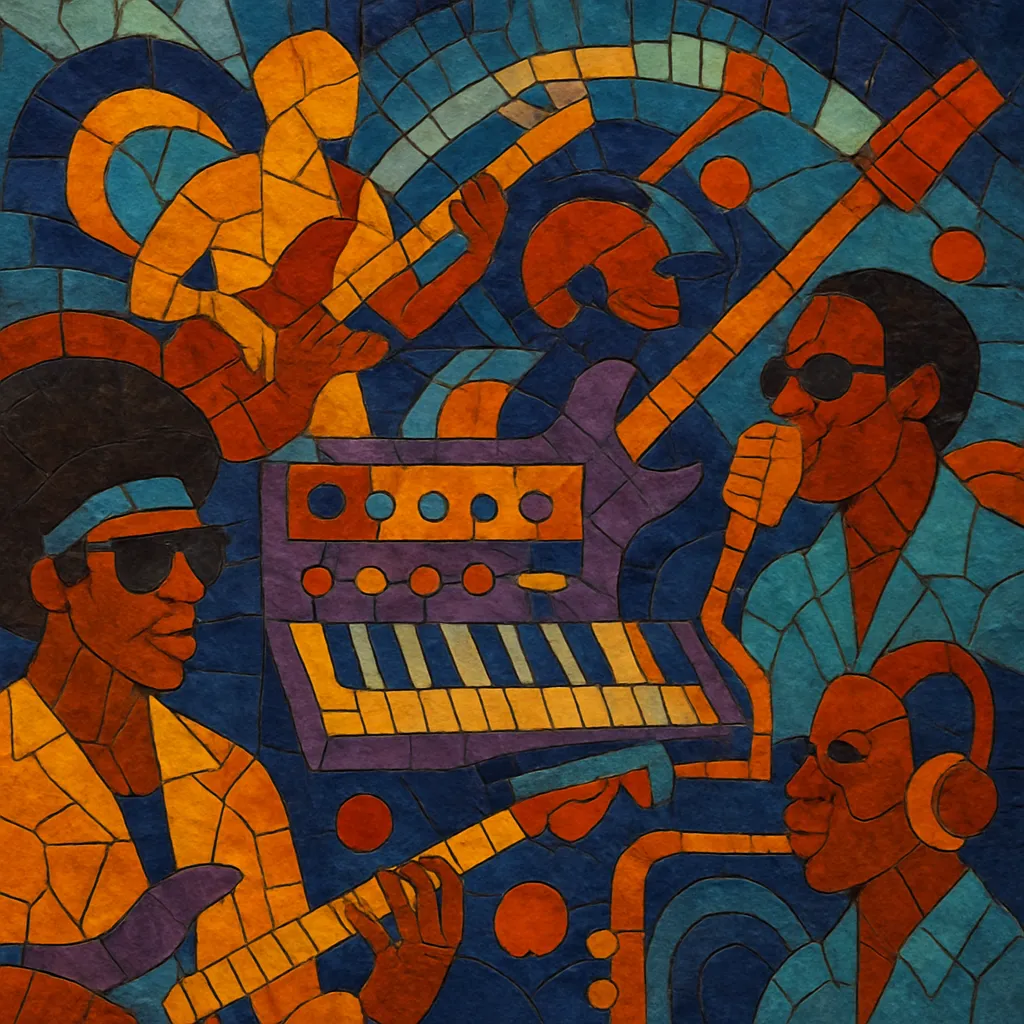
Funktronica is a hybrid style that welds the pocket and syncopation of classic funk to the sound design, sequencing, and production sheen of contemporary electronic music. It emphasizes tightly interlocked drum and bass grooves, rubbery synth bass, talkbox/vocoder textures, and bright, arpeggiated or chord-stab synths.

While its roots lie in 1970s–80s funk and post‑disco electronics, the genre crystallized around the turn of the 21st century as producers in eastern North America began folding Italo‑disco’s neon melodicism and electro’s machine rhythms into modern, festival‑ready tracks. The result is dance‑led, hooky, and groove‑centric music that feels at once retro and forward‑looking.


Sources: Spotify, Wikipedia, Discogs, Rate Your Music, MusicBrainz, and other online sources

History

Origins (late 1990s–early 2000s)

Producers and bands in the United States and Canada began blending the syncopated, bass‑driven feel of funk with digital production tools. Drawing on Italo‑disco, electro, synth‑pop, and boogie/P‑Funk, they created slick, synth‑heavy grooves that favored live‑sounding drum programming, slap‑style or synth bass, and talkbox hooks. This convergence—emerging at the turn of the 21st century in eastern North America—helped solidify a recognizable "funk‑meets‑electronics" palette.

Consolidation and festival era (2010s)

A wave of acts brought sax‑led electro‑funk and sample‑friendly, hip‑hop‑adjacent production to clubs and festivals. The style benefitted from DSPs and online communities, spreading beyond North America and cross‑pollinating with nu‑disco and French house aesthetics. Studio techniques such as side‑chain pumping, wide stereo synth stacks, and modern mastering loudness gave the music its polished, big‑room sheen.

Today

Funktronica now spans live‑band formats and solo producer/DJ projects. It thrives on collaboration—horn players, vocalists, and talkbox performers often feature alongside laptop‑centric producers. The genre continues to influence adjacent scenes like glitch‑hop, future‑facing disco revivals, and electro‑hip‑hop fusions while maintaining its core priorities: groove first, hooks second, and glossy, synth‑rich sound design.

How to make a track in this genre

Groove and rhythm
•   Start with a pocket: 100–116 BPM is common, with swung or lightly shuffled sixteenths. •   Program a syncopated kick and crisp backbeat snare; let ghost‑notes and off‑hi‑hat accents create forward motion.
Bass and harmony
•   Use a synth bass (Moog‑style or FM hybrid) with short decay, light saturation, and pitch‑bend slides to emulate slap/finger funk phrasing. •   Harmonies favor diatonic funk/pop progressions (I–IV–V, ii–V moves) with color tones (9ths/11ths/13ths). Stabbed seventh‑chords or comping via clav/synth keys reinforce the groove.
Sound design and hooks
•   Combine bright poly‑synths for chord stabs, arps for momentum, and a monophonic lead for licks. •   Add talkbox or vocoder lines doubling the hook; layer handclaps, tambourine, and percussive one‑shots for disco sparkle.
Arrangement
•   Intro with filtered drums/bass, drop to full groove by bar 9. •   Alternate A (main riff) and B (chorus/hook) sections; include a breakdown that spotlights bass or talkbox before the final lift.
Mixing tips
•   Side‑chain chords and pads to the kick for pump. •   Parallel compression on drums for smack; gentle bus saturation on the mix for analog glue. •   Keep low‑end mono and tight; carve space around 200–400 Hz to avoid boxiness.
Optional vocals and lyrics
•   Themes are feel‑good, nightlife, flirtation, and movement. Short, catchy refrains work best; call‑and‑response with talkbox adds character.

Top tracks

Locked
Share your favorite track to unlock other users’ top tracks
Influenced by
Has influenced
Challenges
Digger Battle
Let's see who can find the best track in this genre
© 2026 Melodigging
Melodding was created as a tribute to Every Noise at Once, which inspired us to help curious minds keep digging into music's ever-evolving genres.
Buy me a coffee for Melodigging