Genres
Artists
Albums
Make Music
Sign in
Sign in
Artists
Acid House
Artists
Acid House
Sansibar
2021
·
1 album
Listen
2
/5
Genres
Post-Dubstep
Post-dubstep is a loosely defined wave of UK-born electronic music that grew out of dubstep but moved away from its rigid 140 BPM wobble-bass formula. It keeps the bass-weight, sound-system focus, and rhythmic syncopation of dubstep and UK garage, but folds in house and techno tempos, R&B vocal chops, ambient space, and experimental production. Typical tracks explore 120–135 BPM (not fixed at 140), use broken 2‑step/garage swing instead of 4/4, and favor detailed sound design over maximal drops. You’ll often hear hushed, intimate vocals (sampled or original), neo-soul/jazz-influenced chords, and micro-edited percussion with lots of negative space. The mood is frequently introspective, melancholic, and textural—more headphone-oriented than festival-leaning—yet still rooted in club culture.
Discover
Listen
Dark Disco
Dark disco is a mid‑tempo, nocturnal strain of club music that fuses the hypnotic pulse of disco with the grit of post‑punk, EBM, coldwave, and industrial. It favors ominous basslines, minor‑key harmonies, reverb‑soaked guitars and vocals, and analog synth textures, resulting in a moody, cinematic atmosphere that is equally suited to sweaty basements and late‑night festival stages. Tempos typically sit between 105–120 BPM, with emphasis on groove, tension, and shadowy drama rather than maximal speed or brightness.
Discover
Listen
Seapunk
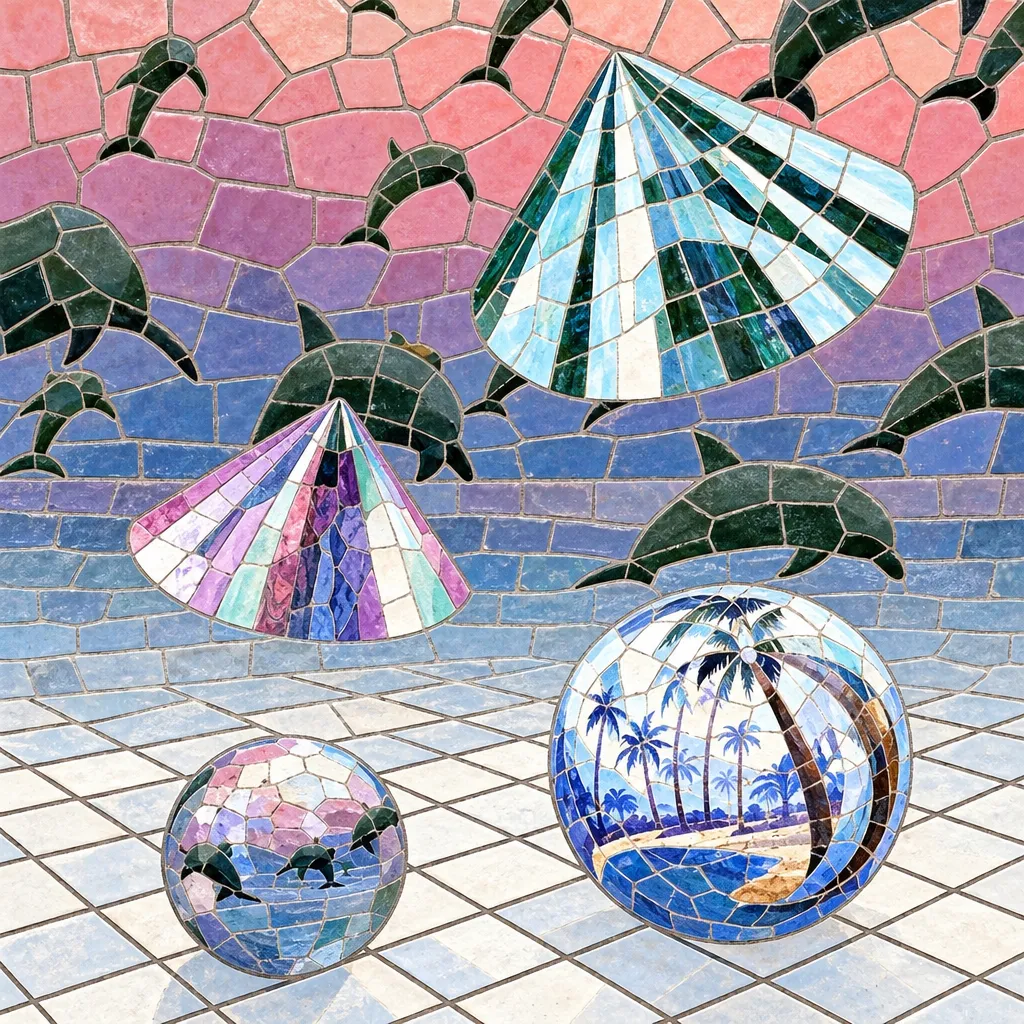
Seapunk is an early-2010s internet-born microgenre and multimedia aesthetic that fuses retro-rave sonics with Y2K-era, ocean-themed visuals. Its sound blends 1990s house and trance riffs, chopped-and-screwed and vaporwave-adjacent sampling, splashy 808/909 drums, and glossy, “watery” synth textures. The visual world is as important as the music: turquoise/teal palettes, 3D chrome dolphins, coral gradients, pixel seas, and GIF-era net art. Together, these define a playful, nostalgic, and cyber-aquatic identity that celebrates both rave euphoria and web-native DIY culture.
Discover
Listen
Ghettotech
Ghettotech is a high‑velocity club style from Detroit that fuses the precision of Detroit techno and electro with the raw party energy of Miami bass, Chicago ghetto house, and hip hop. Typical tempos sit around 150–160 BPM, with clipped 808 drums, chattering hi‑hats, and razor‑sharp edits designed for rapid‑fire DJ mixing. Tracks are built from minimal loops, aggressive sub‑bass, and short, chant‑like vocals that are often sexually explicit and call‑and‑response in nature. The music leaves space for dancers—especially Detroit’s jit style—favoring functional, DJ‑tool arrangements, quick drops, and hard cuts over extended harmonic development. The overall effect is fast, body‑moving, and confrontational, optimized for packed, sweat‑soaked dance floors.
Discover
Listen
West Coast Breaks
West Coast breaks is a regional style of breakbeat that emerged on the U.S. West Coast, especially in Los Angeles and the San Francisco Bay Area. It blends funk- and hip‑hop‑rooted drum breaks with the sunny, party‑friendly sensibility of West Coast house and rave culture. Typical tracks run around 128–135 BPM, use syncopated, rolling breakbeats, punchy snares, thick sub‑bass lines, and upbeat chord stabs or ravey synth riffs. Scratches, vocal drops, and sample edits are common, and arrangements are built for DJ usability with clear 16‑ or 32‑bar phrasing. The overall feel is energetic, funky, and festival‑ready—equally at home in clubs, warehouses, and outdoor desert parties.
Discover
Listen
Acid House
Acid house is a subgenre of house music defined by the squelching, modulated basslines of the Roland TB-303 bass synthesizer-sequencer, typically set against a steady 4/4 drum pattern. It emerged in the mid-1980s club culture of Chicago, with formative 303 experiments credited to artists like Phuture and Sleezy D around 1986, and parallel early-1980s experiments occasionally cited in Mumbai’s nascent electronic scene. The style emphasizes hypnotic repetition, filter resonance, accent/slide programming, and minimalist arrangements that build intensity through real-time knob-tweaking rather than harmonic complexity.
Discover
Listen
Breakbeat
Breakbeat is a broad branch of electronic music defined by its use of broken, syncopated drum patterns ("breakbeats") rather than straight four-on-the-floor rhythms. Producers typically build tracks from looped and chopped drum breaks—often sampled from vintage funk, jazz, and R&B recordings—layered with basslines, synths, and effects. As both a production technique and a stylistic umbrella, breakbeat underpins and intersects with many scenes: from old‑school hip‑hop turntablism and electro to the UK rave continuum (breakbeat hardcore, big beat, Florida breaks) and onward to garage-derived styles. While not synonymous with jungle and drum & bass, the same culture of sampling and chopping classic breaks (e.g., the Amen break) helped inform those genres as well.
Discover
Listen
Show all 7 genres
Albums
2021
1
/5
Sans musique
Sansibar
West Coast Breaks
Similar artists
1
/5
Various Artists
Afro-Funk
Alternative Rock
Ambient
2
/5
Mr. Ho
Acid House
Breakbeat
Miami Bass
3
/5
The Future Sound Of London
Ambient
Acid House
Ambient Techno
2
/5
SL2
Hardcore Breaks
Acid House
Breakbeat
2
/5
Meat Beat Manifesto
Breakbeat
Industrial Hip Hop
Big Beat
2
/5
James Shinra
Braindance
Acid House
Breakbeat
2
/5
Luke Vibert
Drill And Bass
Acid Techno
Idm
2
/5
Detroit's Filthiest
Ghettotech
Breakbeat
Footwork
2
/5
Hermeth
Acid House
Acid Techno
Breakbeat
2
/5
Client_03
Breaks
Acid House
Breakbeat
Download our mobile app
Get the Melodigging app and start digging for new genres on the go
Download on the App Store
Get it on Google Play
© 2026 Melodigging
Give feedback
Legal
Melodding was created as a tribute to
Every Noise at Once
, which inspired us to help curious minds keep digging into music's ever-evolving genres.