Your digging level
Description
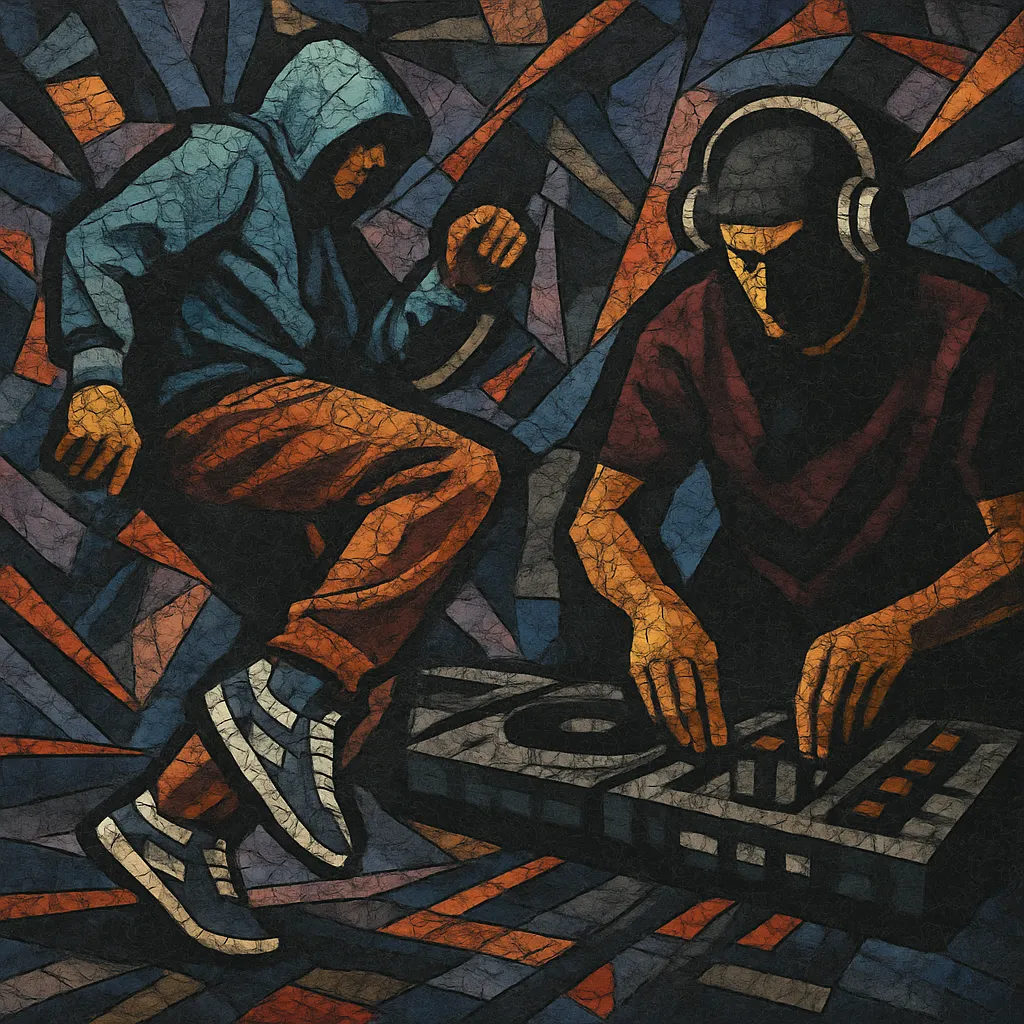
Footwork (often called juke or Chicago juke) is a high‑velocity, sample‑driven form of electronic dance music that emerged from Chicago’s battle‑dance culture.
Built around stuttering, off‑grid percussion at roughly 160 BPM, it uses chopped vocal snippets, booming sub‑bass, and rapid toms, claps, and snares arranged in highly syncopated patterns that are not locked to a constant 4/4 kick. Producers frequently slice fragments of rap, R&B, pop, and soul into call‑and‑response hooks that interact with dancers on the floor. The result is a tense, kinetic sound designed for competitive circles as much as for clubs and headphones.
History
Footwork crystallized in Chicago in the late 1990s as dancers and DJs pushed the faster, more percussive edge of local ghetto house and party tracks. Crews formed around competitive dance circles (“battles”), which demanded tracks with sharper syncopation and space for intricate foot patterns. Producers like RP Boo, DJ Clent, and Gant‑Man began stripping back steady kicks, emphasizing toms, claps, and sub‑bass, and chopping rap/R&B phrases into commands for dancers.
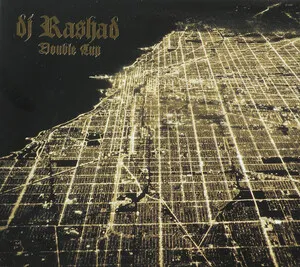
Through the 2000s, the sound codified around ~160 BPM, irregular bar accents, and hyper‑syncopated drum fills. Key figures—DJ Rashad, DJ Spinn, Traxman, DJ Nate, and others—circulated mixtapes and CDRs at skating rinks, school gyms, and neighborhood events. The music’s feedback loop with battle circles defined arrangement choices: sudden mutes, cue‑like vocal chops, and drop‑outs that highlighted specific moves.
Labels and compilations (notably Planet Mu’s “Bangs & Works”) introduced footwork internationally. Teklife and associated crews toured widely, and the style cross‑pollinated with UK bass and jungle scenes, inspiring hybrids and new production techniques. Following DJ Rashad’s passing (2014), the community continued to evolve, with artists like DJ Manny, DJ Earl, and Jlin expanding the palette toward experimental, melodic, and even chamber‑like directions while retaining core rhythmic DNA.
Footwork remains both a dance culture and a studio practice. Its rhythmic logic now informs modern jungle, halftime DnB, and deconstructed club, while Chicago’s scene continues to mentor new producers and dancers who keep the battle tradition central.
• Aim for ~160 BPM. Use irregular bar emphases and leave room for dancers—don’t rely on a constant 4/4 kick.
• Build swing and urgency with off‑grid micro‑timing, ghost notes, and sudden drop‑outs that act like cues in a battle.
• Prioritize toms, claps, and snares over a steady kick; deploy rapid fills and rolls.
• Use crisp hi‑hats (often 1/32 or 1/64 bursts) and flam accents to create stutter.
• Pair deep, sustained sub‑bass (often 808‑style) with short percussive stabs; sidechain subtly so bass breathes without dominating.
• Keep synths minimal—texture and negative space are as important as notes.
• Chop micro‑samples from rap/R&B/pop into rhythmic mantras (single words, syllables, or breaths). Pitch, time‑stretch, and gate them to become part of the drum grid.
• Use call‑and‑response phrasing that “talks” to dancers (e.g., command‑like stabs before a drop or fill).
• Think in short sections (8–16 bars) with frequent switch‑ups: mute the bass, isolate a vocal cell, then reintroduce the full kit for impact.
• Design breakdowns as breathing spaces for footwork moves; re‑enter with fresh fills rather than long builds.
• Preserve transient punch on snares/toms; control sub‑bass with tight EQ and gentle multiband compression.
• Leave headroom; footwork’s impact comes from contrast—silence vs. bursts, dry hits vs. booming subs.