Your digging level
Description
Breaks is a broad electronic dance music style built around syncopated breakbeat drum patterns instead of a straight four-on-the-floor kick. It emphasizes sliced, rearranged, and layered drum breaks—often sampled from classic funk, hip hop, and early electro—combined with heavy sub-bass and club-ready arrangements.
As a scene and label category, “breaks” crystallized in the UK in the late 1990s out of the rave continuum, alongside big beat and later “nu skool breaks.” While tempos usually range from roughly 125–140 BPM, the defining trait is the swung, shuffling, and fragmented rhythm that drives dancers with push–pull groove rather than rigid grid-based kicks.
Breaks spans a spectrum from funky, party-oriented tracks to darker, techy, bass-heavy material (often called tech breaks). Across its variants, it remains DJ-friendly, sample-savvy, and grounded in the art of drum manipulation.


History
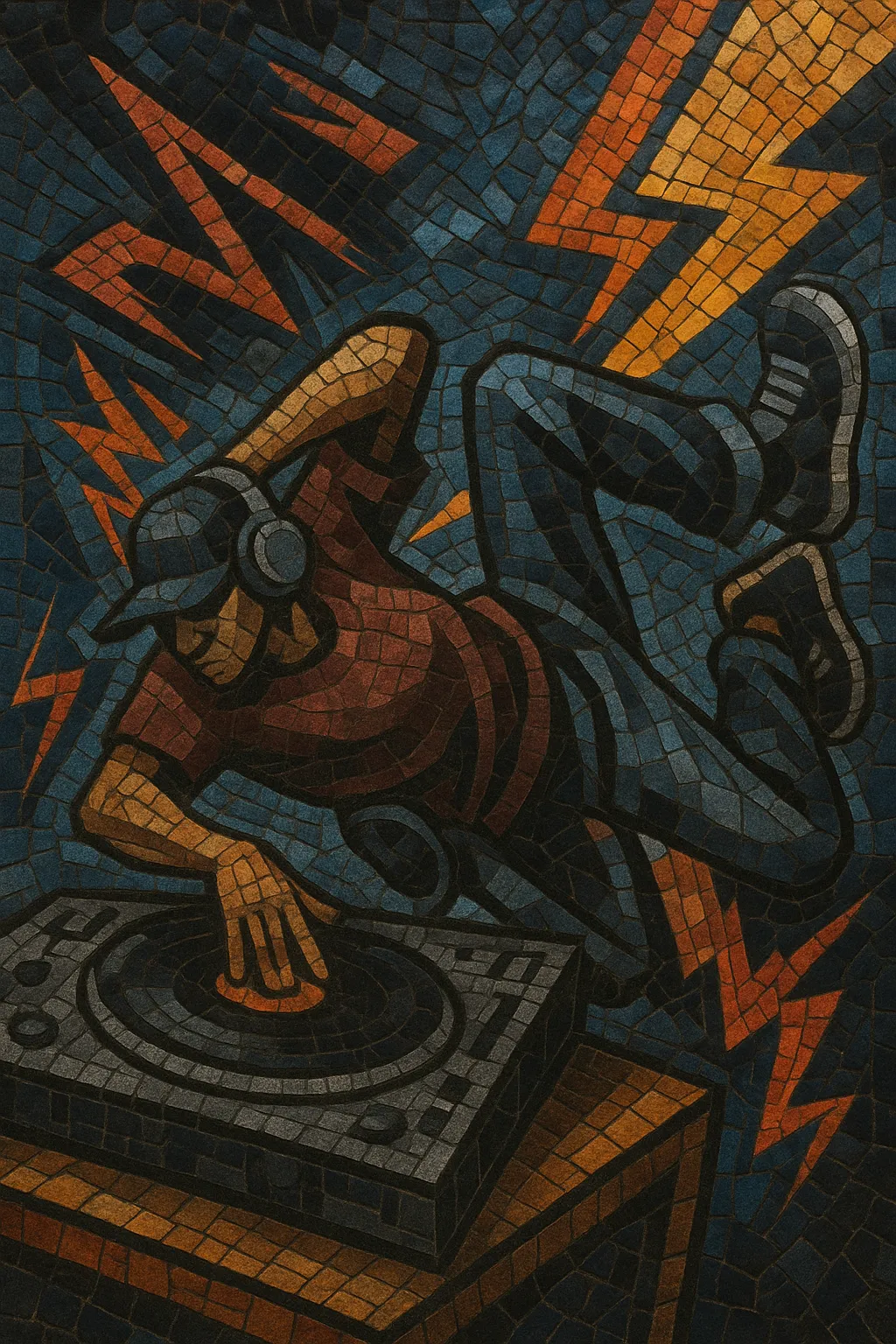
Breaks traces its DNA to the practice of extending the “break” in funk and soul records—popularized by early hip hop DJs who looped drum-only passages for dancers. Electro and Miami bass added 808-driven, syncopated patterns, while UK rave culture embraced chopped breaks in breakbeat hardcore and later jungle.
By the mid-1990s, a distinct, club-oriented breakbeat sound took shape in the UK outside jungle/DnB tempos. Labels, club nights, and magazines began tagging it simply as “breaks,” with producers focusing on 125–140 BPM, big sub-bass, and groove-forward drum programming. Parallel scenes like big beat and the emerging “nu skool breaks” shared aesthetics but differed in emphasis—big beat leaned rock/funk sample energy, while nu skool breaks leaned sleeker, techier sound design.
The sound spread internationally via UK imports, US East/West Coast parties, and a thriving Florida breaks network that emphasized booming low end and DJ battle energy. The period saw a flood of 12" releases, white labels, and DJ-led imprints, reinforcing breaks as a DJ-centric genre.
As bass music diversified (dubstep, UK bass, electro house hybrids), breaks intermingled with newer textures—tech breaks, rave revival motifs, and progressive breaks returned to festival and underground stages. Contemporary producers continue to mine classic breakpacks while pushing futuristic sound design, keeping the core ethos—syncopated drums and kinetic bass—firmly intact.