Your digging level
Description
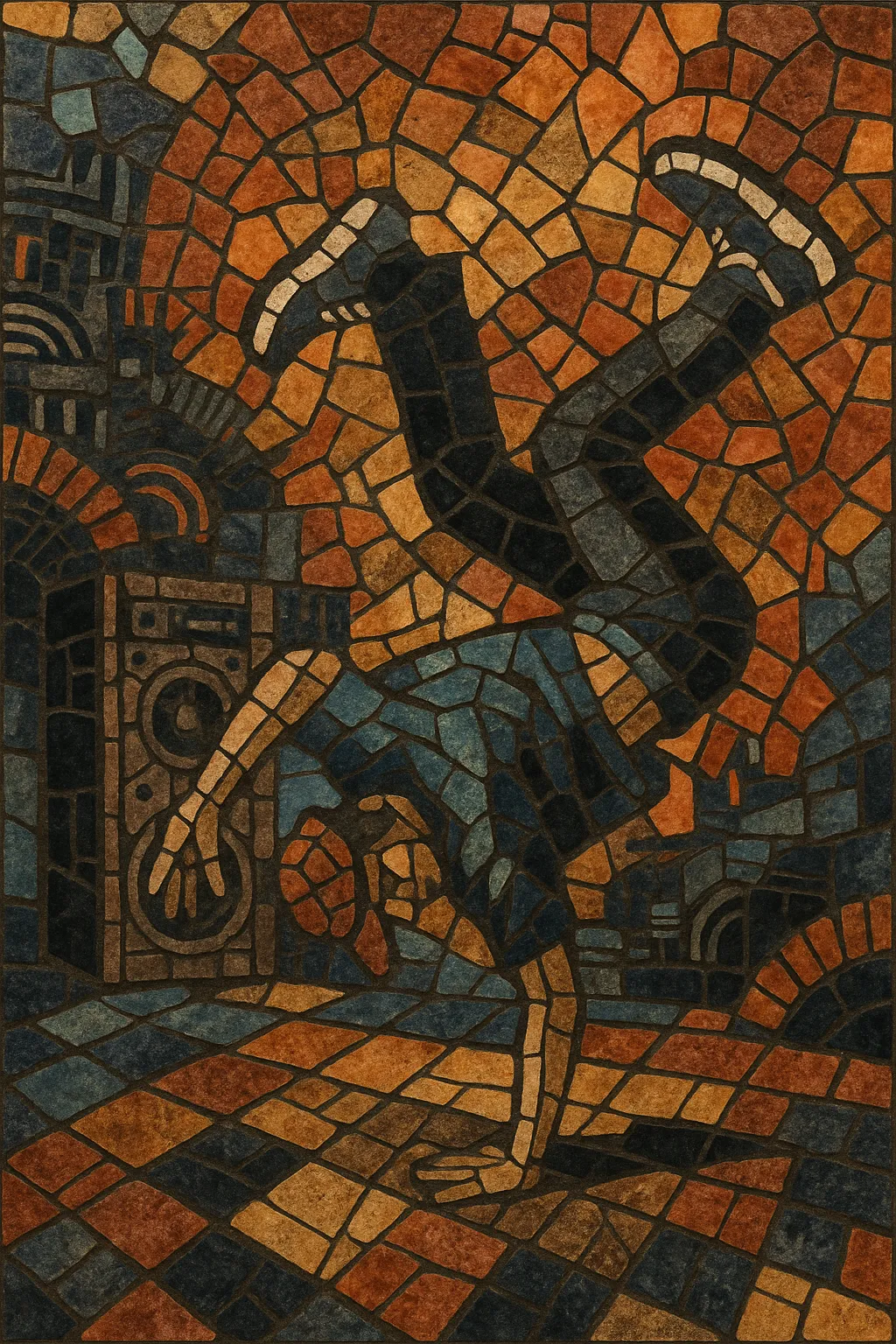
B-boy (or b-boy/b-girl break music) is the DJ-driven, break-centric soundtrack for breaking (breakdancing) within early hip-hop culture.
It emphasizes extended drum breaks, syncopated funk rhythms, and percussion-heavy loops that give dancers clear sections for toprock, footwork, power moves, and freezes.
Rooted in Bronx block parties, b-boy music draws from funk, soul, disco, and Latin records, with DJs isolating and repeating the “break” to maximize energy on the dancefloor.
Over time, electro and early hip-hop production techniques—drum machines, scratching, and sampling—expanded the palette while preserving the breakbeat as the core.
History
B-boy music emerged at Bronx block parties in the 1970s, where DJs like DJ Kool Herc noticed dancers responded most intensely to the short instrumental “breaks” in funk, soul, and disco records. By using two copies of the same record and backspinning the break, DJs extended these drum-forward passages, creating a continuous, high-energy foundation for breakers.
Grandmaster Flash and others refined mixing, cutting, and quick-cue techniques, while MCs hyped dancers and the crowd. The canon of break classics—James Brown’s “Funky Drummer,” The Incredible Bongo Band’s “Apache,” The Jimmy Castor Bunch’s “It’s Just Begun,” and Latin and rare-groove cuts—formed the b-boy toolkit.
Afrika Bambaataa and the Soulsonic Force fused funk breaks with Kraftwerk-inspired synths, birthing electro-influenced b-boy anthems like “Planet Rock.” Producers and crews adopted drum machines, scratching, and sampling to craft bespoke battle-ready tracks while preserving the breakbeat feel.
As hip-hop went global, breaking and b-boy soundtracks spread through competitions and compilation culture. Big beat and breakbeat scenes embraced classic breaks, while dedicated b-boy producers tailored tracks for competition rounds. Events like Battle of the Year and Red Bull BC One standardized set lengths and energy arcs, influencing how b-boy music is arranged.
Modern b-boy music blends classic funk breaks, Latin percussion, and electro/hip-hop sensibilities with contemporary production. Digital crates, sample packs, and streaming-era edits coexist with original vinyl, but the core principle remains: grooves that foreground the break to drive dancers’ movement.



Best playlists