Genres
Artists
Albums
Make Music
Sign in
Sign in
Artists
Digital Horror
Artists
Digital Horror
Princess Nokia
2020
·
1 album
Listen
4
/5
Genres
Digital Horror
Digital horror is a contemporary horror aesthetic that focuses on dread emerging from networked technologies, software, and always‑on media. Narratives and sound worlds revolve around screens, social platforms, livestreams, malware, deepfakes, and the uncanny presence of algorithmic systems. In music and sound design, the style translates this fear of the digital into glitching textures, corrupted audio artifacts, synthetic drones, and the weaponization of familiar interface sounds (alerts, keyboards, notification pings). It often blends dark ambient, industrial noise, and hauntological sampling to suggest threats that live inside code, clouds, and data centers—consistent with the wider definition that emphasizes anxiety and supernatural menace arising from the Internet and modern media.
Discover
Listen
Beats
Beats is a loose, producer-driven category for rhythm-forward instrumentals built around hip‑hop drum patterns without necessarily being rap songs or featuring vocals. It functions as an umbrella for stock, "type," and backing tracks used by rappers, singers, streamers, and content creators, spanning boom‑bap swing to trap hi‑hat grids and R&B‑leaning grooves. On streaming platforms it often appears as standalone instrumentals packaged by tempo, mood, or artist style (e.g., “trap type beat,” “R&B instrumental,” “club beat”), prioritizing portability and utility over artist identity. While rooted in hip‑hop production aesthetics—kicks, snares, 808s, chopped samples—Beats blends downtempo, electronic, and contemporary R&B sensibilities, aiming for clarity, loopability, and immediate vibe.
Discover
Listen
Fake
“Fake” is an informal, streaming-era genre tag used for sound‑alike covers, karaoke takes, tribute recordings, and generic instrumental remakes that closely mimic current or classic hits. Rather than foregrounding the original songwriter’s concept, these recordings prioritize recognizability, search optimization, and fast turnaround. Session singers and studio players reproduce the hook, tempo, and arrangement with minimal reinterpretation; track and artist names often echo the original title or lyrical catchphrase to capture search traffic.
Discover
Listen
Escape Room
Escape room is a data-driven label popularized by Spotify to cluster artists who blur lines between alternative R&B, experimental pop, left-field hip hop, and cutting‑edge club/electronic production. Rather than a strict set of musical rules, it signals a sound defined by textural minimalism, sub‑heavy and off‑kilter rhythms, intimate vocal delivery (often breathy or ASMR-adjacent), and a strong emphasis on sound design and negative space. Songs frequently juxtapose glossy melodies with abrasive or deconstructed percussive layers, creating a stylish, future‑leaning mood that resists easy categorization. The name is unrelated to physical puzzle rooms; instead, it marks music that “escapes” legacy genre boxes while remaining pop‑adjacent and internet‑native in aesthetics and distribution.
Discover
Listen
Pov: Indie
"pov: indie" is a social-media-native microstyle built around short, cinematic indie-pop/indie-rock snippets designed to accompany a first-person (POV) narrative. Instead of being defined by a single new musical technique, it is defined by context: the music is chosen or written to feel like the soundtrack to a specific moment (a crush, a late-night walk, moving to a new city, seasonal nostalgia). Sonically it typically uses bright but soft guitars or synths, intimate vocals, simple memorable hooks, and production that reads clearly on phone speakers. The emotional tone is often wistful, tender, and “coming-of-age,” with lyrics that can be understood quickly in a 10–30 second clip.
Discover
Listen
Trap Queen
“Trap queen” is a micro-genre/playlist tag that sits inside mainstream trap and pop-trap, centered on glossy, hook-forward trap production paired with lyrics that celebrate a charismatic, street-smart, loyal female partner (the “trap queen”) and the lifestyle around hustle, fashion, nightlife, and couple loyalty. Musically it tends to use modern trap drum programming (808 sub-bass, fast hi-hats, snare/clap on the backbeat), melodic minor-key synths or plucked leads, and a strong emphasis on catchy toplines that can cross over to pop radio. In practice, “trap queen” is more of a cultural/memeable descriptor that grew from a defining hit and then expanded into a recognizable sound/lyrical framing within 2010s trap-pop.
Discover
Listen
Shimmer Pop
Shimmer pop is a glossy, hook-forward offshoot of indie pop that emphasizes bright, “glassy” textures and dreamy atmospheres. Its sound is defined by clean, chorus‑drenched guitars or twinkling synth arpeggios, lush pads, and wide, sparkling high‑end detail that gives the music a literal sense of shimmer. Production often merges retro new‑wave and synth‑pop colors with modern indietronica polish, pairing side‑chained synths and gated reverbs with crisp, contemporary drum programming. Melodies are unabashedly pop, while the lyrics frequently explore romantic longing, youthful nostalgia, and late‑night introspection. Tempos typically sit in the mid‑tempo range, with steady 4/4 grooves or lightly syncopated patterns that keep the music buoyant and danceable without becoming aggressive. The overall mood balances optimism and wistfulness, creating a sound that feels both neon‑bright and emotionally tender.
Discover
Listen
Channel Pop
Channel pop is a digital-era strain of mainstream pop shaped by video and creator platforms—especially YouTube and later TikTok and Instagram—where artists build audiences through frequent uploads on their own “channels.” Musically it favors intimate, highly polished but close-mic’d vocals, acoustic guitar or piano-led arrangements, restrained beats, and succinct, playlist-friendly structures. Many releases are cover-first (reimagining recent chart hits) with a steady flow of glossy singles, session-style performances, and creator collaborations that gradually blend into original material. Titles, artwork, and release cadence are optimized for search and recommendation algorithms, yielding a sound that is simultaneously personal and platform-aware.
Discover
Listen
Future House
Future house is a mid‑2010s strain of house music known for rubbery, plucked bass leads, clean and punchy drums, and streamlined, drop‑focused arrangements. It bridges the groove and warmth of deep/UK house with the sheen and impact of big‑room/electro‑house, often featuring metallic or organ‑like bass timbres that “speak” melodically. Typical tracks sit around 124–128 BPM, use tight sidechain compression for a pumping feel, and contrast sparse, atmospheric breakdowns with hooky, syncopated bass drops. Vocals, when present, are concise—often chopped or pitched—and the sound design emphasizes clarity, swing, and a modern, club‑ready polish.
Discover
Listen
Post-Post-Hardcore
Post-post-hardcore is a polished, third-wave offshoot of post-hardcore that crystallized in the 2010s. It fuses the genre’s emotive, dynamic vocals and tension-release structures with modern pop hooks, electronic programming, and metalcore heft. Compared with classic post-hardcore, it favors glossy production, radio-leaning choruses, and hybridized textures—think syncopated djent-lite riffs under bright synths, EDM-style risers and drops, half-time breakdowns, and call-and-response vocals (screamed versus soaring cleans). The result is an accessible yet intense sound that thrives in the internet era of playlists, YouTube covers, and scene cross-pollination.
Discover
Listen
Trap
Trap is a subgenre of hip hop that emerged from the Southern United States, defined by half-time grooves, ominous minor-key melodies, and the heavy use of 808 sub-bass. The style is characterized by rapid, syncopated hi-hat rolls, crisp rimshot/clap on the backbeat, and cinematic textures that convey tension and grit. Lyrically, it centers on street economies, survival, ambition, and introspection, with ad-libs used as percussive punctuation. Production is typically minimal but hard-hitting: layered 808s, sparse piano or bell motifs, dark pads, and occasional orchestral or choir samples. Vocals range from gravelly, staccato deliveries to melodic, Auto-Tuned flows, often using triplet cadences.
Discover
Listen
Lgbtq+ Hip Hop
LGBTQ+ hip hop is hip hop created by, centered on, or strongly associated with LGBTQ+ communities and perspectives. Musically it is not a single sound as much as a cultural lens: artists may use boom bap, West Coast, trap, club rap, experimental rap, or R&B-leaning rap while foregrounding queer identity, desire, gender expression, and community politics. Common lyrical themes include coming out, resilience, love and sexuality outside heteronormative framing, ballroom/club culture, chosen family, HIV/AIDS-era memory, and critiques of homophobia/transphobia in music and society. The genre often emphasizes self-definition and visibility, and it ranges from confrontational protest rap to playful, dance-driven club records and highly personal storytelling.
Discover
Listen
Hip Hop
Hip hop is a cultural and musical movement that emerged from Black, Latino, and Caribbean communities, centering around rapping (MCing), DJing/turntablism, sampling-based production, and rhythmic speech over beats. It prioritizes groove, wordplay, and storytelling, often reflecting the social realities of urban life. Musically, hip hop is built on drum-centric rhythms (from breakbeats to 808 patterns), looped samples, and bass-forward mixes. Lyrically, it ranges from party anthems and braggadocio to political commentary and intricate poetic forms, with flow, cadence, and rhyme density as core expressive tools. Beyond music, hip hop encompasses a broader culture, historically intertwined with graffiti, b-boying/b-girling (breakdance), fashion, and street entrepreneurship, making it both an art form and a global social language.
Discover
Listen
R&b
R&B (Rhythm and Blues) is a vocal- and groove-centered popular music tradition that blends blues tonality, jazz harmony, and gospel-inflected singing with a steady backbeat. It emphasizes expressive lead vocals, call-and-response, lush harmonies, and danceable rhythms. From its 1940s roots in African American communities to its later evolutions, R&B has continually absorbed and reshaped surrounding sounds—from jump blues and swing in the early days to soul, funk, hip hop, and electronic production in the contemporary era. Today, R&B ranges from intimate, slow-burning ballads to club-ready tracks, all tied together by a focus on feel, melody, and vocal performance.
Discover
Listen
Show all 14 genres
Albums
2020
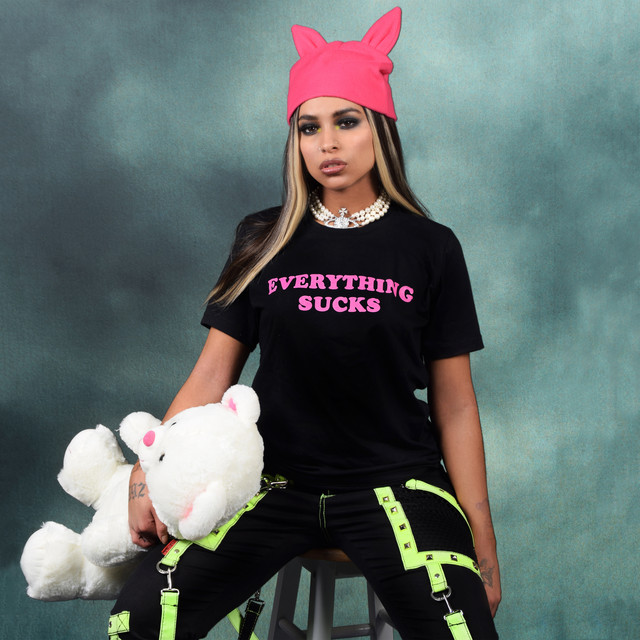
Everything Sucks
Princess Nokia
Lgbtq+ Hip Hop
Similar artists
5
/5
Drake
Canadian Hip Hop
Hip Hop
Pop Rap
5
/5
Rihanna
Barbadian Pop
Contemporary R&b
Pop
5
/5
Ariana Grande
Pop
Contemporary R&b
Trap Soul
5
/5
Chris Brown
R&b
Contemporary R&b
Hip Hop
5
/5
Juice WRLD
Emo Rap
Melodic Rap
Rap
5
/5
Doja Cat
Dance-Pop
Pop Rap
Pop
5
/5
Playboi Carti
Plugg
Pluggnb
Hip Hop
5
/5
Akon
Hip Hop
Laboratorio
Ratchet Music
5
/5
Snoop Dogg
G-Funk
Gangsta Rap
Hip Hop
5
/5
Lil Peep
Cloud Rap
Emo Rap
Hip Hop
Download our mobile app
Get the Melodigging app and start digging for new genres on the go
Download on the App Store
Get it on Google Play
© 2026 Melodigging
Give feedback
Legal
Melodding was created as a tribute to
Every Noise at Once
, which inspired us to help curious minds keep digging into music's ever-evolving genres.