Your digging level for this genre

0/8
🏆
Sign in, then listen to this genre to level up

Description

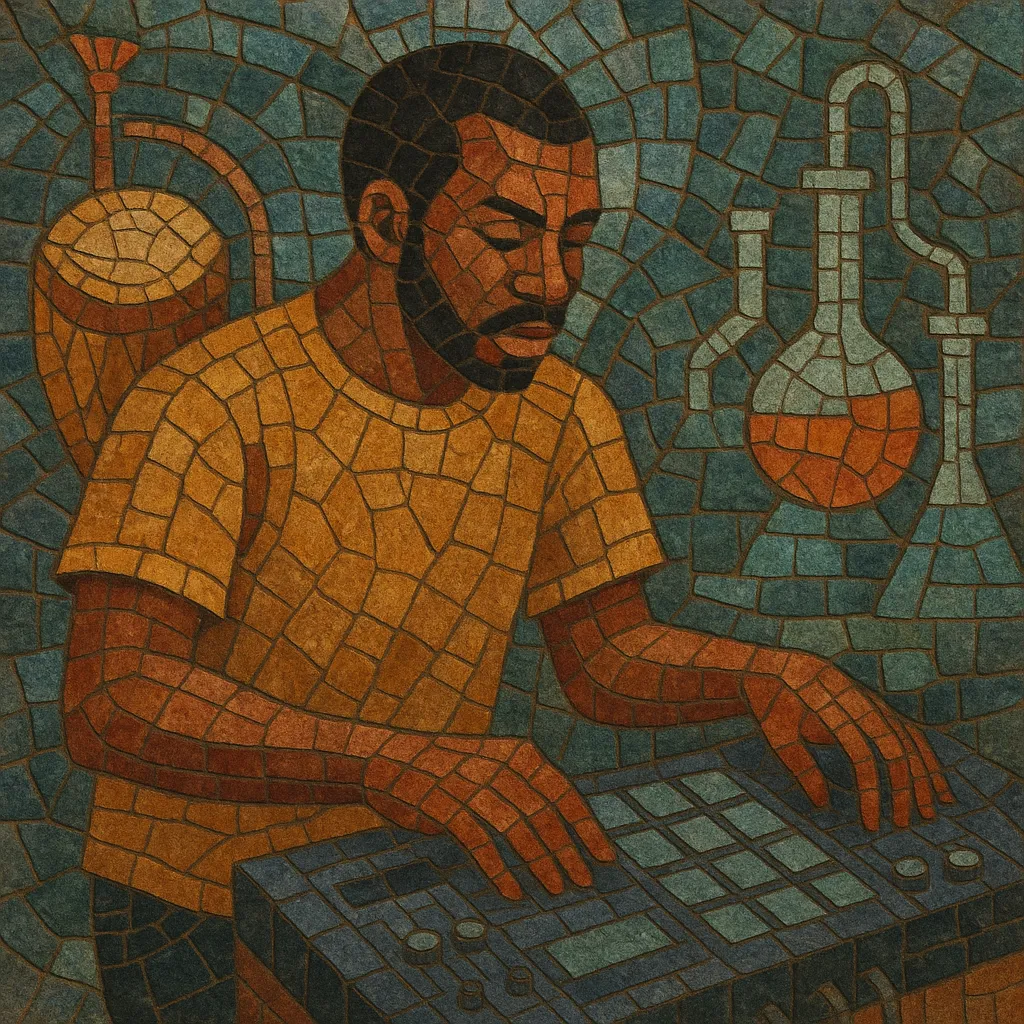
Laboratorio is a Brazilian micro‑scene within contemporary hip hop that coalesced around artist‑run collectives and label ecosystems (most visibly Laboratório Fantasma). It blends boom‑bap and modern trap sensibilities with MPB, samba, and neo‑soul harmony, placing lyricism and social commentary at the core.

The sound is defined by sample‑friendly, groove‑rich beats, live percussion drawn from Afro‑Brazilian traditions, and melodic hooks that often nod to MPB and samba‑soul. Artists use Portuguese lyricism to address race, class, identity, and everyday life, pairing incisive bars with warm, humanized production and frequent collaborations across rap, R&B, and pop.

History

Origins (late 2000s–early 2010s)

The "laboratorio" current emerged in São Paulo’s independent rap networks at the turn of the 2010s, crystallizing around artist‑led operations such as Laboratório Fantasma. As streaming lowered barriers and DIY infrastructure matured, Brazilian MCs and producers began to fuse classic hip hop craft (boom‑bap drums, crate‑digging) with MPB harmony, samba grooves, and live instrumentation. This yielded a warmer, community‑centric aesthetic distinct from both U.S. mainstream rap and older, rawer Brazilian street rap.

Consolidation and crossover (mid–late 2010s)

Through acclaimed albums, tours, and collaborations with singers, percussionists, and jazz players, the scene reached broader audiences. Releases paired sharpened social commentary—on racism, inequality, and Afro‑Brazilian identity—with uplifting, melodically rich arrangements. The collective model (shared producers, house bands, and guest features) reinforced a recognizable sound: soulful chords, syncopated Brazilian percussion, and introspective, poetic Portuguese lyricism.

2020s and cultural footprint

By the 2020s, the laboratorio palette had become a trusted bridge between hip hop, MPB, and pop/R&B in Brazil. Its artists influenced festival lineups, TV and documentary storytelling, and cross‑genre collaborations, while continuing to mentor younger MCs and singer‑songwriters. The result is a sustainable pathway for socially engaged rap that is musically sophisticated and broadly accessible.

How to make a track in this genre

Rhythm and groove
•   Start around 86–98 BPM if aiming for boom‑bap warmth; 70–78 or 130–140 BPM double‑time for modern trap swing. •   Layer classic hip hop drums (kicks/snares with vinyl character) over Brazilian percussion: pandeiro, surdo, agogô, cuíca, tamborim. Use samba and partido‑alto syncopations to create forward motion.
Harmony and melody
•   Draw on MPB/neo‑soul harmony: extended chords (maj7, m9, 11s, 13s), secondary dominants, and modal interchange for color. •   Combine sampled chords (rhodes, guitar, strings) with live overdubs (nylon‑string guitar, cavaquinho, horns) to humanize loops. •   Write sung hooks with memorable, singable contours; alternate sung choruses and rapped verses.
Sound design and sampling
•   Blend dusty samples (records, radio, street ambience) with clean, modern R&B textures. Side‑chain subtly to keep percussion breathing. •   Use call‑and‑response ad‑libs and crowd vocals to evoke cypher/collective energy.
Lyrics and delivery
•   Prioritize Portuguese lyricism with vivid imagery and social insight (race, community, resilience, everyday poetry). Balance critique with hope. •   Vary flows: conversational cadences, double‑time bursts, and laid‑back storytelling. Leave space for musical fills and hook refrains.
Arrangement and collaboration
•   Structure: intro (spoken word or texture) → verse → pre‑chorus → hook → verse → bridge (instrumental break or featured vocal) → hook. •   Invite features from singers, percussionists, or jazz players to underline the hybrid identity. Keep mastering warm, dynamic, and not over‑limited.

Top tracks

Locked
Share your favorite track to unlock other users’ top tracks
Influenced by
Challenges
Digger Battle
Let's see who can find the best track in this genre
© 2025 Melodigging
Melodding was created as a tribute to Every Noise at Once, which inspired us to help curious minds keep digging into music's ever-evolving genres.
Buy me a coffee for Melodigging