Genres
Artists
Albums
Make Music
Sign in
Sign in
Artists
Classical
Artists
Classical
Pace, Ian
2011–2012
·
2 albums
Listen
Genres
New Complexity
New Complexity is a movement in contemporary classical composition characterized by extremely detailed notation, dense polyphonic textures, and intricate rhythmic layers. Composers in this school aim to encode a wealth of micro-level information—articulations, dynamics, timbral inflections, and nuanced temporal relationships—directly into the score. The music typically features nested tuplets, rapidly shifting meters, microtonal pitch structures, and extensive use of extended techniques. While often perceived as virtuosic and formidable, its goal is not complexity for its own sake but the precise realization of highly differentiated sound worlds and continuously transforming textures.
Discover
Listen
Integral Serialism
Integral serialism (also called total serialism) is a post–World War II compositional approach that extends the serial ordering principle beyond pitch to other musical parameters such as duration, dynamics, timbre, articulation, and register. Instead of relying on tonal harmony or freely atonal gestures, the composer constructs one or more ordered sets (series) for each parameter and subjects them to systematic transformations (inversion, retrograde, transposition, permutation) and cross-mappings. The result is highly controlled, pointillistic textures and tightly organized forms whose coherence derives from parametric organization rather than tonal function. Its sound world often features fragmented gestures, rapid contrasts of dynamics and articulation, and intricate rhythmic structures. While perceived as austere or rigorous, it enabled composers to craft micro-detailed musical behaviors and helped forge the postwar European avant-garde’s language.
Discover
Listen
Classical
Classical music is the notated art-music tradition of Europe and its global descendants, characterized by durable forms, carefully codified harmony and counterpoint, and a literate score-based practice. The term “classical” can refer broadly to the entire Western art-music lineage from the Medieval era to today, not just the Classical period (c. 1750s–1820s). It privileges long-form structures (such as symphonies, sonatas, concertos, masses, and operas), functional or modal harmony, thematic development, and timbral nuance across ensembles ranging from solo instruments to full orchestras and choirs. Across centuries, the style evolved from chant and modal polyphony to tonal harmony, and later to post-tonal idioms, while maintaining a shared emphasis on written notation, performance practice, and craft.
Discover
Listen
Albums
2012
1
/5
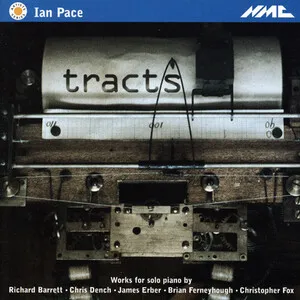
Tracts
Brian Ferneyhough / Ian Pace
New Complexity
Classical
2011
1
/5
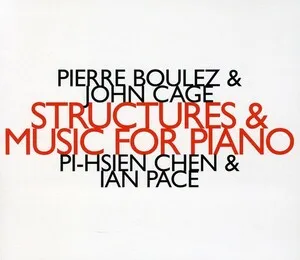
Structures & Music for Piano
John Cage / Pierre Boulez
Integral Serialism
Classical
Similar artists
2
/5
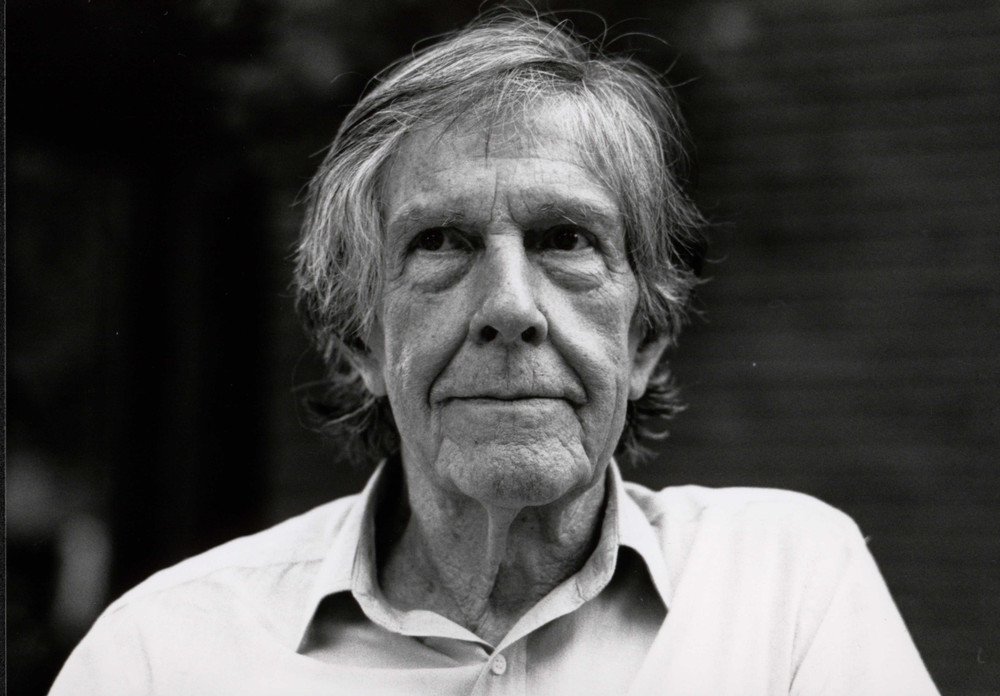
John Cage
Indeterminacy
Classical
Experimental
3
/5
BBC Symphony Orchestra
Classical
Opera
Orchestral
3
/5
Pierre Boulez
Classical
Serialism
Second Viennese School
3
/5
Jean-Efflam Bavouzet
Classical
Classical Piano
Integral Serialism
3
/5
Michael Finnissy
New Complexity
Avant-Garde
Classical
2
/5
WDR Sinfonieorchester Köln
Classical
Avant-Garde
Darmstadt School
2
/5
Olivier Messiaen
Classical
Mélodie
Chamber Music
2
/5
Robert Craft
Classical
Neoclassicism
Ballet
2
/5
Karlheinz Stockhausen
Integral Serialism
Serialism
Darmstadt School
2
/5
Iannis Xenakis
Classical
Stochastic Music
Acousmatic
Download our mobile app
Get the Melodigging app and start digging for new genres on the go
Download on the App Store
Get it on Google Play
© 2026 Melodigging
Give feedback
Legal
Melodding was created as a tribute to
Every Noise at Once
, which inspired us to help curious minds keep digging into music's ever-evolving genres.