
Genres
Artists
Albums
Make Music
Sign in
Sign in
Artists
Młoda Polska
Artists
Młoda Polska
Karol Szymanowski
1973–2023
·
31 albums
Listen
2
/5
Genres
Modern Classical
Modern classical is a contemporary strand of instrumental music that applies classical composition techniques to intimate, cinematic settings. It typically foregrounds piano and strings, is sparsely orchestrated, and embraces ambience, repetition, and timbral detail. Rather than the academic modernism of the early 20th century, modern classical as used today refers to accessible, mood-driven works that sit between classical, ambient, and film music. Felt pianos, close‑miked string quartets, tape hiss, drones, soft electronics, and minimal harmonic movement are common, producing a contemplative, emotionally direct sound that translates well to headphones, streaming playlists, and screen media.
Discover
Listen
Młoda Polska
Młoda Polska (Young Poland) in music was a Polish modernist movement that flourished around the turn of the 20th century. It bridged late-Romantic expressive language with new coloristic and formal ideas drawn from European modernism. Its composers favored lush orchestration, long-breathed melody, rich chromatic harmony, and programmatic thinking (especially in the symphonic poem), while gradually absorbing impressionistic timbres and national elements. The result is music that can feel simultaneously sensuous and searching—romantically charged yet already stepping toward the 20th century.
Discover
Listen
Impressionism
Impressionism in music is a late-19th- and early-20th-century style that prioritizes color, atmosphere, and suggestion over overt drama and functional harmonic progressions. Originating in France, it parallels the visual arts movement in its fascination with light, timbre, and fleeting impressions. Musically, the style favors modal, pentatonic, and whole‑tone materials; parallel (planed) chords; unresolved dissonances; and ambiguous tonal centers. Rhythms are flexible and often blur a sense of strong meter, while textures shimmer through delicate orchestration, pedal tones, and arpeggiated figures. Rather than strict sonata designs, impressionist works tend to be episodic, evocative, and programmatic, conjuring landscapes, water, night, and dreamlike states.
Discover
Listen
Orchestral Song
Orchestral song is an art-song tradition in which a solo voice is accompanied by a full orchestra rather than piano or a small chamber ensemble. It preserves the intimate, text-led focus of lieder and mélodie while expanding the expressive palette with orchestral color, timbral contrast, and large-scale dynamic shaping. Unlike opera, it is not staged and typically sets discrete poems or groups of poems, often assembled into cycles. Forms range from strophic to through-composed, and the style spans late-Romantic tonal idioms to early modernist harmonies. Central to the genre is the careful balance between textual clarity and orchestral richness, with the orchestra acting as a commentator and colorist—introducing motives, painting imagery, and framing the vocal line with preludes, interludes, and postludes.
Discover
Listen
Kurpian Folk Music
Kurpian folk music (Polish: muzyka kurpiowska) is the traditional music of the Kurpie region in north‑eastern Poland, known for its open‑throated “white voice” singing, modal melodies, and a strong ritual and seasonal function. Songs are most often performed a cappella by soloists or small women’s ensembles, with bright, non‑vibrato timbre and powerful projection. Melodically, Kurpian tunes favor modal scales (especially Dorian, Aeolian, and Mixolydian), narrow to moderate ranges, and heterophonic textures when sung in groups. Lyrical songs are frequently in free rhythm (parlando‑rubato), while dance pieces (linked to regional mazurka and oberek variants) use asymmetrical accenting in triple meter with fluid rubato. Instrumentation, when used, typically includes village fiddle bands with baraban (frame drum), basy (folk bass) or other low drones, button accordion, and the iconic seasonal wooden trumpet (ligawka) sounded during Advent. Texts draw on the Kurpie dialect and center on love, work, weddings, church year customs, and the pine‑forest landscape.
Discover
Listen
Romantic Classical
Romantic classical (Romantic-era) music is the 19th‑century phase of Western art music in which expression, individuality, and imagination came to the fore. Composers expanded the orchestra, embraced chromatic harmony and bold modulations, and favored long‑breathed, emotive melodies. Aligned with the wider Romantic movement in literature and the arts, it prized the subjective—love, nature, the supernatural, nationalism, and the sublime—often through programmatic narratives. New and transformed genres (the symphonic poem, grand opera, the art song/Lied, concert overtures) coexisted with reimagined Classical forms (symphony, sonata, concerto) that grew in scale and harmonic daring. From ca. 1800 through the early 20th century, Romantic music stretched from Beethoven’s heroic style and Schubert’s lyricism to Wagner’s leitmotivic dramas and Tchaikovsky’s symphonic ballet-infused language, culminating in late-Romantic gigantism and post-Romantic continuations.
Discover
Listen
Classical Piano
Classical piano is the tradition of composing and performing music for the acoustic piano within the Western classical lineage. It emphasizes formal clarity, tonal harmony, contrapuntal writing, and expressive nuance across the full compass of the instrument. Its core repertoire ranges from Classical-era sonatas and variations to Romantic character pieces, études, dances, and 20th-century impressionistic and modernist works. Pianists exploit dynamics, articulation, pedaling, and touch to shape phrases, imitate orchestral textures, and project both intimate lyricism and large-scale drama.
Discover
Listen
Mazurka
The mazurka is a Polish folk dance and musical genre in triple meter, characterized by strong accents on the second or third beat and by distinctive dotted and syncopated rhythms. It originated in the Mazovia region of Poland and became both a social dance and an instrumental idiom. In the 19th century the mazurka moved from village floors to European salons and concert halls, where composers—most famously Frédéric Chopin—transformed it into a refined art-music genre while preserving its rustic rhythmic markers and modal colorings. Today, the mazurka exists as a living folk dance tradition and as a classical piano form, emblematic of Polish musical identity.
Discover
Listen
Sonata
A sonata is a multi-movement work for one or a few instruments that developed as a principal vehicle of instrumental expression in European art music. In the Baroque era it referred broadly to “music to be sounded” (as opposed to “cantata,” music to be sung) and commonly appeared as the trio sonata (two treble instruments plus basso continuo) in church (sonata da chiesa) or chamber (sonata da camera) contexts. In the Classical era the term narrowed to denote a cyclical, architecturally unified piece for solo keyboard or for a solo melody instrument with keyboard, typically in three or four movements with the first movement in sonata form (exposition–development–recapitulation). Across the 18th–20th centuries, composers used the sonata as a laboratory for harmonic drama, motivic development, and contrasting characters—ranging from the poised clarity of Haydn and Mozart to the structural expansiveness and psychological depth of Beethoven and Romantic successors.
Discover
Listen
Classical
Classical music is the notated art-music tradition of Europe and its global descendants, characterized by durable forms, carefully codified harmony and counterpoint, and a literate score-based practice. The term “classical” can refer broadly to the entire Western art-music lineage from the Medieval era to today, not just the Classical period (c. 1750s–1820s). It privileges long-form structures (such as symphonies, sonatas, concertos, masses, and operas), functional or modal harmony, thematic development, and timbral nuance across ensembles ranging from solo instruments to full orchestras and choirs. Across centuries, the style evolved from chant and modal polyphony to tonal harmony, and later to post-tonal idioms, while maintaining a shared emphasis on written notation, performance practice, and craft.
Discover
Listen
Show all 10 genres
Albums
2023
1
/5
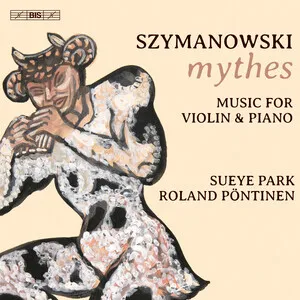
Mythes: Music for Violin & Piano
Karol Szymanowski / Sueye Park / Roland Pöntinen
Młoda Polska
2022
2
/5
Piano Works
Karol Szymanowski / Krystian Zimerman
Młoda Polska
2013
1
/5
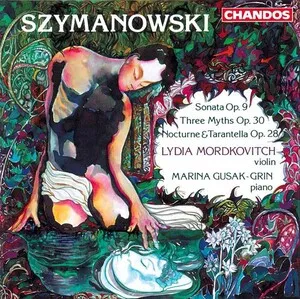
Sonata, op. 9; Nocturne and Tarantella, op. 28; Three Myths, op. 30
Karol Szymanowski / Lydia Mordkovitch / Marina Gusak-Grin
Młoda Polska
Classical
Sonata
2013
1
/5
The Complete Piano Music
Karol Szymanowski / Sinae Lee
Młoda Polska
2013
1
/5
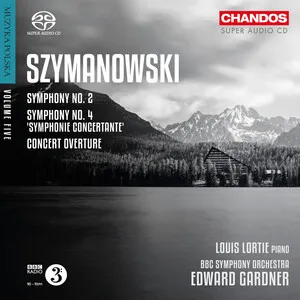
Symphony No. 2; Symphony No. 4 'Symphonie concertante'; Concert Overture
Karol Szymanowski
Młoda Polska
2012
1
/5
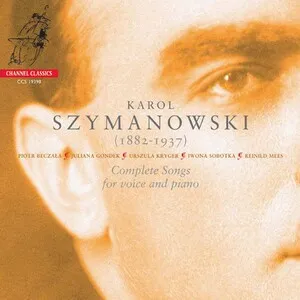
Complete Songs voice & piano
Karol Szymanowski
Młoda Polska
2009
1
/5
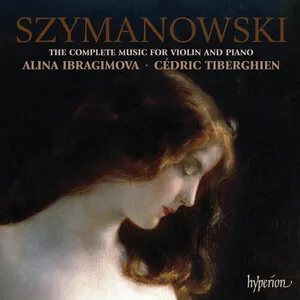
The Complete Music for Violin and Piano
Karol Szymanowski / Alina Ibragimova Алина Ибрагимова / Cédric Tiberghien
Młoda Polska
2007
1
/5
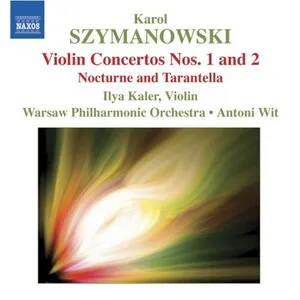
Violin Concertos Nos. 1 and 2; Nocturne and Tarantella
Karol Szymanowski
Młoda Polska
2006
1
/5
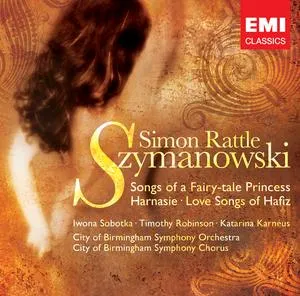
Songs of a Fairy-Tale Princess; Harnasie; Love Songs of Hafiz
Karol Szymanowski
Młoda Polska
Orchestral Song
2005
1
/5
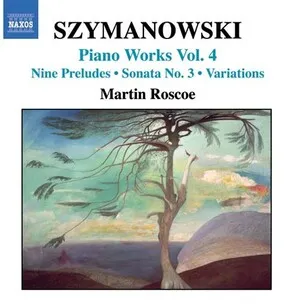
Piano Works Vol. 4
Karol Szymanowski / Martin Roscoe
Młoda Polska
Classical
2003
1
/5
The Complete Mazurkas
Karol Szymanowski / Marc-André Hamelin
Mazurka
Młoda Polska
2001
1
/5
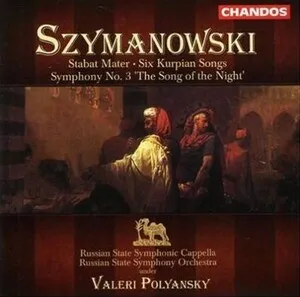
Stabat Mater; Six Kurpian Songs; Symphony No. 3 'The Song of the Night'
Karol Szymanowski / State Symphony Capella of Russia Государственная академичес…
Młoda Polska
2000
1
/5
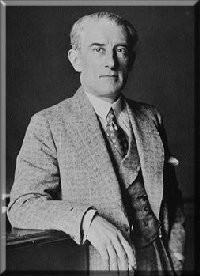
Piano Works Vol. 3
Karol Szymanowski / Martin Roscoe
Młoda Polska
1997
1
/5
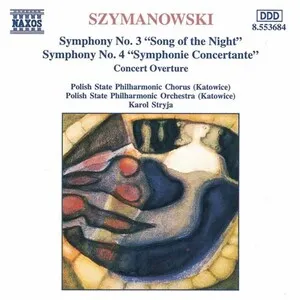
Symphony No. 3 "Song of the Night"; Symphony No. 4 "Symphonie concertante"; Concert Overture
Karol Szymanowski
Młoda Polska
1997
1
/5
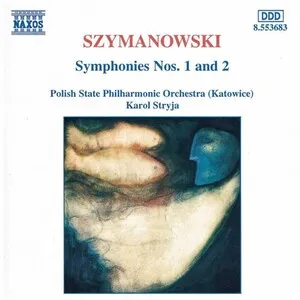
Symphonies Nos. 1 and 2
Karol Szymanowski / Filharmonia Śląska / Karol Stryja
Młoda Polska
1996
1
/5
Piano Works Vol. 2
Karol Szymanowski / Martin Roscoe
Młoda Polska
Classical
1995
1
/5
Piano Works Vol. 1
Karol Szymanowski / Martin Roscoe
Młoda Polska
Classical
1994
1
/5
Stabat Mater; Litany to the Virgin Mary; Symphony No.3
Karol Szymanowski
Młoda Polska
1973
1
/5
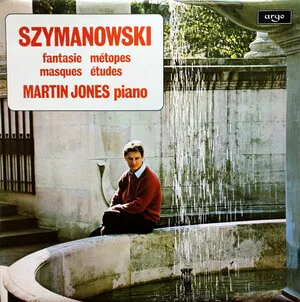
Fantasie; Métopes; Masques; Études
Karol Szymanowski / Martin Jones

Młoda Polska
Etnofonie Kurpiowskie: Tribute to Szymanowski and Skierkowski
Karol Szymanowski
Kurpian Folk Music
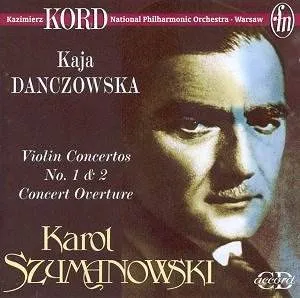
Violin Concertos No. 1 & 2; Concert Overture
Karol Szymanowski
Młoda Polska
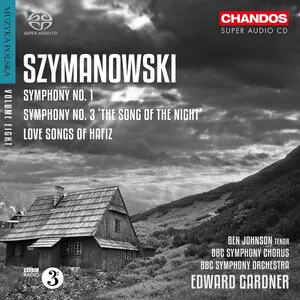
Symphony No. 1; Symphony No. 3 'The Song of the Night'; Love Songs of Hafiz
Karol Szymanowski
Młoda Polska
Orchestral Works / Orchesterwerke / L'oeuvre d'orchestre
Karol Szymanowski
Młoda Polska
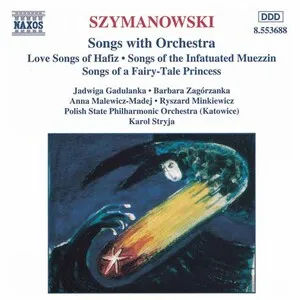
Songs With Orchestra
Karol Szymanowski
Młoda Polska
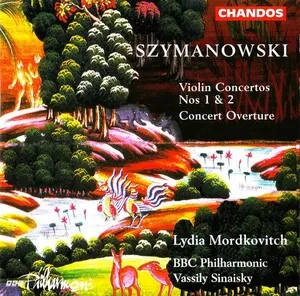
Violin Concertos Nos 1 & 2; Concert Overture
Karol Szymanowski
Młoda Polska
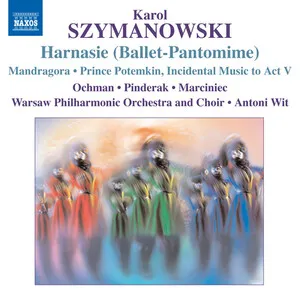
Harnasie (Ballet-pantomime); Mandragora; Prince Potemkin, Incidental Music to Act V
Karol Szymanowski
Młoda Polska
King Roger
Karol Szymanowski
Młoda Polska
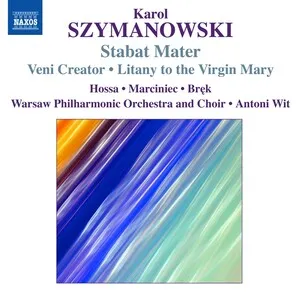
Stabat Mater; Veni Creator; Litany to the Virgin Mary
Karol Szymanowski
Młoda Polska
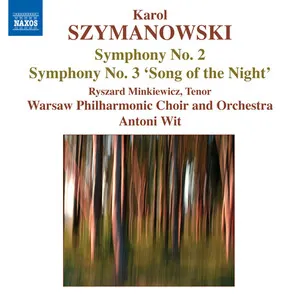
Symphony No. 2; Symphony No. 3 'Song of the Night'
Karol Szymanowski
Młoda Polska
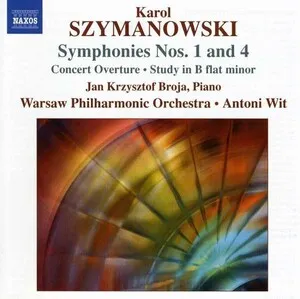
Symphonies Nos. 1 & 4; Concert Overture; Study in B flat minor
Karol Szymanowski
Młoda Polska
Song of the Night; Violin Concerto No. 1
Karol Szymanowski
Młoda Polska
Similar artists
3
/5
Marc-André Hamelin
Chamber Music
Classical
Classical Piano
2
/5
Martin Roscoe
Classical
Młoda Polska
Chamber Music
4
/5
Frédéric Chopin
Classical
Character Piece
Nocturne
2
/5
Reinbert de Leeuw
Classical
Classical Piano
Impressionism
4
/5
Maurice Ravel
Impressionism
Classical
Neoclassicism
3
/5
Krystian Zimerman
Classical
Concerto
Classical Performance
3
/5
BBC Symphony Orchestra
Classical
Opera
Orchestral
3
/5
Arthur Rubinstein
Classical
Character Piece
Classical Piano
3
/5
Rafal Blechacz
Classical
Classical Piano
Mazurka
3
/5
Warsaw Philharmonic Orchestra
Classical
Classical Piano
Orchestral
Download our mobile app
Get the Melodigging app and start digging for new genres on the go
Download on the App Store
Get it on Google Play
© 2026 Melodigging
Give feedback
Legal
Melodding was created as a tribute to
Every Noise at Once
, which inspired us to help curious minds keep digging into music's ever-evolving genres.