Genres
Artists
Albums
Make Music
Sign in
Sign in
Artists
Electronic Rock
Artists
Electronic Rock
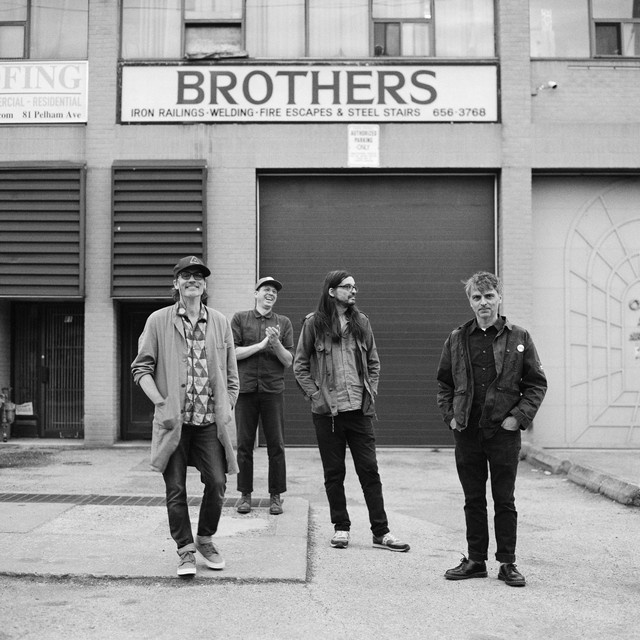
Holy Fuck
2016
·
1 album
Listen
3
/5
Genres
Zoomergaze
Zoomergaze is a Gen Z, internet-native evolution of shoegaze that fuses the genre’s dense, guitar-washed textures with hyperpop/digicore maximalism and modern trap/emo-rap rhythm programming. It favors blown‑out saturation, brickwalled dynamics, digital clipping, and wide stereo fields, often pairing jet‑engine guitars with 808 subs, jittery hi‑hats, breakbeat flourishes, and intimate, lightly Auto‑Tuned vocals. The mood leans dreamy yet emotionally raw—nostalgic, melancholic, and diaristic—delivered through DIY production that thrives on Bandcamp, SoundCloud, and TikTok discovery. Where classic shoegaze hid the singer in the mix, Zoomergaze keeps the voice present and personal, weaving confessional hooks into shimmering noise and glitchy, internet-era sound design.
Discover
Listen
Rage
Rage is a high-energy, synth-forward trap production style characterized by bright, detuned supersaw leads, pounding 808s, and fast, looping drum patterns built for explosive rap performances. It emphasizes instant-impact hooks, minimal chord movement, and anthemic drops that feel closer to festival EDM crescendos than traditional hip hop breakdowns. The sound rose from the post–SoundCloud, punk-influenced branch of trap, drawing on the icy simplicity of Playboi Carti’s late-2010s palette and marrying it with trance/eurodance-styled leads and EDM trap dynamics. The result is a glossy, adrenalized bed for shouted, rebellious vocals—music designed for mosh pits, arena stages, and viral snippets alike.
Discover
Listen
Dark Clubbing
Dark clubbing is a contemporary, internet-spread club aesthetic that blends the physical energy of techno and EBM with the shadowy atmosphere of darkwave and post‑punk. Typically mid‑tempo to driving (roughly 115–130 BPM), it favors pounding four‑to‑the‑floor kicks, gritty bass synths, cold synthetic textures, and reverb‑soaked vocals. The result is dance music that feels nocturnal and cinematic—equally suited to smoke‑filled basements and late‑night drives. Although it borrows heavily from older traditions (industrial, electro, goth/EBM club culture), dark clubbing cohered as a playlist‑ and DJ‑driven micro‑scene in the late 2010s, unified more by shared mood, sound design, and visual aesthetic (neon noir, chrome, leather, shadow) than by rigid formal rules.
Discover
Listen
Drift
Drift is a contemporary micro-style of ambient centered on slowly evolving tonal beds, gentle tape-worn textures, and an emphasis on atmosphere over event. It favors long decays, soft-focus harmonies, and minimal or absent percussion so that sounds seem to hover and "drift" in place. Production typically blends synth pads, processed guitar, and found sounds with heavy use of reverb, delay, and subtle modulation. Compared to classic dark ambient, drift is warmer and more consonant; compared to new age, it is more textural and reductionist. The result is music designed for deep listening, sleep, study, or contemplative environments.
Discover
Listen
Gaming Dubstep
Gaming dubstep is a high-energy offshoot of modern dubstep tailored for gameplay, esports highlights, and streaming content. It emphasizes explosive drops, cinematic builds, and hyper-detailed sound design that cuts through voice chat and game SFX. Typically centered around 140 BPM with a half-time groove, it blends brostep aggression, riddim simplicity, and melodic dubstep breakdowns. Producers favor bright, wide leads for anthemic choruses and gritty, midrange-focused bass timbres for drops. The result is music that feels epic and adrenalized, built to amplify on-screen action and montage pacing.
Discover
Listen
Post-Rock
Post-rock is a style that uses traditional rock instrumentation—guitars, bass, drums, and often piano or strings—to create expansive textures, evolving soundscapes, and dynamic arcs rather than conventional verse–chorus songs. It emphasizes timbre, atmosphere, and gradual development: clean or lightly overdriven guitars drenched in delay and reverb, cyclical ostinatos, layered crescendos, and pronounced quiet–loud dynamics. Vocals, if present, are often sparse, wordless, or treated as another textural layer. The genre draws heavily from ambient, minimalism, krautrock, progressive and space rock, shoegaze, noise rock, and experimental practices, yielding music that can feel cinematic, contemplative, and emotionally cathartic.
Discover
Listen
Alternative
Alternative is an umbrella term for non-mainstream popular music that grew out of independent and college-radio scenes. It emphasizes artistic autonomy, eclectic influences, and a willingness to subvert commercial formulas. Sonically, alternative often blends the raw immediacy of punk with the mood and texture of post-punk and new wave, adding elements from folk, noise, garage, and experimental rock. While guitars, bass, and drums are typical, production ranges from lo-fi to stadium-ready, and lyrics tend toward introspection, social critique, or surreal storytelling. Over time, “alternative” became both a cultural stance and a market category, spawning numerous substyles (alternative rock, alternative hip hop, alternative pop, etc.) and moving from underground circuits to mainstream prominence in the 1990s.
Discover
Listen
Dance-Punk
Dance-punk is a fusion of punk’s abrasive energy and attitude with the groove-forward rhythms of funk and disco. It favors tight, four-on-the-floor drum patterns, rubbery and syncopated bass lines, choppy, scratchy rhythm guitars, and percussion accents like cowbell and handclaps. Vocals are often shouted, talk-sung, or delivered with sardonic cool, and lyrics tend to be ironic, urban, and socially observant. A first wave emerged in the late 1970s and early 1980s alongside post-punk and no wave scenes (especially in New York and the UK), while a high-profile revival in the early 2000s (centered around DFA Records) brought analog synths, minimalist production, and indie-club sensibilities back to the fore.
Discover
Listen
Electronic Rock
Electronic rock is a fusion genre that blends the instrumentation, songwriting, and performance energy of rock with the timbres, tools, and production methods of electronic music. Guitars, bass, and live drums coexist with synthesizers, drum machines, sequencers, and samplers, yielding textures that can range from shimmering and atmospheric to gritty and industrial. Stylistically, electronic rock spans motorik grooves and experimental soundscapes, the sleek sheen of new wave and synth-driven hooks, the distortion and aggression of industrial-influenced rock, and the minimalist pulse of indie and dance-oriented hybrids. It often emphasizes sound design, studio processing, and loop-driven rhythms while retaining rock’s song forms, vocal presence, and live performance ethos.
Discover
Listen
Electronic
Electronic is a broad umbrella genre defined by the primary use of electronically generated or electronically processed sound. It encompasses music made with synthesizers, drum machines, samplers, computers, and studio/tape techniques, as well as electroacoustic manipulation of recorded or synthetic sources. The genre ranges from academic and experimental traditions to popular and dance-oriented forms. While its sonic palette is rooted in electricity and circuitry, its aesthetics span minimal and textural explorations, structured song forms, and beat-driven club permutations. Electronic emphasizes sound design, timbre, and studio-as-instrument practices as much as melody and harmony.
Discover
Listen
Instrumental
Instrumental is music created and performed without sung lyrics, placing the expressive weight on melody, rhythm, harmony, and timbre produced by instruments. As an umbrella practice it appears in many cultures, but its modern identity cohered in Baroque-era Europe when purely instrumental forms such as the sonata, concerto, and dance suites began to flourish. Since then, instrumental thinking—developing motives, structuring form without text, and showcasing timbral contrast—has informed everything from orchestral music and solo piano repertoire to post-rock, film scores, and beat-driven electronic styles. Instrumental works can be intimate (solo or chamber) or expansive (full orchestra), narrative (programmatic) or abstract (absolute music). The absence of lyrics invites listeners to project imagery and emotion, making the style a natural fit for cinema, games, and contemplative listening.
Discover
Listen
Show all 11 genres
Albums
2016
2
/5
Congrats
Holy Fuck
Dance-Punk
Electronic Rock
Similar artists
4
/5
Justice
Electro House
French Electro
Nu Disco
1
/5
Various Artists
Afro-Funk
Alternative Rock
Ambient
4
/5
Nine Inch Nails
Cyberpunk
Industrial
Industrial Rock
4
/5
LCD Soundsystem
Dance-Punk
Alternative Dance
Electronic Rock
3
/5
YMIR
Bass Trap
Dark Clubbing
Electronic Rock
4
/5
STARSET
Future Rock
Rock
Alternative Rock
4
/5
Pendulum
Electronic Rock
Drum And Bass
Dancefloor Drum And Bass
3
/5
Sohodolls
Electronic Rock
Digital Horror
Grave Wave
5
/5
The Weeknd
Contemporary R&b
Alternative R&b
Pop
5
/5
Daft Punk
Electronic
Filter House
Electro
Download our mobile app
Get the Melodigging app and start digging for new genres on the go
Download on the App Store
Get it on Google Play
© 2026 Melodigging
Give feedback
Legal
Melodding was created as a tribute to
Every Noise at Once
, which inspired us to help curious minds keep digging into music's ever-evolving genres.