Your digging level

For this genre
0/8
🏆
Sign in, then listen to this genre to level up

Description

Dark clubbing is a contemporary, internet-spread club aesthetic that blends the physical energy of techno and EBM with the shadowy atmosphere of darkwave and post‑punk.

Typically mid‑tempo to driving (roughly 115–130 BPM), it favors pounding four‑to‑the‑floor kicks, gritty bass synths, cold synthetic textures, and reverb‑soaked vocals. The result is dance music that feels nocturnal and cinematic—equally suited to smoke‑filled basements and late‑night drives.

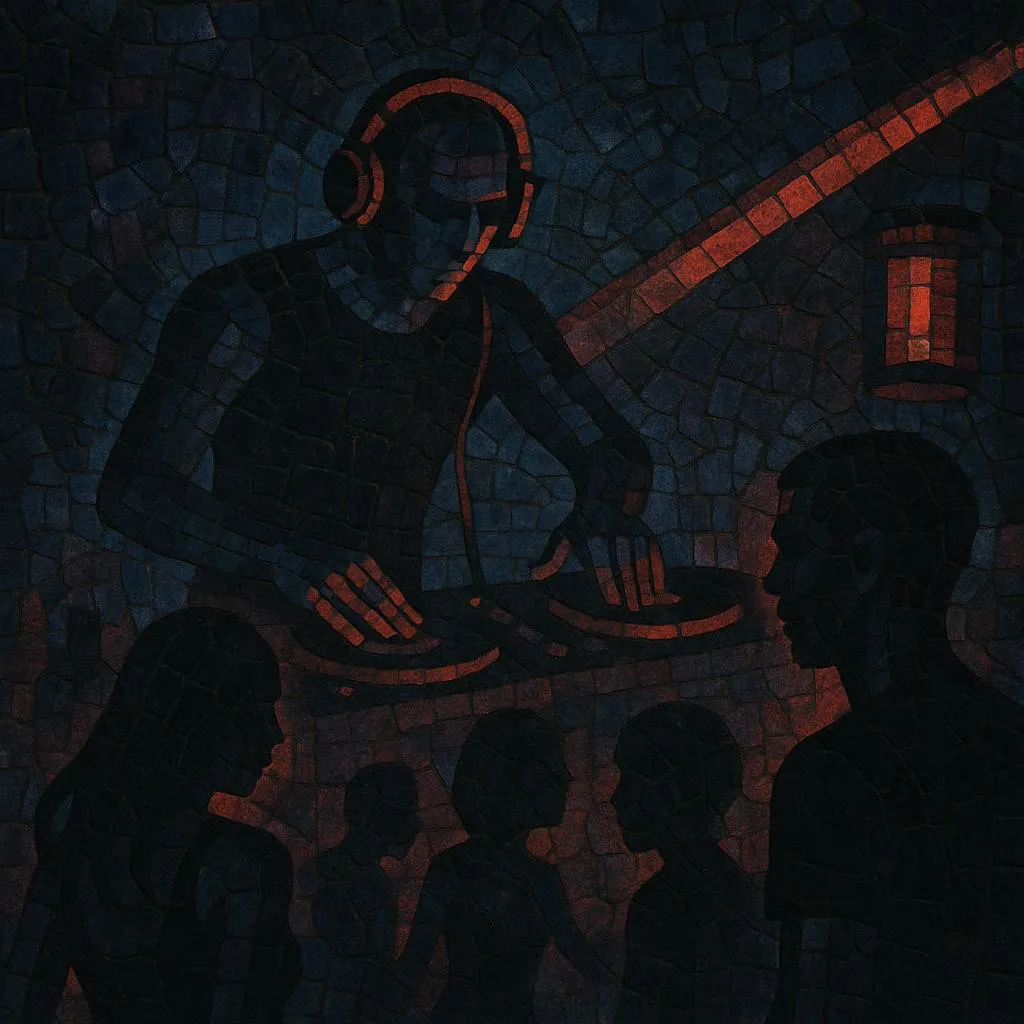
Although it borrows heavily from older traditions (industrial, electro, goth/EBM club culture), dark clubbing cohered as a playlist‑ and DJ‑driven micro‑scene in the late 2010s, unified more by shared mood, sound design, and visual aesthetic (neon noir, chrome, leather, shadow) than by rigid formal rules.


Sources: Spotify, Wikipedia, Discogs, RYM, MB, user feedback and other online sources

History

Origins (pre-2010s)

Dark clubbing’s DNA lies in late‑20th‑century underground dance and goth scenes. European EBM and industrial club culture brought martial kicks, sequenced basslines, and grit; post‑punk and darkwave contributed minor‑key harmonies, monotone vocal delivery, and a brooding lyrical stance; and techno/electro supplied the DJ‑centered, functional dancefloor language.

Coalescence in the late 2010s

By the mid‑to‑late 2010s, a distinct "dark clubbing" sound began circulating through YouTube mixes, boutique labels, and Berlin‑anchored club networks. This period saw a convergence of aesthetic signifiers—distorted bass arps, gated snares, icy pads—tied together by neon‑noir imagery and minimalist typography. Social media and streaming playlists helped codify the tag, grouping artists from disparate scenes under a shared mood and tempo range.

2020s expansion and cross-pollination

In the 2020s, dark clubbing spread globally through Bandcamp labels, independent DJs, and TikTok/short‑form video, often interleaving with dark disco, industrial techno, synthwave, and witch house. While still a loose umbrella term, it now denotes a recognizable palette: heavy compression/saturation, cold melodic cells, and club‑functional arrangements sculpted for smoke‑machine environments and late‑night endurance.

Aesthetic and cultural profile

The scene emphasizes DIY ethics, small‑room intensity, and a visual language of chrome, leather, strobes, and cinematic shadow. Its core appeal is affective: the catharsis of hard, driving rhythm fused to introspective melancholy.

How to make a track in this genre

Tempo, rhythm, and groove
•   Aim for 115–130 BPM. Keep a four‑on‑the‑floor kick for club functionality. •   Use syncopated off‑beat hi‑hats and metallic/percussive accents to create forward motion. •   Layer claps/snares with gated reverb or short rooms; consider occasional tom fills and industrial hits.
Sound palette and synthesis
•   Bass: sequenced analog‑style lines (saw/square with mild filter drive), sidechained to the kick. Try arpeggiated patterns with octave jumps. •   Leads/pads: cold, glassy pads (PWM, wavetable, or FM), minor‑key stabs, noise‑textured risers. •   Processing: tasteful distortion/saturation, tape or tube emulation, bit‑crush on percussion, chorus/flanger on pads to widen the stereo image.
Harmony and melody
•   Favor Aeolian or Phrygian modes; keep progressions sparse (i–VI–VII or pedal‑tone drones). •   Build hooks from short, repeating motifs; use semitone bends, tritones, and minor 2nds for tension. •   Reserve harmonic movement for breakdowns; keep verses and drops anchored to a bass pedal for club pressure.
Vocals and lyrics
•   Understated, intimate delivery (spoken/sung, low register) with slapback or plate reverb. •   Themes: nocturnal urbanity, detachment, desire, fatalism, hedonism—minimalist imagery over narrative density.
Arrangement and structure
•   DJ‑friendly: 8–16‑bar intros/outros with stripped drums or utility loops for mixing. •   Form: intro → groove set → first drop → breakdown (atmospheric) → main drop → outro. •   Use tension tools: high‑pass sweeps, snare rolls, gated noise, and subtractive breakdowns before heavy returns.
Mixing and mastering
•   Emphasize kick/bass translation on club systems; carve a kick notch in the bass around the fundamental. •   Multi‑band saturation to add density; tame harshness in 2–5 kHz with dynamic EQ. •   Master for loudness with headroom; control low‑end mono compatibility below ~120 Hz.
Performance and DJ usage
•   Prepare extended edits and drum‑only intros for blends. •   Pair with adjacent styles (EBM, dark disco, industrial techno) to maintain mood continuity throughout a set.
Techno Basics 1.2 💃🎶🕺
Techno TV
How vinyl DJs see waveforms in a dark club 💡
Digital DJ Tips
How to Darksynth #producer #synth
Tonepusher
SUPER EASY DARK MELODY TUTORIAL FOR ABSOLUTE BEGINNERS 🔥
Busy Works Beats

Best playlists

The Sound of Dark Clubbing
Every Noise at Once
Dark Clubbing
Dark Clubbing
Chosic
Dark Clubbing Mix
Dark Clubbing Mix
Spotify
Best of Dark Clubbing
volt.fm
LOCKDOWN - Cyberpunk / Dark Techno / Industrial Bass / Dark Clubbing / Dark Electro Music Mix
Versus Music Official

Top tracks

Locked
Share your favorite track to unlock other users’ top tracks

Upcoming concerts

in this genre
Influenced by
Has influenced
No genres found

Download our mobile app

Get the Melodigging app and start digging for new genres on the go
© 2026 Melodigging
Melodding was created as a tribute to Every Noise at Once, which inspired us to help curious minds keep digging into music's ever-evolving genres.
Buy me a coffee for Melodigging