Genres
Artists
Albums
Make Music
Sign in
Sign in
Artists
Opera
Artists
Opera
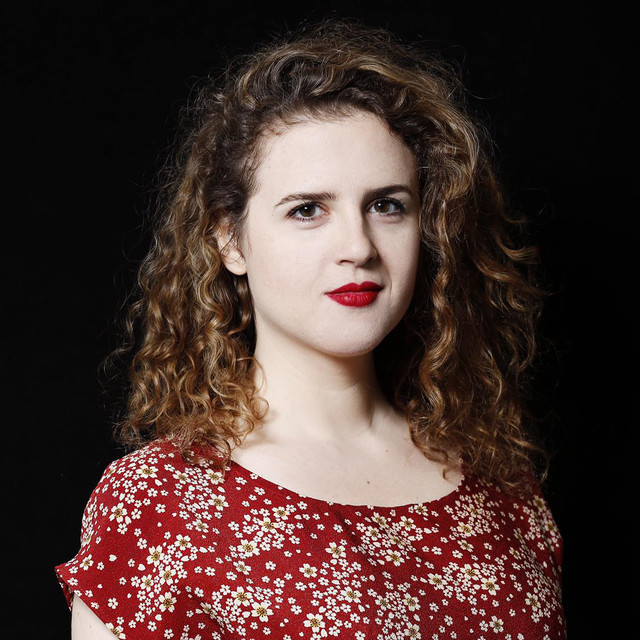
Graciela Oddone
2017
·
1 album
Listen
1
/5
Genres
Folclore Navarra
Folclore navarra refers to the traditional musical and dance practices of Navarre (Navarra) in northern Spain. At its core stands the region’s powerful jota navarra singing and dancing, performed with ringing, high‑projection voices over lively triple‑meter accompaniments by rondalla ensembles (guitars, bandurria, laúd), accordion, and local winds such as dulzaina/txistu with tamboril. Costuming at village fiestas commonly features white garments with red sashes and kerchiefs. Lyrical themes celebrate rural life, courtship, local identities and places, and religious or festal occasions (notably summer festivals and processions). In northern Navarre, Basque‑language song and dance (e.g., zortziko, aurresku family) interweave with the jota tradition, giving the region’s folklore a bilingual, bi‑cultural character. Today, schools, peñas, and folklore groups sustain performance, competitions, and teaching across the Ebro valley and the Pyrenean foothills.
Discover
Listen
Latin American Baroque
Latin American Baroque is the repertoire of sacred and festive art music written and performed in the cathedrals, missions, and courts of colonial Spanish and Portuguese America during the Baroque era. It blends European contrapuntal craft, basso continuo, and ceremonial grandeur with local languages, dance rhythms, and timbral practices. Typical forms include masses, motets, litanies, and villancicos (often for Christmas and major feasts), set in Latin as well as Spanish and sometimes indigenous languages such as Nahuatl, Quechua, or Guaraní. Instrumentation combines European forces—violins, cornetts, sackbuts, bajón (dulcian), harp, organ, and guitars—with local percussion and distinctive rhythmic cells (notably the sesquiáltera 3:2). The result is music that can be both solemn and architectonic for liturgy, and exuberant and dance-inflected for feast-day devotions.
Discover
Listen
Opera
Opera is a large-scale theatrical genre that combines music, drama, and visual spectacle, in which the story is primarily conveyed through singing accompanied by an orchestra. It unites solo voices, ensembles, and chorus with staging, costumes, and often dance to create a total artwork. Emerging in late Renaissance Italy and flourishing in the Baroque era, opera developed signature forms such as recitative (speech-like singing that advances the plot) and aria (lyrical numbers that explore character and emotion). Over the centuries it evolved diverse national styles—Italian bel canto, French grand opéra, German music drama—while continually experimenting with orchestration, harmony, narrative structure, and stagecraft.
Discover
Listen
Albums
2017
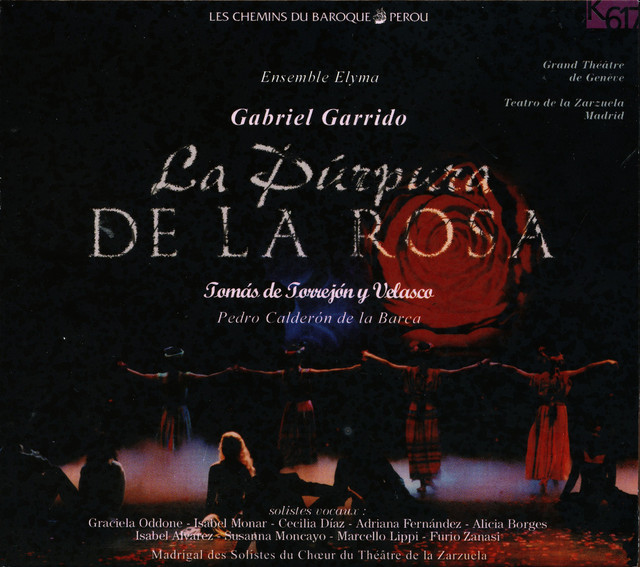
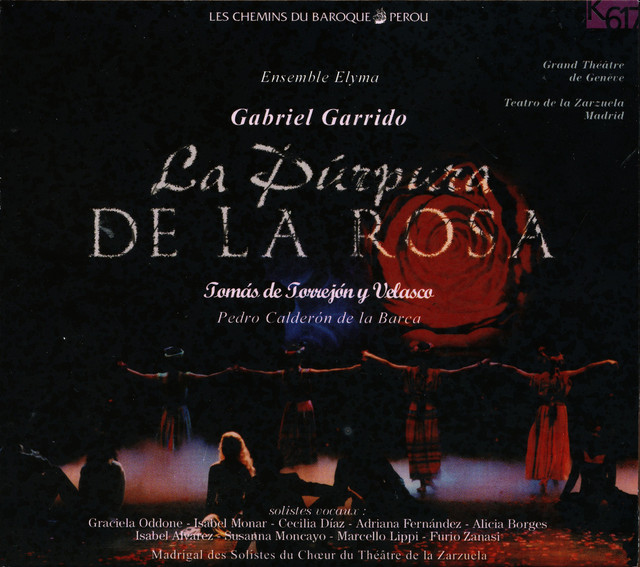
Torrejón y Velasco: La púrpura de la rosa
Tomás de Torrejón y Velasco, Graciela Oddone, Isabel Monar, Cecilia Diaz, Adria…
Folclore Navarra
Latin American Baroque
Similar artists
2
/5
Furio Zanasi
Gregorian Chant
Opera
Folclore Navarra
2
/5
Chœur De Chambre De Namur
Opera
Classical
Tragédie En Musique
2
/5
Cappella Mediterranea
Baroque
Early Music
Opera
2
/5
Eva Zaïcik
Baroque
Early Music
Opera
1
/5
Gabriel Garrido
Latin American Baroque
Folclore Navarra
1
/5
Susanna Moncayo
Tango
Folclore Navarra
Latin American Baroque
4
/5
Wolfgang Amadeus Mozart
Classical
Requiem
Classical Period
4
/5
London Symphony Orchestra
Classical
Ballet
American Classical Piano
4
/5
Berliner Philharmoniker
Classical
Symphony
Romantic Classical
4
/5
Herbert von Karajan
Classical
Symphonic Poem
Symphony
Download our mobile app
Get the Melodigging app and start digging for new genres on the go
Download on the App Store
Get it on Google Play
© 2026 Melodigging
Give feedback
Legal
Melodding was created as a tribute to
Every Noise at Once
, which inspired us to help curious minds keep digging into music's ever-evolving genres.