Genres
Artists
Albums
Make Music
Sign in
Sign in
Artists
Lo-Fi Emo
Artists
Lo-Fi Emo
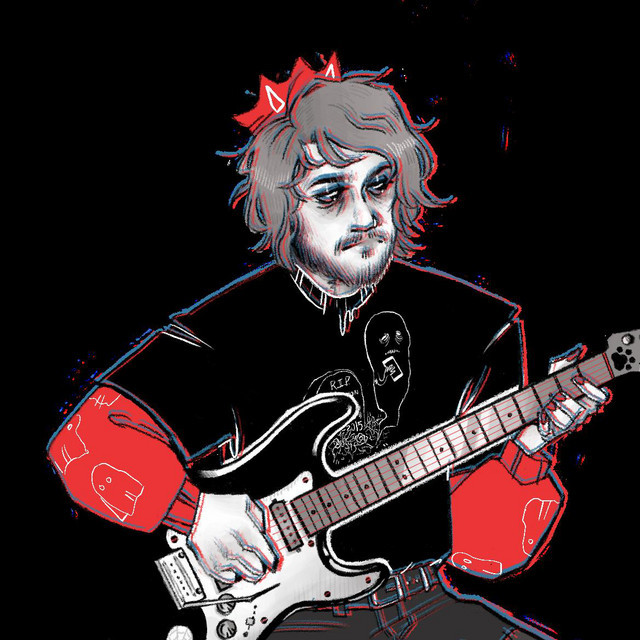
dandelion hands
2013–2017
·
4 albums
Listen
3
/5
Genres
Corecore
Corecore is an internet-native, collage-heavy audiovisual microgenre that turns the endless stream of online content into emotionally charged montages. It typically pairs melancholic or atmospheric music with rapid-fire edits of news clips, social-media posts, movie fragments, webcam confessions, and found audio, using juxtaposition to evoke overload, alienation, and fragile intimacy in the age of feeds. While it is primarily known as a video-editing aesthetic (especially on TikTok), its musical identity leans on ambient, vaporwave, breakcore, and experimental collage, favoring texture, mood, and narrative over traditional song structure. Rather than having a fixed sonic palette, corecore uses existing tracks—often downtempo, hazy, or nostalgic—then re-contextualizes them with speech samples and visual montage to produce catharsis and social commentary.
Discover
Listen
Lo-Fi Emo
Lo-fi emo is a DIY offshoot of the emo tradition that blends emotionally direct songwriting with the intimate aesthetics of home recording. It favors tape- or laptop-recorded sounds, audible room noise and hiss, simple guitar figures, and hushed, conversational vocals. Musically it often draws on twinkly Midwest-emo guitar voicings or sparse acoustic strums, minimal drum programming or lightly mic’d kits, and gentle reverb or chorus for a soft, dreamy patina. Lyrics are introspective and confessional—journals set to music—highlighting vulnerability, loneliness, nostalgia, and fleeting moments of connection. The genre flourished on Bandcamp, Tumblr, and SoundCloud, where micro-labels and peer-to-peer communities enabled rapid sharing of demos, splits, and cassette runs. Its low barrier to entry and personal tone made it a recognizable aesthetic across the 2010s and into the streaming era.
Discover
Listen
Analog Horror
Analog horror is an internet-born horror style that foregrounds the texture and limits of obsolete media. It is characterized by lo‑fi, band‑limited sound, tape hiss, wow and flutter, and the sonic vocabulary of public‑access TV, VHS cassettes, emergency broadcast signals, and numbers stations. In narrative terms, it tends toward cryptic, surreal plots presented as faux archival broadcasts, training films, or interrupted transmissions. Musically, the idiom leans on drones, minimal motifs, degraded samples, and detuned analog synths, using period‑authentic processing to evoke dread, nostalgia, and the uncanny.
Discover
Listen
Sleep
Sleep is a functional music category designed to support falling asleep and sustaining restful, uninterrupted sleep. It favors extremely low stimulation: slow or absent pulse, very soft dynamics, long envelopes, and timbres that avoid sharp transients. Stylistically, it borrows from ambient and new-age traditions (drones, gentle pads, soft piano), environmental and field recordings (rain, waves, wind), and unobtrusive tonal fragments. Production emphasizes smooth spectral balance, minimal movement, and gradual change so the listener can disengage without sudden arousal. In the streaming era, “sleep” became a distinct, curated space: long-form tracks and continuous mixes, colored-noise beds, and sparse neoclassical motifs, optimized for bedtime routines, night-long playback, and bedroom acoustics.
Discover
Listen
Bedroom Pop
Bedroom pop is an internet-native, DIY strain of pop and indie music characterized by intimate vocals, gentle melodies, and home-recorded production. Artists typically write, record, and mix their songs in domestic spaces using affordable software and minimal gear. Sonically, it blends indie pop and dream pop with lo-fi textures, soft rock chords, and understated electronic beats. The focus is on a confessional, diaristic tone—often whispery or close-mic’d—paired with warm saturation, tape hiss, and nostalgic timbres. Distribution thrives on platforms like YouTube, SoundCloud, and Bandcamp, where self-released tracks can spread virally.
Discover
Listen
Pov: Indie
"pov: indie" is a social-media-native microstyle built around short, cinematic indie-pop/indie-rock snippets designed to accompany a first-person (POV) narrative. Instead of being defined by a single new musical technique, it is defined by context: the music is chosen or written to feel like the soundtrack to a specific moment (a crush, a late-night walk, moving to a new city, seasonal nostalgia). Sonically it typically uses bright but soft guitars or synths, intimate vocals, simple memorable hooks, and production that reads clearly on phone speakers. The emotional tone is often wistful, tender, and “coming-of-age,” with lyrics that can be understood quickly in a 10–30 second clip.
Discover
Listen
Liminal Space
Liminal space is an internet-borne microgenre/aesthetic of ambient and vaporwave-adjacent music that aims to evoke the uncanny feeling of being in empty transitional places—deserted school corridors, unlit parking structures, late-night office lobbies, or closed shopping malls. Sonically, it blends hushed drones, diffuse synth pads, tape hiss, and faraway environmental noises with fragments of public-address announcements or detuned muzak. The harmonic language is static, unresolved, and memory-like, with slow fades, extreme reverberation, and time-stretching that flatten the sense of motion. The result is a dreamlike, nostalgic, and often eerie atmosphere that feels suspended between past and present, presence and absence.
Discover
Listen
Writing
Writing is a functional, streaming-era microgenre designed to support reading and writing by providing an unobtrusive sonic backdrop. It favors gentle dynamics, sparse textures, and a stable emotional temperature that reduces distraction while maintaining a subtle sense of flow. The sound palette commonly blends modern classical elements (felt piano, light strings), ambient pads and drones, soft post-rock guitars with long reverb tails, and understated downtempo or lo-fi rhythms. Tempos are typically slow to moderate (often 60–90 BPM) or pulse-free, with simple, repetitive motifs and gradual evolution rather than dramatic contrasts. Harmonically, it leans on consonant, slowly changing chords, modal centers, and extended triads for warmth, avoiding sharp dissonance or sudden modulations. Vocals, when present at all, are wordless; most tracks are instrumental to preserve focus.
Discover
Listen
Slowcore
Slowcore is a minimalist strain of indie rock defined by extremely slow tempos, hushed dynamics, and sparse arrangements. It emphasizes space, sustain, and emotional restraint over volume or virtuosity, often using clean guitars, soft drumming, and intimate vocals to create a glacial, contemplative atmosphere. Lyrically, it gravitates toward introspection, memory, and everyday melancholy, with melodies that unfold patiently and harmonies that remain simple and diatonic. The result is music that feels heavy with quiet, where silence and decay are as expressive as the notes themselves.
Discover
Listen
Lo-Fi
Lo-fi is a music aesthetic and genre defined by an embrace of audible imperfections—tape hiss, clipping, room noise, distorted transients, and uneven performance—that would be treated as errors in high-fidelity recording. Emerging from the DIY ethos of American indie and punk scenes, lo-fi turns budget constraints and home-recording limitations into a signature sound. Songs are often intimate, direct, and unvarnished, prioritizing immediacy and personality over polish. Typical lo-fi recordings use 4-track cassette or similarly modest setups, simple chord progressions, and understated vocals, spanning rock, folk, pop, and experimental approaches while retaining a homemade warmth and nostalgic patina.
Discover
Listen
Emo
Emo is a rock subgenre that emerged from the mid-1980s Washington, D.C. hardcore punk scene as “emotional hardcore” (often shortened to emocore). It retains punk’s urgency but foregrounds confessional, vulnerable lyrics and dramatic dynamic shifts. Across its eras, emo has encompassed several distinct sounds: the intense, cathartic D.C. style; the melodic, guitar‑intricate “Midwest emo” of the 1990s; and the 2000s mainstream wave that blended emo’s lyrical candor with pop‑punk hooks (often called “emo pop”). Common musical traits include intertwining clean and overdriven guitars, intricate arpeggios and counter‑melodies, elastic song structures, and vocals that range from intimate murmurs to raw, impassioned shouts.
Discover
Listen
Chiptune
Chiptune (also called chip music or 8-bit music) is a style of electronic music created with, or emulating, the programmable sound generator (PSG) and FM chips found in vintage game consoles and home computers such as the NES/Famicom, Game Boy, Commodore 64 (SID), Amiga, Atari ST, and others. The sound palette is defined by simple waveforms (square/pulse, triangle, saw, noise), rapid arpeggios that imply chords on limited channels, pitch bends, duty-cycle modulation, and crunchy noise percussion. These constraints lend chiptune its bright, percussive, and highly melodic character, often evoking early video-game aesthetics. While originally utilitarian—music for games and computer demos—the approach evolved into a standalone art form. Contemporary chiptune spans pure hardware-authentic tracks and hybrid productions that blend chip timbres with modern synthesis, drums, vocals, and mixing techniques.
Discover
Listen
Noise Pop
Noise pop blends the tunefulness and hook-centric structures of pop with abrasive textures such as feedback, distortion, and tape hiss. It typically features bright, simple melodies buried beneath a dense, overdriven "wall of sound," with vocals often mixed low or coated in reverb. The aesthetic draws on 1960s girl-group and power-pop songwriting but delivers it through punk-informed energy and noise-rock sonics, creating music that is simultaneously sweet and scuffed.
Discover
Listen
Indie
Indie (short for “independent”) began as music made and released outside the major-label system, where a DIY ethos shaped everything from songwriting and recording to artwork and touring. As a sound, indie is eclectic but often features jangly or overdriven guitars, intimate or understated vocals, melodic basslines, and unvarnished production that foregrounds authenticity over gloss. It spans rock, pop, and folk while welcoming electronic textures and lo‑fi aesthetics. Lyrics typically focus on personal observation, small details, and wry self-awareness rather than overt virtuosity or spectacle. Beyond style, indie describes a culture: small labels and stores, college/alternative radio, fanzines/blogs, community venues, and scenes that value experimentation, individuality, and artistic control.
Discover
Listen
Singer-Songwriter
Singer-songwriter is a song-focused style in which the same person writes, composes, and performs their own material, often accompanying themselves on acoustic guitar or piano. It emphasizes personal voice, lyrical intimacy, and storytelling over elaborate production. Arrangements are typically sparse, allowing the melody, words, and performance nuance to carry the song’s emotional weight. While rooted in folk and blues traditions, singer-songwriter embraces pop and rock songcraft, producing works that can range from quiet confessional ballads to subtly orchestrated, radio-ready pieces.
Discover
Listen
Experimental
Experimental music is an umbrella term for practices that prioritize exploration, process, and discovery over adherence to established genre norms. It embraces new sound sources, nonstandard tuning systems, indeterminacy and chance operations, graphic and open-form scores, extended techniques, and technology-led sound design (tape, electronics, computers, and live processing). Rather than a single style, it is a methodology and ethos: testing hypotheses about sound, structure, and performance, often blurring boundaries between composition, improvisation, sound art, and performance art. Listeners can expect unfamiliar timbres, unusual forms, and an emphasis on how music is made as much as the resulting sound.
Discover
Listen
Spoken Word
Spoken word is a performance-centered genre where text—poems, monologues, stories, or manifestos—is delivered aloud with musicality in voice rather than through singing. It may be entirely a cappella or accompanied by sparse instrumentation (often jazz combos, ambient textures, or minimal electronics) that frames the cadence and rhetoric of the performer. The emphasis is on language: prosody, pacing, imagery, and argument. Pieces often explore personal narratives, social critique, and political themes, drawing on techniques such as internal rhyme, alliteration, and repetition. While recordings exist, the tradition is fundamentally live, prioritizing immediacy, audience engagement, and oratorical presence.
Discover
Listen
Show all 17 genres
Albums
2017
3
/5
19
dandelion hands
Lo-Fi Emo
Bedroom Pop
Experimental
2014
3
/5
Bleak Week
dandelion hands
Lo-Fi Emo
Experimental
Lo-Fi
2013
4
/5
It's All In Your Head
dandelion hands
Lo-Fi Emo
Emo
Noise Pop
dandelion hands is dead!! vol 2
dandelion hands
Chiptune
Similar artists
1
/5
Various Artists
Afro-Funk
Alternative Rock
Ambient
3
/5
Flatsound
Lo-Fi Emo
Spoken Word
Indie Shoegaze
3
/5
Your Arms Are My Cocoon
Screamo
Bedroom Skramz
Lo-Fi Emo
3
/5
Crywank
Anti-Folk
Folk
Emo
2
/5
Brave Little Abacus
Emo
Math Rock
Lo-Fi Emo
3
/5
Tigers Jaw
Lo-Fi Emo
Indie Punk
Math Rock
3
/5
La Dispute
Emo
Spoken Word
Post-Hardcore
5
/5
Joji
Viral Pop
Electronic
Alternative R&b
5
/5
Bring Me The Horizon
Melodic Metalcore
Post-Hardcore
Screamo
4
/5
JPEGMAFIA
Experimental Hip Hop
Industrial Hip Hop
Experimental
Download our mobile app
Get the Melodigging app and start digging for new genres on the go
Download on the App Store
Get it on Google Play
© 2026 Melodigging
Give feedback
Legal
Melodding was created as a tribute to
Every Noise at Once
, which inspired us to help curious minds keep digging into music's ever-evolving genres.