Genres
Artists
Albums
Make Music
Sign in
Sign in
Artists
Medieval
Artists
Medieval
Christopher Wilson
1993
·
1 album
Listen
2
/5
Genres
Early Music Ensemble
An early music ensemble is a specialized vocal, instrumental, or mixed group devoted to the historically informed performance of Medieval, Renaissance, and Baroque repertoires (roughly before 1750). These ensembles typically use period instruments (or accurate reconstructions), historical tunings and temperaments, and performance practices derived from primary sources and treatises. Their goal is not a museum-like re‑creation but a living, stylistically grounded interpretation that clarifies texture, rhythm, rhetoric, and the soundworlds of earlier eras. Line‑ups range from small consorts (e.g., viols, recorders, lutes) to chamber orchestras with continuo groups, and from one‑to‑a‑part vocal consorts to medium‑sized choirs for larger polyphonic or Baroque works.
Discover
Listen
Viola Da Gamba
Viola da gamba refers both to a family of bowed, fretted, gut‑strung instruments held between the legs and to the repertoire and performance practice that grew around them. Emerging in late 15th‑century Spain and flourishing across Renaissance and Baroque Europe, gamba music spans intimate solo works, expressive duos, and rich consort textures. Its tone is subtle, vocal, and nuanced—ideal for contrapuntal lines, divisions (ornamented variations), and dance‑derived forms. Typical features include modal and early tonal harmony, contrapuntal writing, elaborate ornamentation, and a refined, inward character suited to courtly and domestic music-making.
Discover
Listen
Medieval
Medieval music refers to the diverse sacred and secular musical practices of Europe between the fall of the Western Roman Empire and the dawn of the Renaissance. It spans more than eight centuries, from early monophonic chant to the first notated polyphony. Core features include the use of church modes rather than major/minor, extensive reliance on vocal music (Latin sacred chant as well as vernacular song), and the progressive development from unmeasured chant to rhythmic modal notation and, later, mensural notation. Texture evolves from monophony (plainchant, troubadour songs) to organum, conductus, and the motet, culminating in complex isorhythmic works by the late 13th–14th centuries. Secular traditions—troubadours and trouvères in France, Minnesänger in German lands, and the Iberian Cantigas—coexisted with and influenced sacred practice. Instruments such as the vielle, harp, psaltery, recorder, shawm, hurdy-gurdy, and portative organ often doubled or accompanied voices, though much music remained purely vocal.
Discover
Listen
Albums
1993
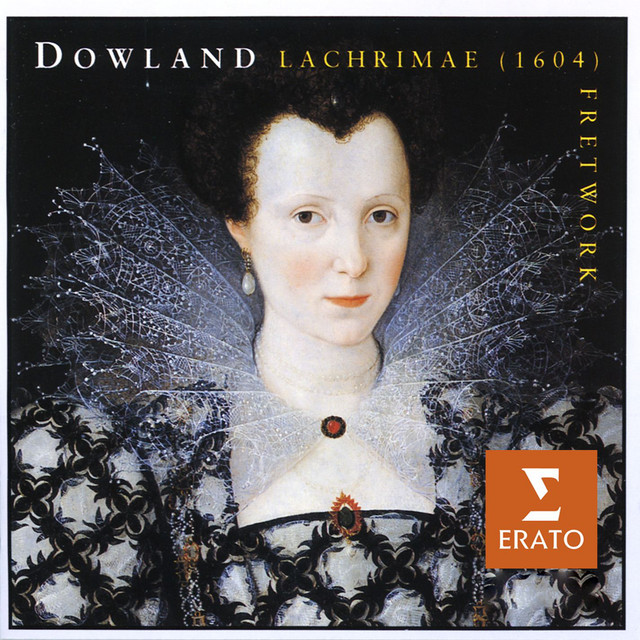
Dowland - Lachrimae
John Dowland, Fretwork, Christopher Wilson
Early Music Ensemble
Viola Da Gamba
Similar artists
3
/5
John Dowland
Renaissance
Elizabethan Song
Early Music
2
/5
Fretwork
English Renaissance
Baroque
Chamber Music
4
/5
Anonymous
Ars Antiqua
Gregorian Chant
Medieval
3
/5
Hildegard von Bingen
Gregorian Chant
Plainchant
Classical
2
/5
Michael Praetorius
Early Music
Medieval
Early Music Ensemble
2
/5
Sequentia
Gregorian Chant
Plainchant
Medieval
2
/5
Nigel North
Baroque
Classical
Early Music
2
/5
Les Musiciens De Saint-Julien
Baroque
Celtic
Early Music
2
/5
François Lazarevitch
Baroque
Early Music
Medieval
2
/5
Baltimore Consort
Celtic
Early Music
Medieval
Download our mobile app
Get the Melodigging app and start digging for new genres on the go
Download on the App Store
Get it on Google Play
© 2026 Melodigging
Give feedback
Legal
Melodding was created as a tribute to
Every Noise at Once
, which inspired us to help curious minds keep digging into music's ever-evolving genres.