Your digging level

For this genre
0/8
🏆
Sign in, then listen to this genre to level up

Description

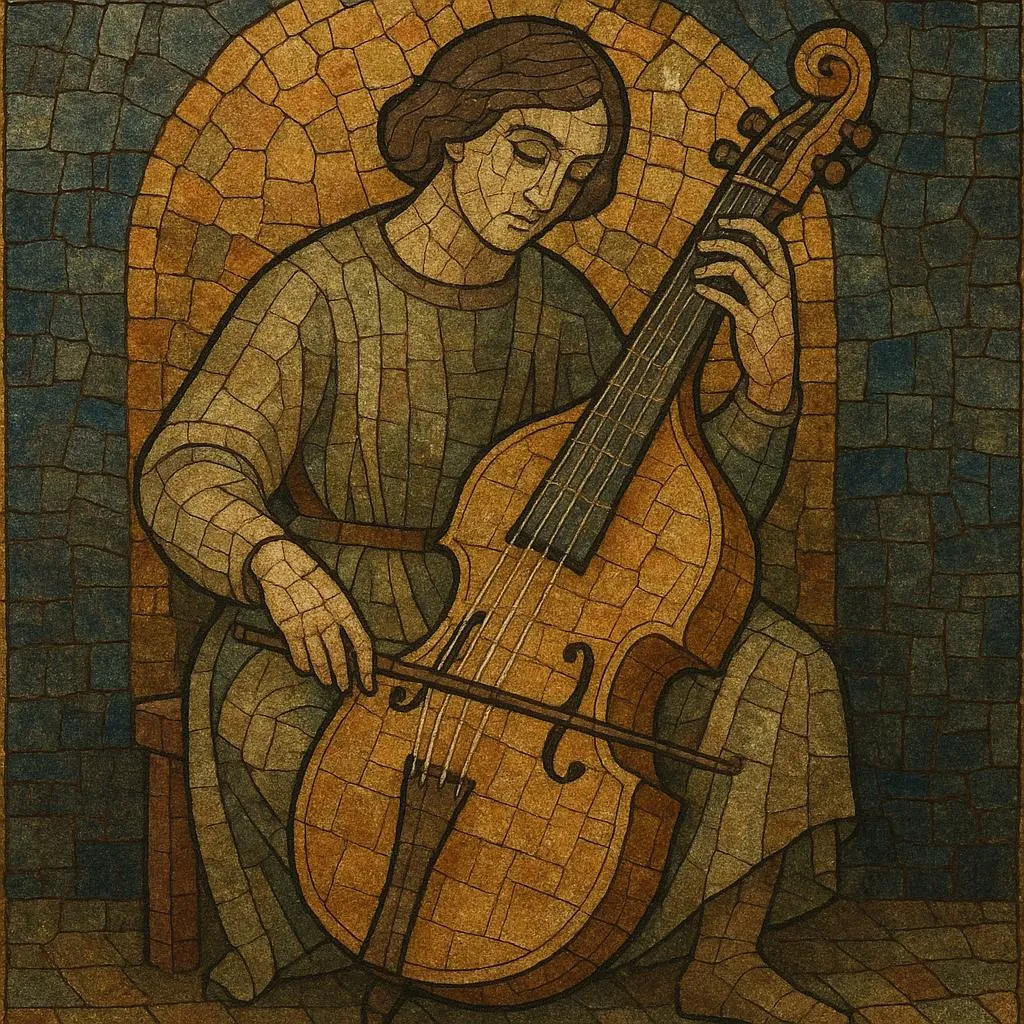
Viola da gamba refers both to a family of bowed, fretted, gut‑strung instruments held between the legs and to the repertoire and performance practice that grew around them.

Emerging in late 15th‑century Spain and flourishing across Renaissance and Baroque Europe, gamba music spans intimate solo works, expressive duos, and rich consort textures. Its tone is subtle, vocal, and nuanced—ideal for contrapuntal lines, divisions (ornamented variations), and dance‑derived forms.

Typical features include modal and early tonal harmony, contrapuntal writing, elaborate ornamentation, and a refined, inward character suited to courtly and domestic music-making.


Sources: Spotify, Wikipedia, Discogs, RYM, MB, user feedback and other online sources

History

Renaissance origins (late 1400s–1500s)

The viola da gamba family crystallized in Iberia from the bowed vihuela tradition and quickly spread to Italy, France, England, and Germany. By the 16th century it became a principal instrument for domestic music-making and courtly entertainment. Consort repertory flourished, emphasizing imitative counterpoint and dance forms.

Mature styles and national schools (1600s)

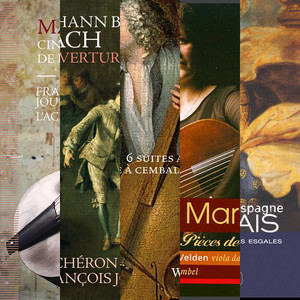
In the 17th century distinct idioms emerged. In England, consort fantasies and divisions (virtuosic diminutions) reached high sophistication through players like Christopher Simpson and Tobias Hume. In France, a highly expressive solo tradition blossomed, centered on pièces de viole that combined dance movements with character pieces; composers such as Sainte‑Colombe and later Marin Marais and Antoine Forqueray pushed technique and ornamentation.

Baroque virtuosity and transformation (1700s)

The Baroque period brought greater harmonic clarity and soloistic display. In Germany and the Low Countries, Johann Schenck and others wrote sonatas exploring emerging tonal practices. As the 18th century progressed, the cello gradually supplanted the gamba in public venues, but the instrument persisted in salons and certain courts (notably through Carl Friedrich Abel in London), leaving a substantial late repertoire.

Revival and historically informed performance (20th century–present)

After a long decline, the 20th‑century early‑music revival restored the gamba’s repertoire and techniques. Pioneering scholars and performer‑musicologists reconstructed instruments, bows, tunings, and ornamentation practice. Today, solo, duo, and consort performance on period instruments—and new works inspired by early idioms—are integral to historically informed performance.

How to make a track in this genre

Instrumentation and tuning
•   Write for bass viola da gamba (most common), typically tuned D–G–c–e–a–d' (in fourths with a mid third). Frets and gut strings favor pure intervals and nuanced intonation. •   Ensemble options include solo viol, duos with continuo (viol + theorbo/harpsichord), and viol consort (treble, tenor, bass viols).
Texture, form, and rhythm
•   Favor contrapuntal textures and clear voice-leading; allow each line a vocal contour and space for resonance. •   Use dance‑derived forms (allemande, courante, sarabande, gigue), grounds/chaconnes, and variation sets (recercadas, divisions) over repeating bass patterns. •   Keep tempi moderate; write rhythms that articulate bow strokes (inégales in French style; elegant, speech‑like phrasing).
Harmony, melody, and ornamentation
•   Employ modal or early tonal harmony with suspensions, prepared dissonances, and cadential formulas typical of 16th–17th centuries. •   Compose cantabile, speech‑inflected melodies within comfortable positions; exploit open strings and sympathetic resonance. •   Indicate or imply ornamentation: trills, mordents, slides (coulés), agréments; allow the performer latitude to add diminutions at repeats.
Continuo and notation practice
•   For Baroque works, supply a figured‑bass line for continuo; leave space for improvised realization. •   Use scordature sparingly for color; write idiomatic chords that respect the instrument’s tuning and bow capabilities.
Performance approach
•   Aim for a refined, intimate affect; shape phrases with gentle bow starts and tapered releases. •   Balance clarity and resonance—avoid overly thick textures that mask contrapuntal detail.

Top tracks

Locked
Share your favorite track to unlock other users’ top tracks

Related labels

Upcoming concerts

in this genre
Influenced by
Has influenced

Download our mobile app

Get the Melodigging app and start digging for new genres on the go
© 2026 Melodigging
Melodding was created as a tribute to Every Noise at Once, which inspired us to help curious minds keep digging into music's ever-evolving genres.
Buy me a coffee for Melodigging