Genres
Artists
Albums
Make Music
Sign in
Sign in
Artists
Byzantine Chant
Artists
Byzantine Chant
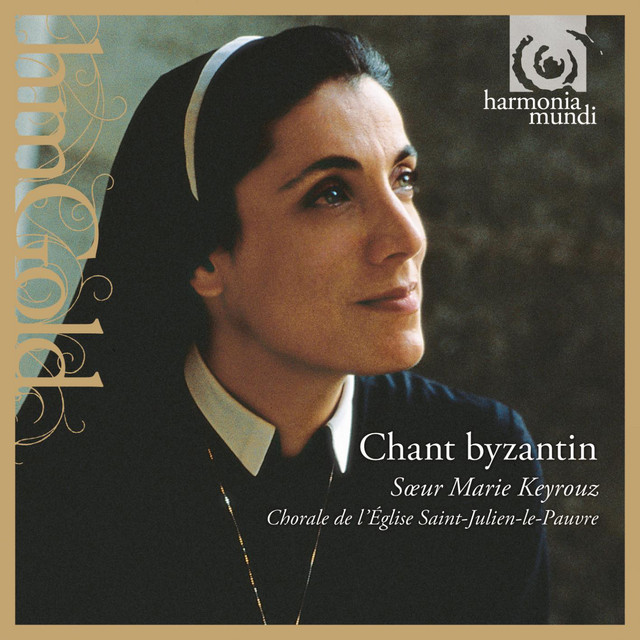
Chorale de l'église Saint-Julien-le-Pauvre
1989
·
1 album
Listen
1
/5
Genres
Greek Music
Greek music is a broad umbrella for the musical traditions and popular styles of Greece, spanning from ancient theoretical lineages to contemporary pop, rock, and urban fusions. It is characterized by modal melodies (dromoi) that relate to the Eastern maqam/Byzantine echoi systems, richly ornamented vocals, and distinctive asymmetric dance meters such as 7/8, 9/8, and 5/8. Signature instruments include the bouzouki and baglamas in urban styles, as well as violin, clarinet, laouto (lute), santouri (hammered dulcimer), and various regional folk instruments. Across the 20th century, Greek music moved from the Smyrna/Constantinople café-aman and rebetiko idioms to laiko, entechno (art song), and modern laiko, while parallel folk traditions (dimotika) continued to thrive. Contemporary Greek music blends these roots with Western pop and rock forms, often preserving Greek-language lyrics and dance-oriented rhythms.
Discover
Listen
Classical
Classical music is the notated art-music tradition of Europe and its global descendants, characterized by durable forms, carefully codified harmony and counterpoint, and a literate score-based practice. The term “classical” can refer broadly to the entire Western art-music lineage from the Medieval era to today, not just the Classical period (c. 1750s–1820s). It privileges long-form structures (such as symphonies, sonatas, concertos, masses, and operas), functional or modal harmony, thematic development, and timbral nuance across ensembles ranging from solo instruments to full orchestras and choirs. Across centuries, the style evolved from chant and modal polyphony to tonal harmony, and later to post-tonal idioms, while maintaining a shared emphasis on written notation, performance practice, and craft.
Discover
Listen
Syro-Aramaic Chant
Syro‑Aramaic chant (often called Syriac chant) is the ancient Christian liturgical singing tradition of the Syriac‑speaking churches of the Near East. Sung in Classical Syriac (a form of Aramaic), it is a monophonic, a cappella repertoire used in the Divine Liturgy and Daily Offices of West‑Syriac (e.g., Syriac Orthodox, Maronite) and East‑Syriac (e.g., Assyrian Church of the East, Chaldean) rites. Musically it is modal and highly melismatic, organized into an eight‑mode system (Oktoechos) with Syriac names (Qadmoyo, Trayono, Tlithoyo, Rbiyo, Hmsho, Shtithoyo, Shbi‘oyo, Tminoyo). The core corpus is preserved in the Beth Gazo (“Treasury of Melodies”), which supplies model tunes and cadential formulas for a wide range of hymn types (qolo, madrāšā, soghīthā, bo‘utho, teshbuhte). Performance is responsorial or antiphonal, led by a cantor (ḥazzā) with the assembly responding, and rhythm follows the prosody of the sacred text rather than fixed meter. Its sound world is solemn, luminous, and text‑driven: narrow to moderate ambitus, stepwise motion, and ornate turns and micro‑ornaments articulate the theology of the text. Historically unaccompanied and in unison, local practices sometimes add a soft ison‑like drone.
Discover
Listen
Byzantine Chant
Byzantine chant is the monophonic, a cappella liturgical music of the Eastern Roman (Byzantine) Church, sung primarily in Greek and organized around the octoechos (eight-mode) system. Its melodies are modal rather than harmonic, unfolding in one line supported in later practice by a sustained drone (ison). The repertory sets biblical psalms and hymnic poetry (e.g., troparia, kontakia, stichera, and canons) to melodies that follow textual accent and rhetorical pacing rather than strict meter. Notation employs neumes that encode melodic direction and ornate formulae, preserving a highly codified oral tradition. The sound is characterized by free rhythm, microtonal inflections in certain modes, and an austere, prayerful timbre designed for resonant ecclesiastical spaces. Byzantine chant remains central to the worship of the Eastern Orthodox Church and has shaped a wide family of chant traditions across the Mediterranean and Slavic worlds.
Discover
Listen
Byzantine Music
Byzantine music is the sacred chant tradition of the Byzantine (Eastern Roman) Empire, cultivated primarily in the Greek-speaking Christian world. It is a monophonic, vocal art that uses modal systems (the Octoechos), formulaic melodic patterns, and an ison (drone) to support the principal melody. It is performed a cappella in liturgical contexts, with texts drawn from scripture and hymnography in Greek and related Christian languages. Its notation developed a distinctive neumatic script, and its aesthetics emphasize prayerful sobriety, rhetorical declamation of sacred texts, and highly ornamented melodic gestures governed by modal grammar.
Discover
Listen
Albums
1989
1
/5
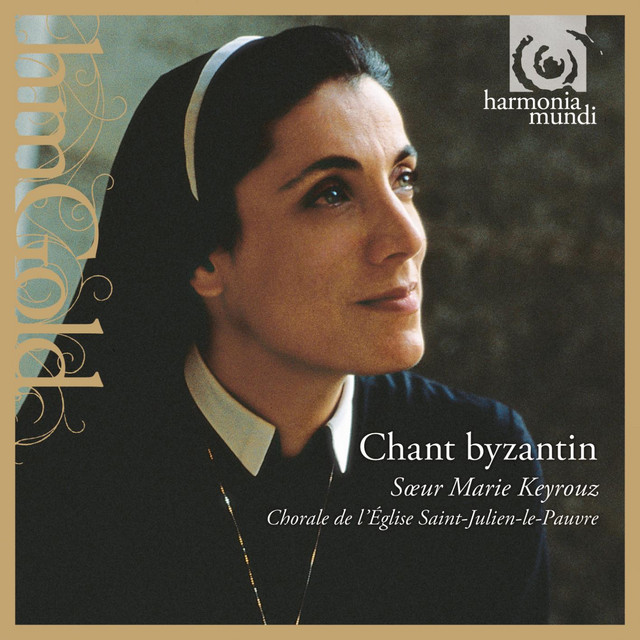
Chant Byzantin • Passion et résurrection
Sœur Marie Keyrouz, S.B.C.
Byzantine Chant
Byzantine Music
Syro-Aramaic Chant
Similar artists
4
/5
Anonymous
Ars Antiqua
Gregorian Chant
Medieval
1
/5
Sœur Marie Keyrouz
Syriac Chant
Byzantine Chant
Byzantine Music
4
/5
Traditional
Gregorian Chant
Classical
Spanish Classical Music
4
/5
Sergei Rachmaninoff
Classical
Moscow School
Concerto
3
/5
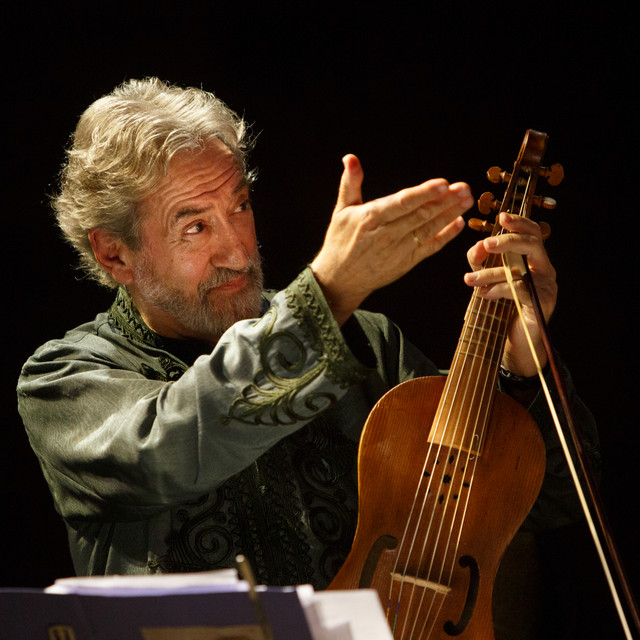
Jordi Savall
Renaissance
Baroque
Classical
3
/5
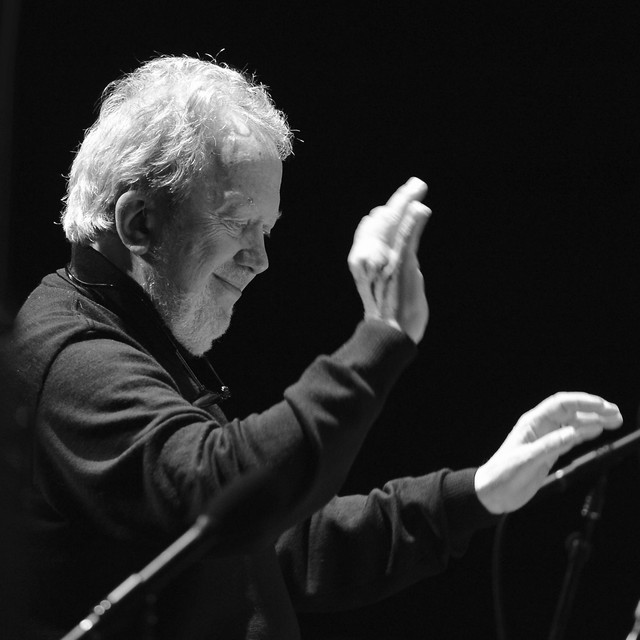
John Nelson
Opera
Byzantine Chant
Byzantine Music
2
/5
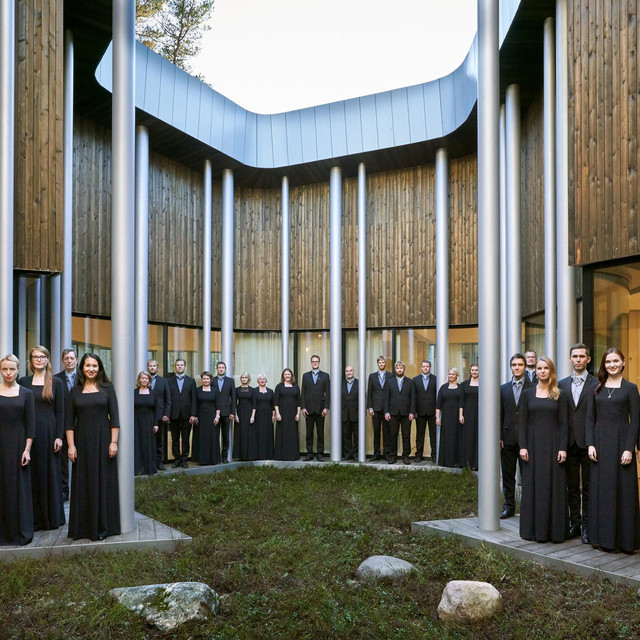
Estonian Philharmonic Chamber Choir
Choral
Minimalism
Holy Minimalism
2
/5
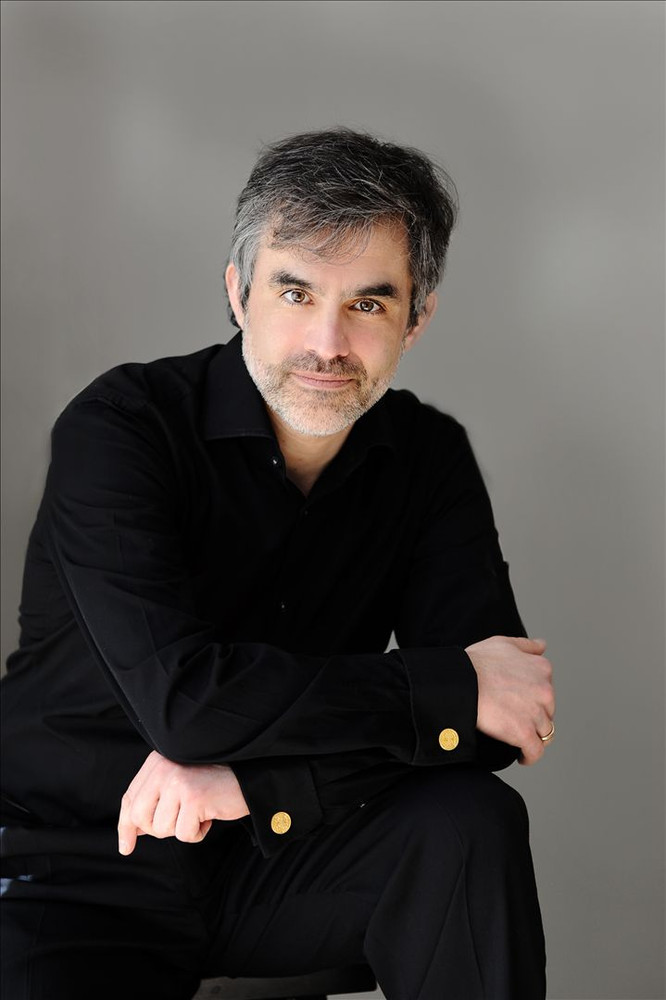
Alexander Lingas
Medieval
Byzantine Chant
Byzantine Music
2
/5
Cappella Romana
Byzantine Chant
Medieval
Byzantine Music
2
/5
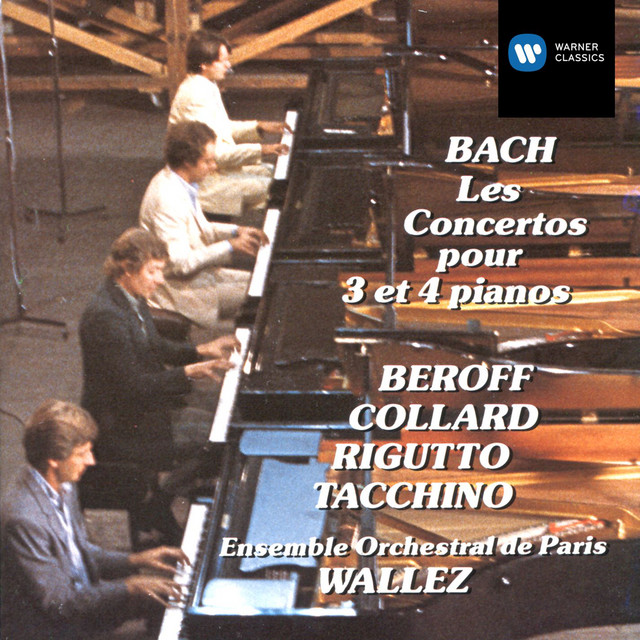
Ensemble Orchestral de Paris
Baroque
Concerto
Byzantine Chant
Download our mobile app
Get the Melodigging app and start digging for new genres on the go
Download on the App Store
Get it on Google Play
© 2026 Melodigging
Give feedback
Legal
Melodding was created as a tribute to
Every Noise at Once
, which inspired us to help curious minds keep digging into music's ever-evolving genres.