Genres
Artists
Albums
Make Music
Sign in
Sign in
Artists
Classical
Artists
Classical
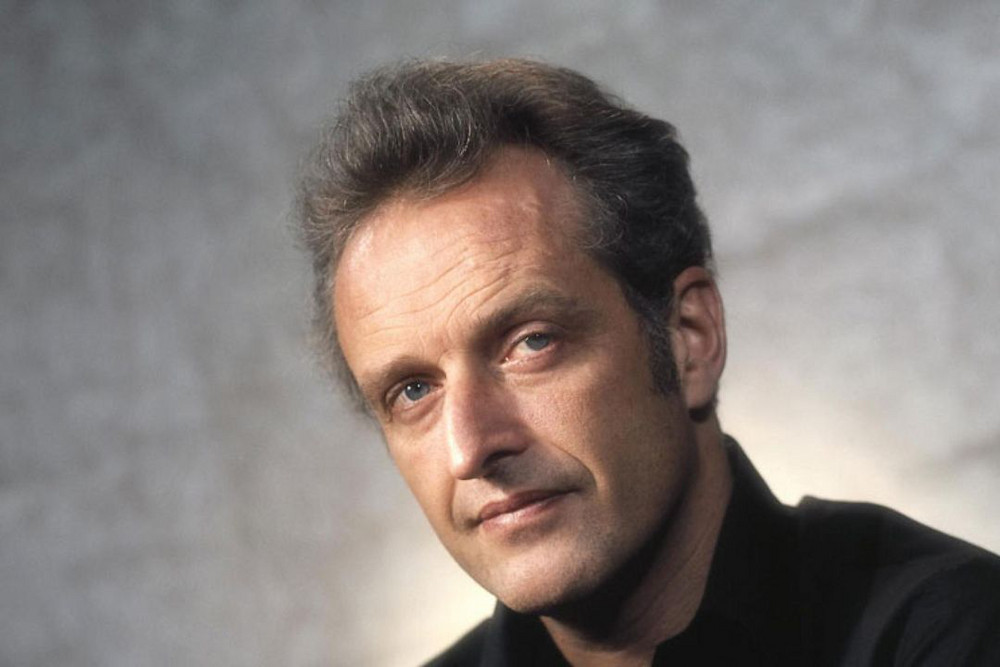
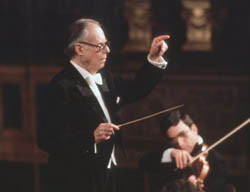
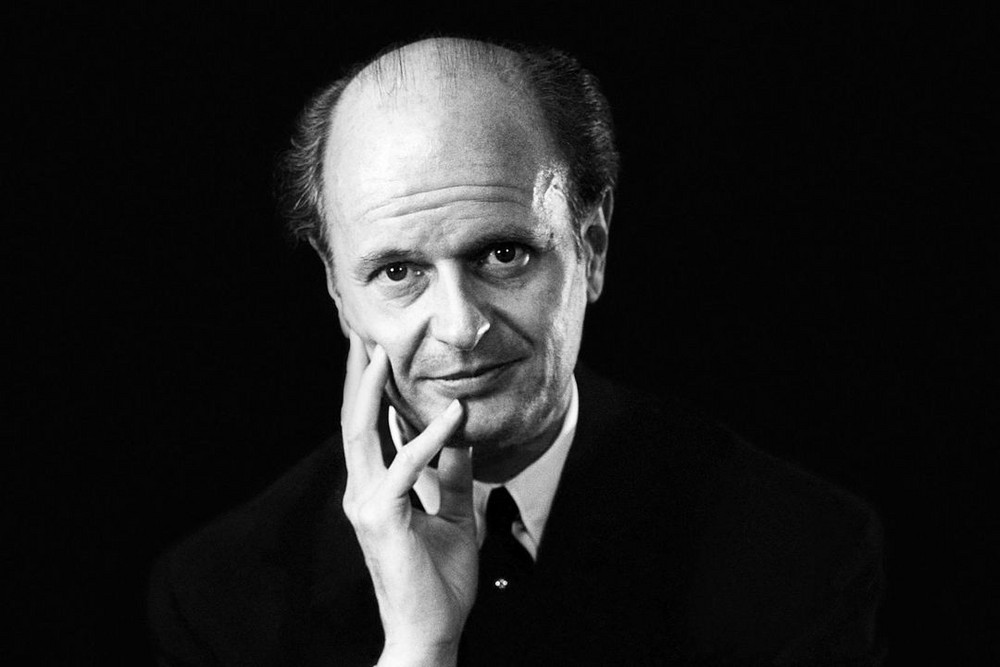
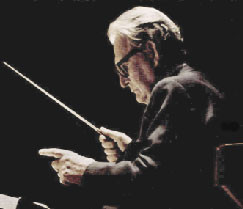
Carlos Kleiber
1973–2007
·
6 albums
Listen
3
/5
Genres
432hz
432hz is a wellness-oriented ambient/New Age micro-genre built around tuning music to the alternative concert pitch A=432 Hz instead of the modern standard A=440 Hz. In practice, 432hz releases are largely instrumental, slow-tempo, and reverb-rich, combining soft pads, drones, gentle piano, bowls/chimes, and nature sounds. Tracks are marketed for relaxation, meditation, yoga, sleep, and "energy" or "chakra" work, and are frequently tagged with wellness keywords. While advocates claim psychoacoustic or physiological benefits from 432 Hz tuning, these claims remain unproven; the sound signature audiences respond to is the calm production, consonant harmony, and spacious mixing typical of ambient and New Age music. As a streaming-native style, 432hz thrives on platforms like YouTube and Spotify where long-form background listening, SEO-friendly titling, and looping visuals support use-cases such as study, mindfulness, and sleep.
Discover
Listen
Writing
Writing is a functional, streaming-era microgenre designed to support reading and writing by providing an unobtrusive sonic backdrop. It favors gentle dynamics, sparse textures, and a stable emotional temperature that reduces distraction while maintaining a subtle sense of flow. The sound palette commonly blends modern classical elements (felt piano, light strings), ambient pads and drones, soft post-rock guitars with long reverb tails, and understated downtempo or lo-fi rhythms. Tempos are typically slow to moderate (often 60–90 BPM) or pulse-free, with simple, repetitive motifs and gradual evolution rather than dramatic contrasts. Harmonically, it leans on consonant, slowly changing chords, modal centers, and extended triads for warmth, avoiding sharp dissonance or sudden modulations. Vocals, when present at all, are wordless; most tracks are instrumental to preserve focus.
Discover
Listen
Regional Music
Regional music is an umbrella term for locally rooted musical styles that are strongly tied to a specific place, community, and cultural practice. Rather than denoting one uniform sound, it encompasses many traditions whose instrumentation, rhythms, language, and performance customs reflect the history and daily life of a region. In the recording era, labels, radio programmers, and later streaming platforms used “regional music” to group market- or scene-specific traditions (for example, Cajun in Louisiana, son in Cuba, morna in Cape Verde, or Irish traditional music). The term highlights locality, vernacular identity, and continuity with folk or indigenous practices, even when these styles modernize or cross over into pop and rock contexts.
Discover
Listen
New German School
The New German School (Neu deutsche Schule) was a mid‑19th‑century movement in German‑speaking music that championed program music, dramatic narrative, and progressive harmony. Centered around Franz Liszt in Weimar and Richard Wagner’s concept of music drama, it stood in contrast to the Brahms‑aligned current that favored "absolute" music. Its aesthetics privileged extra‑musical ideas (literature, myth, history) as structuring forces for composition. Techniques such as thematic transformation, extensive chromaticism, and motivic networks (leitmotifs) gave coherence to single‑movement orchestral forms and continuous operatic fabrics. The orchestra itself became an active narrator, expanded in size, color, and brass/woodwind innovations.
Discover
Listen
Operetta
Operetta is a light, theatrical form of musical drama that blends spoken dialogue with tuneful, dance-inflected numbers and comic plots. It favors memorable melodies, witty wordplay, and a buoyant orchestral palette over the heavy dramatic weight of grand opera. Emerging in mid-19th-century Paris and quickly flourishing in Vienna and beyond, operetta draws on popular dance rhythms (especially the waltz and march), satirical or romantic storylines, and clear, lyrical vocal writing. It serves as a bridge between opera and modern musical theatre, balancing classical technique with popular appeal.
Discover
Listen
Romantische Oper
Romantische Oper (Romantic Opera) is an early nineteenth‑century German operatic genre that blends folkloric subject matter, medieval or fantastic settings, and a heightened orchestral role with the number‑opera practices inherited from the late Classical era. Rather than growing directly out of the eighteenth‑century Singspiel, it was decisively shaped by the French opéra comique of the Revolutionary and Napoleonic eras. Characteristic are reminiscence motifs—recognizable musical phrases tied to characters, ideas, or places—that recur across a work to bind drama and music, prefiguring later leitmotivic techniques. Orchestration becomes vivid and dramaturgical (hunting horns, nature painting, offstage ensembles), while choruses and folk‑like tunes reinforce themes of the supernatural, heroism, nationhood, and the poetic power of nature. Typical libretti draw on German folk tales, legends, and medieval romance; musically, the style favors singable, diatonic melodies colored by chromatic harmony and striking timbral effects to depict magic and terror alongside lyric intimacy.
Discover
Listen
Romantic Classical
Romantic classical (Romantic-era) music is the 19th‑century phase of Western art music in which expression, individuality, and imagination came to the fore. Composers expanded the orchestra, embraced chromatic harmony and bold modulations, and favored long‑breathed, emotive melodies. Aligned with the wider Romantic movement in literature and the arts, it prized the subjective—love, nature, the supernatural, nationalism, and the sublime—often through programmatic narratives. New and transformed genres (the symphonic poem, grand opera, the art song/Lied, concert overtures) coexisted with reimagined Classical forms (symphony, sonata, concerto) that grew in scale and harmonic daring. From ca. 1800 through the early 20th century, Romantic music stretched from Beethoven’s heroic style and Schubert’s lyricism to Wagner’s leitmotivic dramas and Tchaikovsky’s symphonic ballet-infused language, culminating in late-Romantic gigantism and post-Romantic continuations.
Discover
Listen
Romanticism
Romanticism in music is a 19th‑century movement that prioritizes individual expression, emotional intensity, and evocative storytelling over the balanced clarity of the Classical era. It expands harmony with richer chromaticism and distant modulations, stretches forms (longer developments, cyclic structures), and favors flexible tempo (rubato) and extreme dynamics. Orchestras grow in size and color (tuba, piccolo, contrabassoon, harp, expanded brass and percussion), while the piano becomes a primary vehicle for intimate expression and virtuoso display. Key genres include the art song (Lied), character piece, symphony and symphonic poem, and grand opera with leitmotifs. Program music—works that narrate scenes, poems, or ideas—stands alongside absolute music, both suffused with heightened subjectivity, nature imagery, nationalism, and the sublime.
Discover
Listen
Symphony
A symphony is a large-scale composition for orchestra, typically cast in multiple movements that contrast in tempo, key, and character. In the Classical era, the most common layout was four movements: a fast opening movement (often in sonata form), a slow movement, a dance-like movement (minuet or later scherzo), and a fast finale. Over time, the symphony evolved from compact works of the mid-18th century into expansive, architecturally ambitious statements in the 19th and 20th centuries. Composers increasingly treated the symphony as a vehicle for thematic development, cyclical unity, and dramatic narrative—sometimes programmatic, sometimes abstract—using the full coloristic range of the modern orchestra. While rooted in Classical balance and clarity, symphonies incorporate a wide spectrum of harmonic languages and orchestral techniques. From Haydn’s wit and structural innovation to Beethoven’s heroic scope, Mahler’s cosmic breadth, and Shostakovich’s modern intensity, the symphony has remained a central pillar of Western concert music.
Discover
Listen
Classical Period
The Classical period in Western art music (c. 1750–1820) is defined by clarity of form, balance of phrase, and transparent textures. Composers favored singable melodies, symmetrical four- and eight-bar phrases, and functional harmony that modulates to closely related keys. Hallmark forms such as the symphony, string quartet, sonata, and classical concerto were standardized, often using sonata form, theme-and-variations, minuet and trio, and rondo designs. Orchestras expanded beyond strings to include standardized pairs of woodwinds and horns, with trumpets and timpani for ceremonial weight, while the fortepiano gradually replaced the harpsichord. The style pivoted away from the dense counterpoint of the late Baroque toward a more galant, conversational musical rhetoric. It culminated in the Viennese masters—Haydn, Mozart, and the early Beethoven—whose works crystallized the era’s ideals and prepared the way for Romanticism.
Discover
Listen
Classical Performance
Classical performance refers to the interpretive tradition of presenting Western classical repertoire in concert and studio settings. Rather than defining a compositional style, it describes how ensembles and soloists realize written scores through technique, tone, phrasing, and stylistic choices across eras from Baroque to contemporary. It centers on fidelity to the score and historically informed practice, while allowing space for interpretive nuance such as tempo flexibility, articulation, and dynamic shading. Typical forces include soloists, chamber groups, choirs, and orchestras performing in acoustically resonant venues or purpose-built studios, captured by production teams specialized in naturalistic sound.
Discover
Listen
Orchestral
Orchestral music refers to compositions written for an orchestra—a large ensemble typically built around a string section (violins, violas, cellos, double basses), complemented by woodwinds, brass, percussion, and often harp, keyboard, or other auxiliary instruments. A conductor coordinates the ensemble, shaping balance, phrasing, and expression. The style emphasizes coloristic timbre combinations, dynamic range from the softest pianissimo to explosive tuttis, and textures that can shift seamlessly between transparent chamber-like writing and monumental masses of sound. Orchestral writing underpins concert genres such as symphonies, overtures, and tone poems, as well as opera, ballet, and modern film and game scores. While orchestral writing evolved across centuries, its core craft centers on melody, counterpoint, harmony, register, and orchestration—the art of assigning musical ideas to instruments to achieve clarity, contrast, and narrative impact.
Discover
Listen
Opera
Opera is a large-scale theatrical genre that combines music, drama, and visual spectacle, in which the story is primarily conveyed through singing accompanied by an orchestra. It unites solo voices, ensembles, and chorus with staging, costumes, and often dance to create a total artwork. Emerging in late Renaissance Italy and flourishing in the Baroque era, opera developed signature forms such as recitative (speech-like singing that advances the plot) and aria (lyrical numbers that explore character and emotion). Over the centuries it evolved diverse national styles—Italian bel canto, French grand opéra, German music drama—while continually experimenting with orchestration, harmony, narrative structure, and stagecraft.
Discover
Listen
German Music
German music is a broad umbrella for the musical traditions created in the German-speaking lands, spanning from medieval sacred chant and courtly song to world-shaping classical composition, folk idioms, and modern popular and electronic styles. It is central to the Western classical canon (from chorales and counterpoint to symphonies and opera), yet it also encompasses vernacular streams such as Volksmusik and Schlager, as well as innovative modern movements like Krautrock, Neue Deutsche Welle, Berlin techno, Deutschrap, and Neue Deutsche Härte. Across eras, characteristic traits include structural clarity, deep harmonic development, contrapuntal craft, and—especially in vocal genres—German-language texts that range from devotional and philosophical to satirical and everyday themes. Because “German music” names a national tradition rather than one single style, it combines art-music lineages (medieval to contemporary), regional folk practices, and international exchange, with German hubs (Leipzig, Dresden, Berlin, Hamburg, Munich, Düsseldorf, Cologne) acting as engines of musical education, performance, and experimentation.
Discover
Listen
Classical
Classical music is the notated art-music tradition of Europe and its global descendants, characterized by durable forms, carefully codified harmony and counterpoint, and a literate score-based practice. The term “classical” can refer broadly to the entire Western art-music lineage from the Medieval era to today, not just the Classical period (c. 1750s–1820s). It privileges long-form structures (such as symphonies, sonatas, concertos, masses, and operas), functional or modal harmony, thematic development, and timbral nuance across ensembles ranging from solo instruments to full orchestras and choirs. Across centuries, the style evolved from chant and modal polyphony to tonal harmony, and later to post-tonal idioms, while maintaining a shared emphasis on written notation, performance practice, and craft.
Discover
Listen
European Music
“European music” is a broad umbrella covering the historical and regional practices that developed across the European continent, from medieval sacred chant and courtly song to folk traditions, art (classical) music, and later popular and electronic styles. Common threads include the codification of staff notation, the development of modal and later tonal harmony, the use of structured forms (e.g., mass, motet, madrigal; sonata, symphony, opera; verse–chorus song), and a rich palette of instruments culminating in the modern orchestra and various regional folk ensembles. While extremely diverse from region to region, European music is marked by a continuous dialogue between sacred and secular practices, learned written traditions and oral folk idioms, and later between art music and mass-market popular genres.
Discover
Listen
Western Classical
Western classical is the notated art-music tradition that developed in Europe from medieval Christian chant into the large-scale secular and sacred forms of the Baroque, Classical, Romantic, and modern eras. It is characterized by staff notation, evolving systems of modality and tonality, and forms such as symphony, sonata, concerto, mass, opera, and chamber music. Across its history, Western classical established an extensive theory of harmony and counterpoint, refined orchestration across strings, winds, brass, and percussion, and cultivated performance practices from a cappella chant to full symphonic and operatic forces. Its repertoire, pedagogy, and institutions (conservatories, orchestras, opera houses) made it a global reference point for compositional craft and instrumental technique.
Discover
Listen
Show all 17 genres
Albums
2007
1
/5
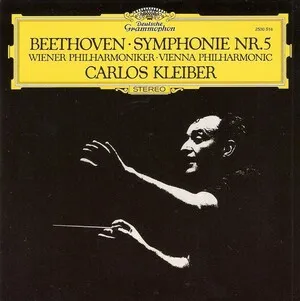
Symphonie Nr.5
Ludwig van Beethoven / Wiener Philharmoniker / Carlos Kleiber
Classical Period
European Music
Symphony
1995
1
/5
Symphonie Nr.7
Ludwig van Beethoven / Wiener Philharmoniker / Carlos Kleiber
Classical Period
Symphony
European Music
1982
1
/5
Tristan und Isolde
Richard Wagner
New German School
Romantic Classical
1981
3
/5
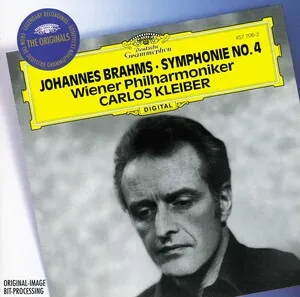
Symphonie No. 4
Johannes Brahms / Wiener Philharmoniker / Carlos Kleiber
Symphony
Romanticism
Romantic Classical
1976
3
/5
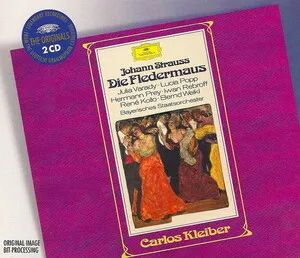
Die Fledermaus
Johann Strauss
Operetta
1973
1
/5
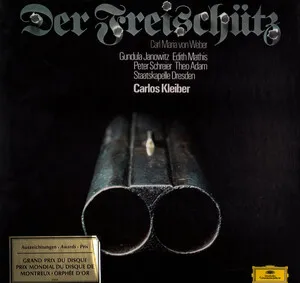
Der Freischütz
Carl Maria von Weber
Romantische Oper
German Music
Similar artists
4
/5
Berliner Philharmoniker
Classical
Romantic Classical
Romanticism
4
/5
Herbert von Karajan
Classical
Symphonic Poem
Symphony
4
/5
Wiener Philharmoniker
Classical
Romantic Classical
Romanticism
4
/5
Philharmonia Orchestra
Classical
Opera
Choral
3
/5
Karl Böhm
Classical
Classical Period
Opera
2
/5
Ferenc Fricsay
Classical
Opera
Romantic Classical
2
/5
Otto Klemperer
Choral
Classical
Opera
2
/5
Anna Tomowa-Sintow
Requiem
Classical
Opera
4
/5
Ludwig van Beethoven
Classical
Classical Period
Romantic Classical
4
/5
Wolfgang Amadeus Mozart
Classical
Requiem
Classical Period
Download our mobile app
Get the Melodigging app and start digging for new genres on the go
Download on the App Store
Get it on Google Play
© 2026 Melodigging
Give feedback
Legal
Melodding was created as a tribute to
Every Noise at Once
, which inspired us to help curious minds keep digging into music's ever-evolving genres.