Your digging level
Description
432hz is a wellness-oriented ambient/New Age micro-genre built around tuning music to the alternative concert pitch A=432 Hz instead of the modern standard A=440 Hz.
In practice, 432hz releases are largely instrumental, slow-tempo, and reverb-rich, combining soft pads, drones, gentle piano, bowls/chimes, and nature sounds. Tracks are marketed for relaxation, meditation, yoga, sleep, and "energy" or "chakra" work, and are frequently tagged with wellness keywords. While advocates claim psychoacoustic or physiological benefits from 432 Hz tuning, these claims remain unproven; the sound signature audiences respond to is the calm production, consonant harmony, and spacious mixing typical of ambient and New Age music.
As a streaming-native style, 432hz thrives on platforms like YouTube and Spotify where long-form background listening, SEO-friendly titling, and looping visuals support use-cases such as study, mindfulness, and sleep.


History
Throughout the 18th–20th centuries, orchestral pitch was not fixed; it varied by city and ensemble. France adopted A=435 Hz in the late 1800s, and the ISO 16 standard set A=440 Hz in 1955, which is now the global norm. Various historical and modern advocates (often citing Verdi) have proposed alternatives around 432 Hz, but no single historical consensus on A=432 existed.
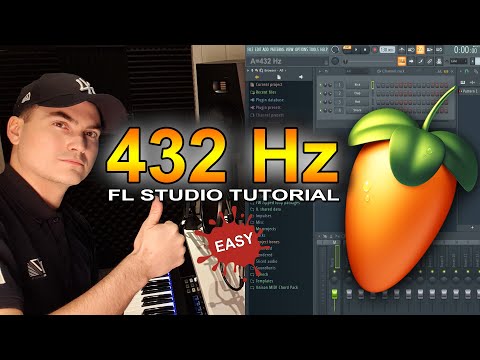
With the rise of wellness culture, YouTube, and streaming playlists in the 2010s, producers began tagging calm ambient/New Age tracks as "432 Hz"—either by recording with A=432 as the reference or by pitch-shifting finished audio down about −31.8 cents. The label spread alongside other wellness tropes (binaural beats, "solfeggio" numbers), forming a discoverable niche optimized for relaxation, meditation, yoga, and sleep.
Independent of tuning, the sound coalesced around long, pad-based textures, gentle piano arpeggios, drones, singing bowls, ocean/forest beds, and slow, metronomic or beatless pacing. Minimal harmonic movement, consonant intervals, and generous spatial effects (long reverbs, soft delays) are common.
Proponents attribute special properties to 432 Hz (e.g., improved relaxation or resonance with nature). Scientific validation for frequency-specific health claims is lacking; any benefits listeners report are more parsimoniously explained by musical factors (tempo, timbre, dynamics), expectancy/placebo, and listening context. Nonetheless, the tag functions effectively as a community signal and discovery keyword within wellness music.