Your digging level
Description
Chakra music is a contemplative branch of new age and ambient practice built around the South Asian concept of chakras—subtle energy centers described in Hindu and Buddhist yogic traditions. Artists shape timbre, pitch centers, and pacing to support meditation, yoga, breathwork, and body–mind practices that reference these centers.
Typical palettes feature long drones, spacious synthesizer pads, tanpura or shruti-box sustains, Tibetan or crystal singing bowls, gentle bells, bansuri or voice intoning seed (bija) mantras, and field recordings that evoke calm. Tracks often unfold very slowly, minimize harmonic change, and emphasize breath-length phrasing to facilitate inward focus.
While modern releases sometimes claim specific frequencies (e.g., “432 Hz,” “528 Hz”) map to particular chakras, such assertions are culturally modern and scientifically unverified. Musically, the genre is best understood as an ambient, raga- and chant-informed practice designed for meditative listening and movement.
History
Chakra music draws conceptually from Indian yogic literature and tantra, where sound (nāda) and mantra are central to practice. Musical antecedents include raga-based meditation, devotional chant (bhajan, kirtan), Vedic and Buddhist chant, and the use of drones (e.g., tanpura) to stabilize attention.
As yoga and meditation spread globally in the 1970s, the New Age movement fostered a recorded-music culture for relaxation and spiritual practice. Western and Indian musicians began issuing albums thematically organized around the seven chakra archetypes, using extended drones, soft synthesizers, and mantra recitation. These works translated esoteric ideas into accessible, long-form ambient pieces for home practice, massage, and studio classes.
With the growth of yoga studios, massage therapy, and holistic wellness, chakra-themed compilations and artist albums became common in catalogs and spa environments. Singing bowls, harmonium, bansuri, and world-ambient production tropes entered the vocabulary, while liner notes often offered chakra color/symbol mappings and guided intentions.
Playlists and functional audio (“focus,” “sleep,” “meditation”) accelerated the genre’s reach. Producers issue long, loop-friendly pieces with minimal transients, very slow evolution, and generous reverberation. Some releases reference specific “healing” tunings (e.g., 432/528 Hz) or binaural beat layers; regardless of claims, the musical core remains drone-led textures, mantra or vowel-toning, and breath-paced development.
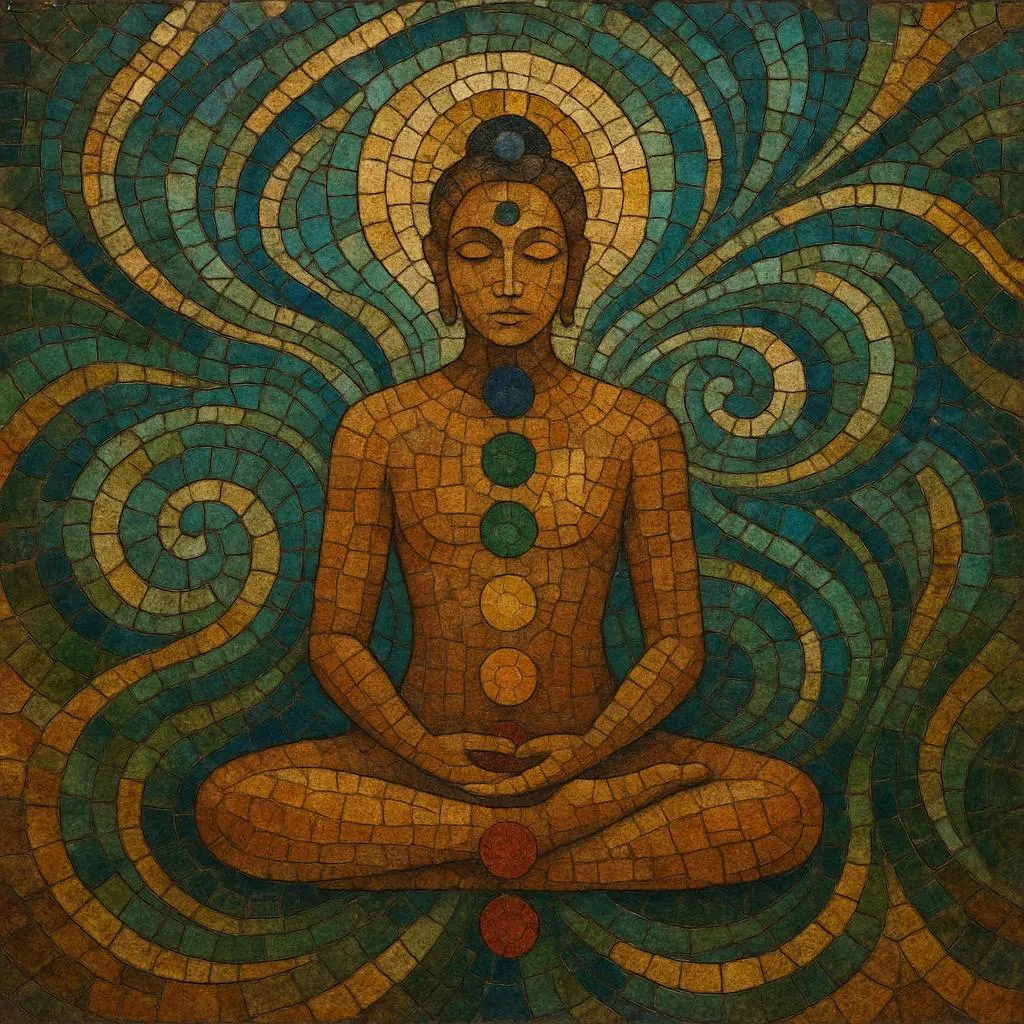
Chakra music commonly associates each track with a chakra’s symbolic qualities (grounding, creativity, will, compassion, expression, intuition, unity). Responsible practitioners acknowledge the Indian origins of these frameworks and avoid presenting modern frequency charts as historical fact.