Genres
Artists
Albums
Make Music
Sign in
Sign in
Artists
Darmstadt School
Artists
Darmstadt School
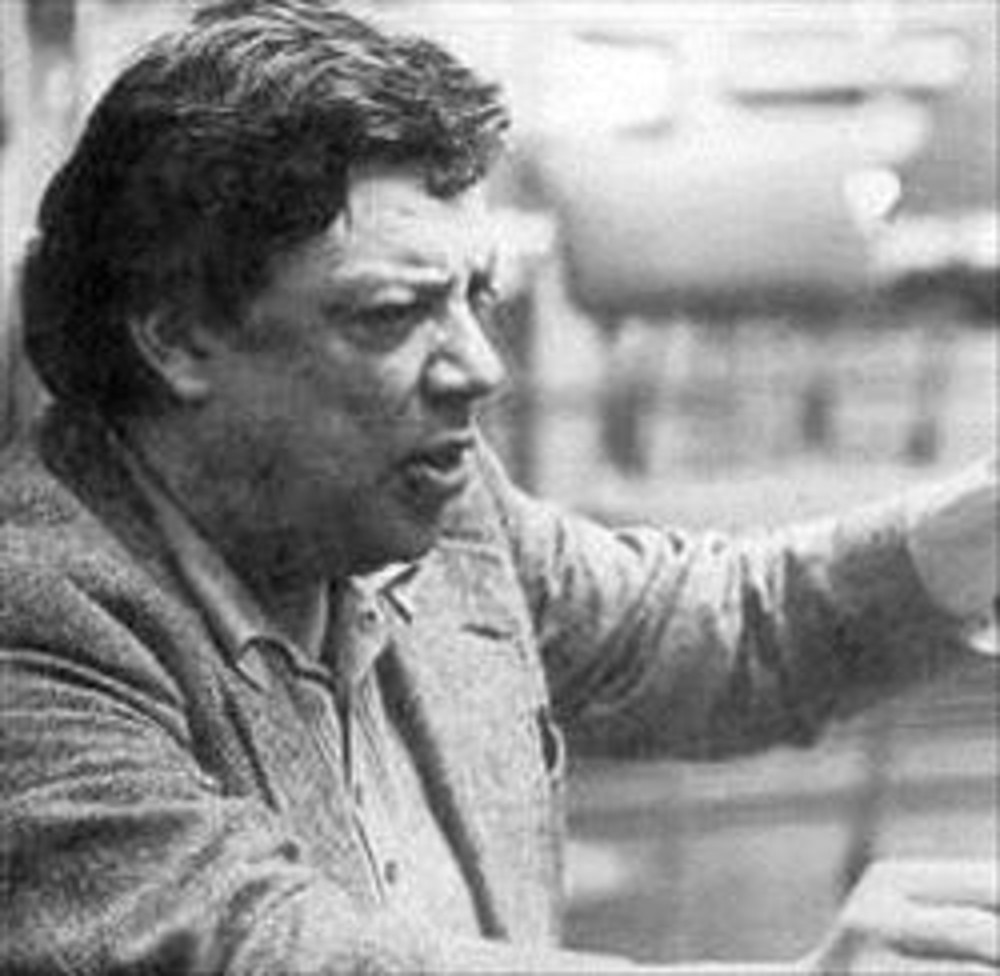
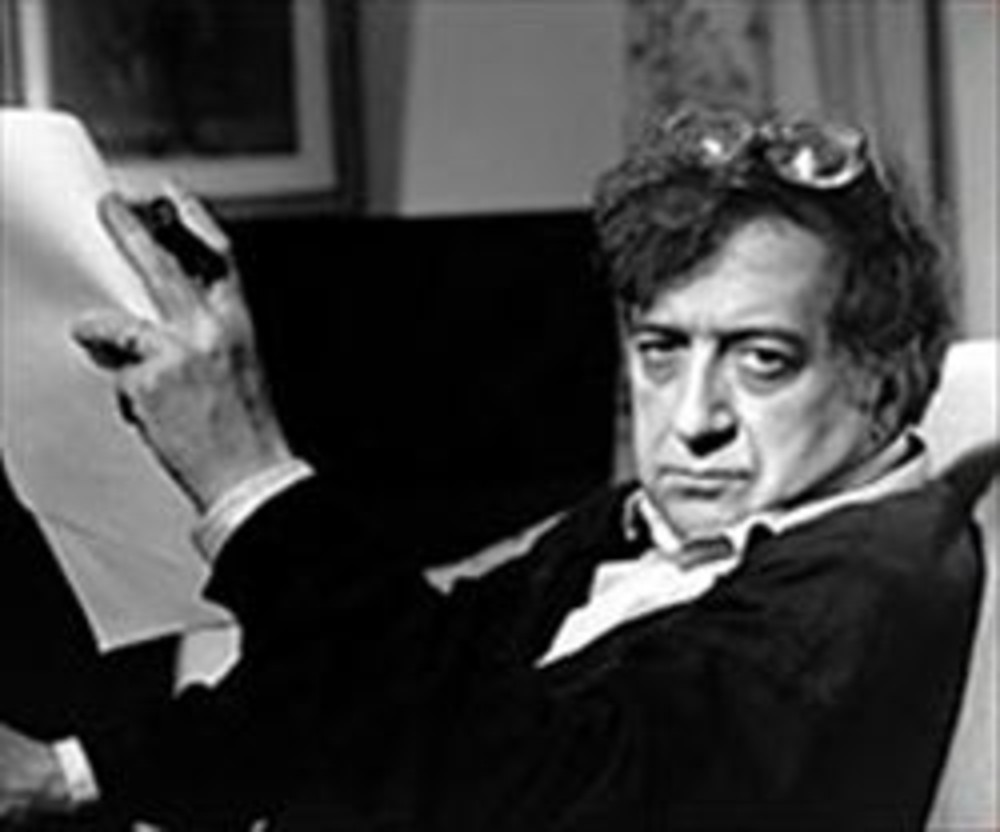
Bruno Maderna
1994–2013
·
8 albums
Listen
1
/5
Genres
Darmstadt School
The Darmstadt School refers to the post–World War II circle of composers who gathered around the Internationale Ferienkurse für Neue Musik (International Summer Courses for New Music) in Darmstadt, West Germany. Characterized by rigorous serial and post-serial techniques, extreme control of musical parameters (pitch, rhythm, dynamics, timbre), and a rejection of tonal and romantic idioms, the style prized structural clarity, pointillist textures, and an ascetic, laboratory-like approach to sound. While aesthetically diverse, its core ethos was a modernist drive toward formal innovation, often engaging electronic media and advanced notation, and deeply influenced by the Second Viennese School—especially Webern’s concise, atomized writing.
Discover
Listen
Experimental
Experimental music is an umbrella term for practices that prioritize exploration, process, and discovery over adherence to established genre norms. It embraces new sound sources, nonstandard tuning systems, indeterminacy and chance operations, graphic and open-form scores, extended techniques, and technology-led sound design (tape, electronics, computers, and live processing). Rather than a single style, it is a methodology and ethos: testing hypotheses about sound, structure, and performance, often blurring boundaries between composition, improvisation, sound art, and performance art. Listeners can expect unfamiliar timbres, unusual forms, and an emphasis on how music is made as much as the resulting sound.
Discover
Listen
Musique Concrète
Musique concrète is an electroacoustic approach to composition that uses recorded real‑world sounds (objets sonores) as primary material rather than traditional instruments or notation. Composers edit, splice, loop, reverse, time‑stretch, filter, and otherwise transform these recordings to create works designed for loudspeakers. Emerging in late‑1940s France, it introduced acousmatic listening—focusing on the sound itself, detached from its source—along with a morphology‑based vocabulary of gesture, texture, and timbre. Historically realized on tape and now on digital audio workstations, musique concrète privileges montage and transformation over conventional harmony and meter, inviting listeners into a rich, tactile world of sonic phenomena.
Discover
Listen
Contemporary Classical
Contemporary classical is the broad field of Western art music created after World War II. It embraces an array of aesthetics—from serialism and indeterminacy to minimalism, spectralism, electroacoustic practices, and post‑tonal lyricism—while retaining a concern for notated composition and timbral innovation. Unlike the unified styles of earlier eras, contemporary classical is pluralistic. Composers freely mix acoustic and electronic sound, expand instrumental techniques, adopt non‑Western tuning and rhythm, and explore new forms, from process-based structures to open and graphic scores. The result is a music that can be rigorously complex or radically simple, technologically experimental or intimately acoustic, yet consistently focused on extending how musical time, timbre, and form can be shaped.
Discover
Listen
Serialism
Serialism is a compositional method in which musical parameters are organized into ordered series that govern a work’s structure. Most famously, twelve‑tone serialism uses an ordered row of the 12 pitch classes, deploying transformations such as prime, inversion, retrograde, and retrograde inversion to avoid traditional tonal hierarchy. While Schoenberg’s twelve‑tone technique focuses on pitch, post‑war composers expanded the idea to "total" or "integral" serialism, applying series to rhythm, dynamics, articulation, timbre, and register. The results often emphasize clarity of event over tonal center, pointillistic textures, and rigorous formal control. Aesthetic outcomes range from Berg’s expressive lyricism to Webern’s ultra‑condensed, crystalline writing, and later to the highly systematized post‑war European avant‑garde. Serialism remains a cornerstone of 20th‑century modernist practice, whether embraced, extended, or reacted against by subsequent movements.
Discover
Listen
Avant-Garde
Avant-garde music is an umbrella term for boundary-pushing practices that challenge prevailing norms of harmony, rhythm, timbre, form, and performance. It privileges experimentation, conceptual rigor, and a willingness to reframe what counts as music at all. Historically tied to early 20th‑century artistic modernism, avant-garde music introduced atonality, the emancipation of noise, and new forms of notation and process. It embraces indeterminacy, extended techniques, electronics, spatialization, and multimedia performance, treating sound as material to be sculpted, questioned, and reinvented.
Discover
Listen
Electronic
Electronic is a broad umbrella genre defined by the primary use of electronically generated or electronically processed sound. It encompasses music made with synthesizers, drum machines, samplers, computers, and studio/tape techniques, as well as electroacoustic manipulation of recorded or synthetic sources. The genre ranges from academic and experimental traditions to popular and dance-oriented forms. While its sonic palette is rooted in electricity and circuitry, its aesthetics span minimal and textural explorations, structured song forms, and beat-driven club permutations. Electronic emphasizes sound design, timbre, and studio-as-instrument practices as much as melody and harmony.
Discover
Listen
Concerto
A concerto is a large-scale composition that sets one or more solo instruments in dynamic dialogue with an orchestra. Its core idea is contrast—between soloist and tutti—and the dramatic negotiation of power, color, and thematic responsibility. While Baroque concertos often relied on ritornello form, the Classical era standardized a three-movement plan (fast–slow–fast) with sonata principles in the opening movement. The Romantic period emphasized virtuosity and expressive foregrounding of the soloist, and the 20th–21st centuries broadened the palette with new instruments, harmonies, and formats. Across eras, the concerto remains a showcase for instrumental character, technical brilliance, and the art of orchestral conversation.
Discover
Listen
Classical
Classical music is the notated art-music tradition of Europe and its global descendants, characterized by durable forms, carefully codified harmony and counterpoint, and a literate score-based practice. The term “classical” can refer broadly to the entire Western art-music lineage from the Medieval era to today, not just the Classical period (c. 1750s–1820s). It privileges long-form structures (such as symphonies, sonatas, concertos, masses, and operas), functional or modal harmony, thematic development, and timbral nuance across ensembles ranging from solo instruments to full orchestras and choirs. Across centuries, the style evolved from chant and modal polyphony to tonal harmony, and later to post-tonal idioms, while maintaining a shared emphasis on written notation, performance practice, and craft.
Discover
Listen
Show all 9 genres
Albums
2013
1
/5
Complete Works for Orchestra, Vol. 5
Bruno Maderna
Darmstadt School
Classical
Concerto
2010
1
/5
Orchestral Works
Bruno Maderna
Darmstadt School
2002
1
/5
Acousmatrix - The History of Electronic Music VII
Luciano Berio
Serialism
Classical
Electronic
2002
1
/5
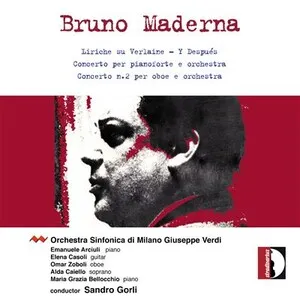
Liriche su Verlaine; Y después; Concerto per pianoforte e orchestra; Concerto n. 2 per oboe e orchestra
Bruno Maderna
Darmstadt School
1999
1
/5
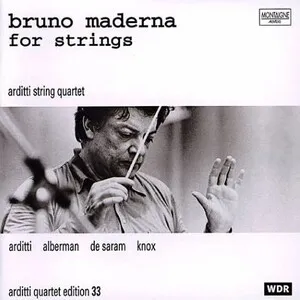
For Strings
Bruno Maderna / Arditti Quartet
Darmstadt School
1994
1
/5
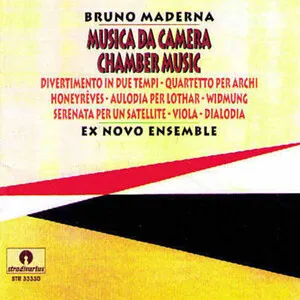
Musica da camera
Bruno Maderna / Ex Novo Ensemble
Darmstadt School
1994
1
/5
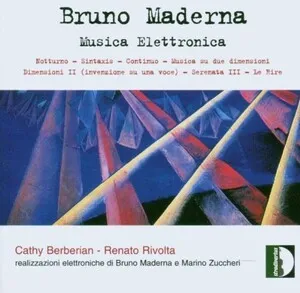
Musica elettronica: Notturno; Sintaxis; Continuo; Musica su due dimensioni; Dimensioni II (invenzione su una voce); Ser…
Bruno Maderna
Darmstadt School
1994
1
/5
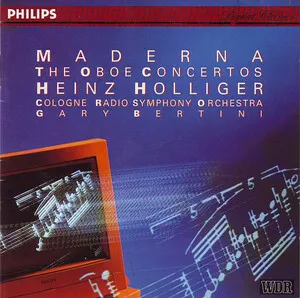
The Oboe Concertos
Bruno Maderna
Darmstadt School
Similar artists
3
/5
Pierre Boulez
Classical
Serialism
Second Viennese School
2
/5
Karlheinz Stockhausen
Integral Serialism
Serialism
Darmstadt School
1
/5
Luigi Nono
Darmstadt School
Classical
Acousmatic
2
/5
WDR Sinfonieorchester Köln
Classical
Avant-Garde
Darmstadt School
1
/5
Arturo Tamayo
Orchestral
Classical
Stochastic Music
1
/5
Various Artists
Afro-Funk
Alternative Rock
Ambient
2
/5
Luciano Berio
Serialism
Avant-Garde
Darmstadt School
3
/5
Paul Hillier
Choral
Minimalism
Classical
2
/5
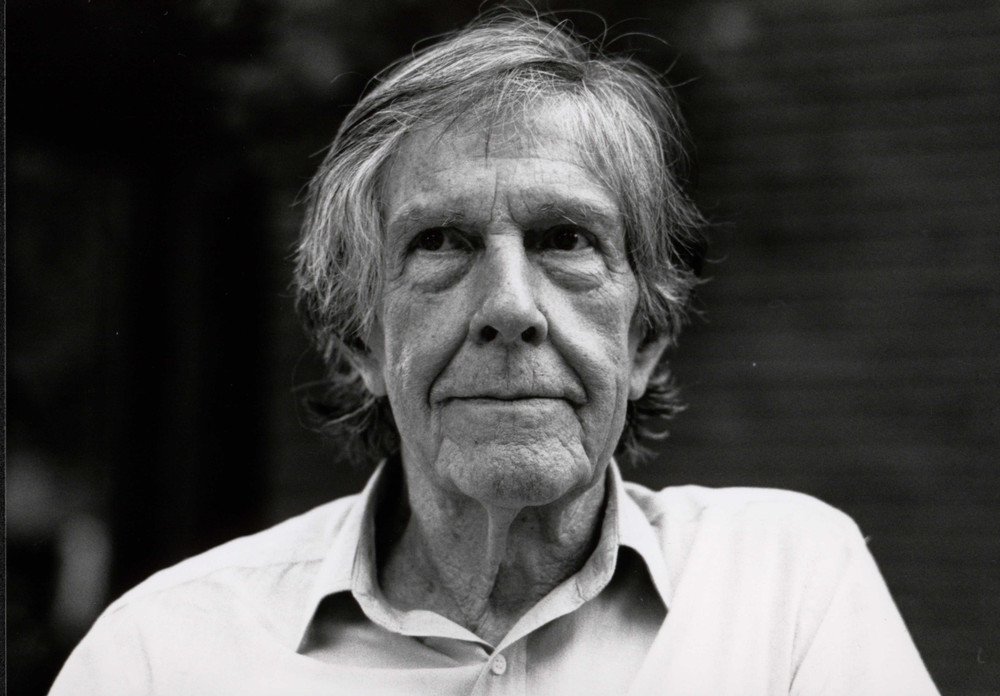
John Cage
Indeterminacy
Classical
Experimental
2
/5
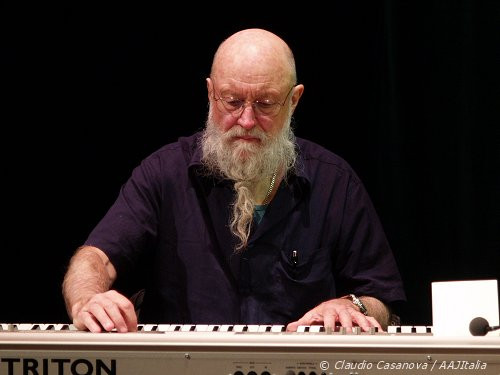
Terry Riley
Minimalism
Classical
Experimental
Download our mobile app
Get the Melodigging app and start digging for new genres on the go
Download on the App Store
Get it on Google Play
© 2026 Melodigging
Give feedback
Legal
Melodding was created as a tribute to
Every Noise at Once
, which inspired us to help curious minds keep digging into music's ever-evolving genres.