



Genres
Artists
Albums
Make Music
Sign in
Sign in
Artists
Wagnerian Singing
Artists
Wagnerian Singing
Bayreuth Festival Orchestra
1971–2018
·
11 albums
Listen
2
/5
Genres
Wagnerian Singing
Wagnerian singing is the dramatic operatic vocal style associated with the music dramas of Richard Wagner. It is characterized by large, penetrating voices capable of projecting over very dense orchestration for prolonged periods, with remarkable stamina, focus, and legato. The style prioritizes declamatory text delivery in German, seamless "endless melody" (unendliche Melodie), and an expressive, weighty timbre with a pronounced singer’s formant (squillo) that carries through large halls. Tessituras are often high and unrelenting, with long phrases, wide dynamic ranges, and limited use of ornamental display compared to bel canto. Typical Wagnerian voice categories include the Heldentenor and hochdramatische Sopran (high dramatic soprano), along with dramatic mezzo-sopranos and bass-baritones. Roles such as Brünnhilde, Isolde, Siegfried, and Wotan exemplify the technical and expressive demands of the style.
Discover
Listen
Classical Tenor
Classical tenor refers to the Western classical tradition of tenor singing across opera, oratorio, and art song. It centers on a high male voice type whose typical written range spans roughly C3 to B4/C5, with the core tessitura sitting around the passaggio between E4–G4. The style is defined by legato phrasing, precise diction in multiple languages (especially Italian, German, French, and Latin), balanced chiaroscuro tone, and secure breath management (appoggio) that enables both long lyrical lines and brilliant climaxes. Subtypes include leggiero, lyric, spinto, dramatic, and heldentenor, each suited to different repertoire weights and orchestral demands. Accompaniments are commonly full orchestra (opera/oratorio) or piano (Lied/mélodie), sometimes organ or chamber ensembles. Repertoire ranges from Baroque da capo arias to Romantic grand opera scenes, Wagnerian music dramas, sacred works, and recital songs.
Discover
Listen
Classical Bass
Classical bass is the tradition of double bass performance and composition within Western classical music. It centers on the double bass as a solo, chamber, and orchestral instrument, highlighting its deep timbre, wide range, and expressive capabilities. Repertoire spans concertos, sonatas, character pieces, orchestral excerpts, and chamber works in which the bass either anchors harmony or emerges as a lyrical, virtuosic voice. The style relies on bow (arco) technique—détaché, legato, spiccato, staccato, and martelé—alongside pizzicato, natural and artificial harmonics, and advanced thumb-position playing. Players use orchestral tuning (E–A–D–G) and often solo tuning (F♯–B–E–A) with transposition. Both French and German bow holds are common. Notation crosses bass, tenor, and treble clefs to accommodate range, and writing idiomatically respects string crossings, shifting, and the instrument’s resonance.
Discover
Listen
Orchestral
Orchestral music refers to compositions written for an orchestra—a large ensemble typically built around a string section (violins, violas, cellos, double basses), complemented by woodwinds, brass, percussion, and often harp, keyboard, or other auxiliary instruments. A conductor coordinates the ensemble, shaping balance, phrasing, and expression. The style emphasizes coloristic timbre combinations, dynamic range from the softest pianissimo to explosive tuttis, and textures that can shift seamlessly between transparent chamber-like writing and monumental masses of sound. Orchestral writing underpins concert genres such as symphonies, overtures, and tone poems, as well as opera, ballet, and modern film and game scores. While orchestral writing evolved across centuries, its core craft centers on melody, counterpoint, harmony, register, and orchestration—the art of assigning musical ideas to instruments to achieve clarity, contrast, and narrative impact.
Discover
Listen
Opera
Opera is a large-scale theatrical genre that combines music, drama, and visual spectacle, in which the story is primarily conveyed through singing accompanied by an orchestra. It unites solo voices, ensembles, and chorus with staging, costumes, and often dance to create a total artwork. Emerging in late Renaissance Italy and flourishing in the Baroque era, opera developed signature forms such as recitative (speech-like singing that advances the plot) and aria (lyrical numbers that explore character and emotion). Over the centuries it evolved diverse national styles—Italian bel canto, French grand opéra, German music drama—while continually experimenting with orchestration, harmony, narrative structure, and stagecraft.
Discover
Listen
Classical
Classical music is the notated art-music tradition of Europe and its global descendants, characterized by durable forms, carefully codified harmony and counterpoint, and a literate score-based practice. The term “classical” can refer broadly to the entire Western art-music lineage from the Medieval era to today, not just the Classical period (c. 1750s–1820s). It privileges long-form structures (such as symphonies, sonatas, concertos, masses, and operas), functional or modal harmony, thematic development, and timbral nuance across ensembles ranging from solo instruments to full orchestras and choirs. Across centuries, the style evolved from chant and modal polyphony to tonal harmony, and later to post-tonal idioms, while maintaining a shared emphasis on written notation, performance practice, and craft.
Discover
Listen
Albums
2018
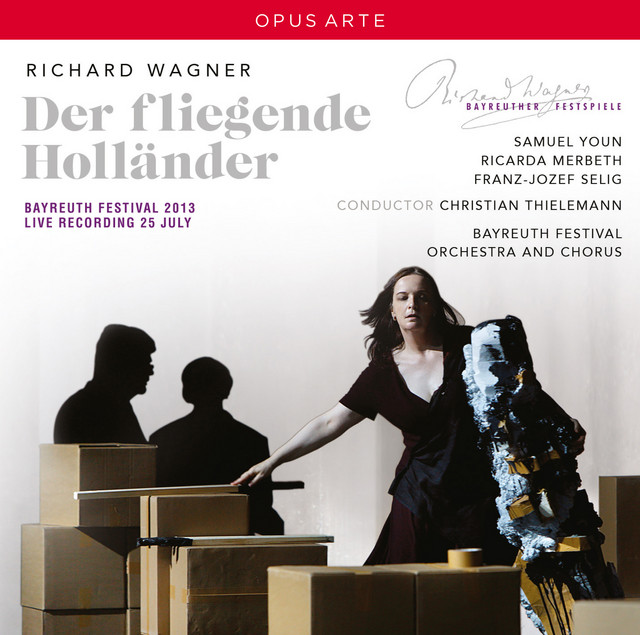
Der fliegende Holländer, WWV 63 (Live)
Wagner; Samuel Youn, Tomislav Mužek, Orchester der Bayreuther Festspiele & Chri…
Wagnerian Singing
2018
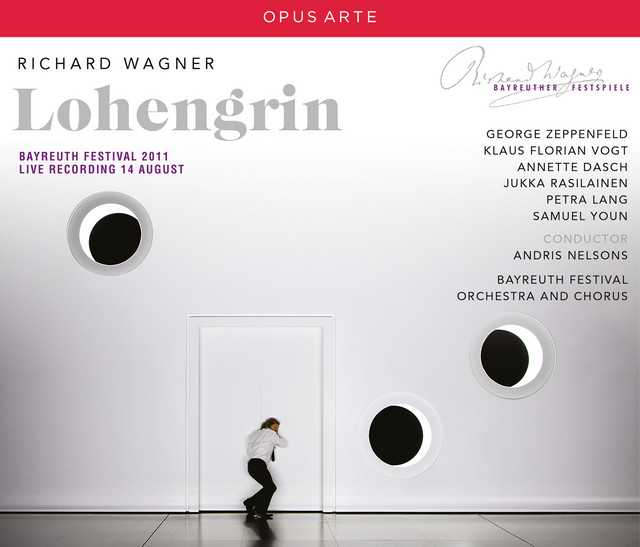
Lohengrin, WWV 75 (Recorded Live 2011)
Wagner; Orchester der Bayreuther Festspiele, Andris Nelsons, Annette Dasch & Kl…
Wagnerian Singing
2016
Wagner: Der Ring des Nibelungen, WWV 86 (Live)
Richard Wagner, Astrid Varnay, Regina Resnik, Ira Malaniuk, Maria von Ilosvay,…
Classical Bass
2015
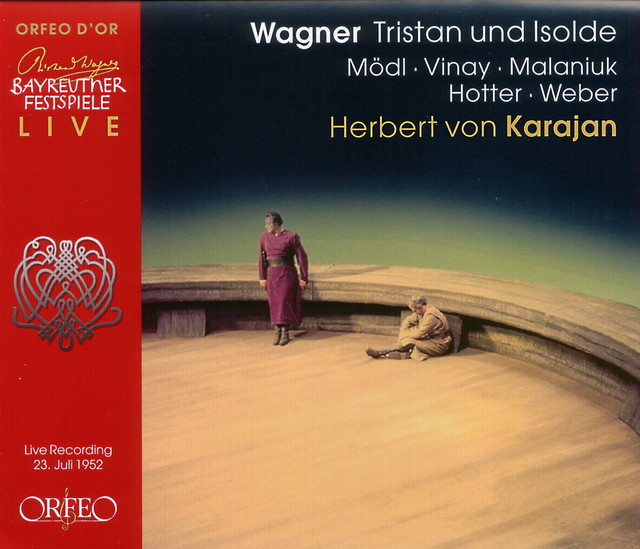
Wagner: Tristan und Isolde, WWV 90
Richard Wagner, Martha Mödl, Ramon Vinay, Ira Malaniuk, Hans Hotter, Ludwig Web…
Classical Tenor
2015
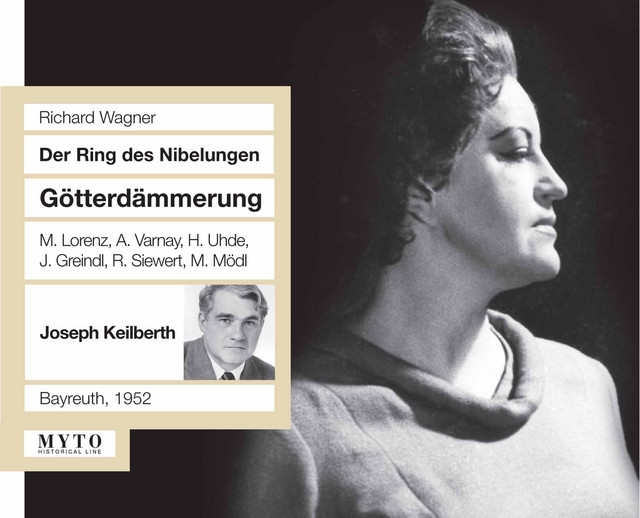
Wagner: Götterdämmerung, WWV 86d
Richard Wagner, Max Lorenz, Astrid Varnay, Hermann Uhde, Josef Greindl, Ruth Si…
Wagnerian Singing
Classical Tenor
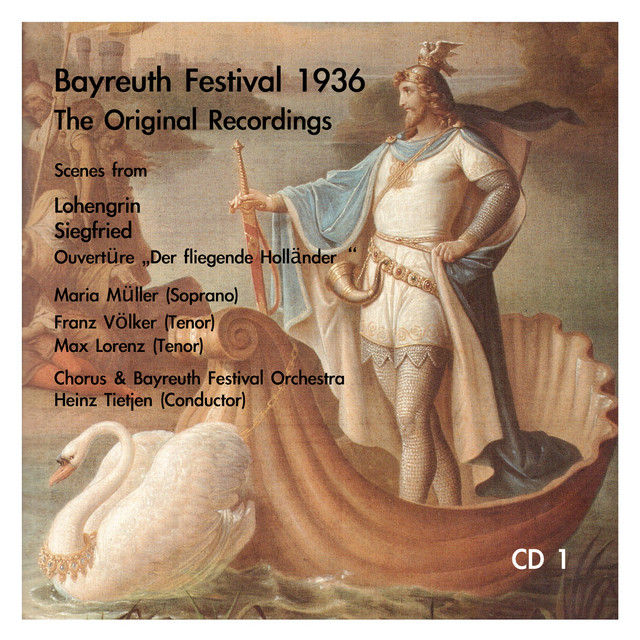
2013
The Bayreuth Festival 1936 Original Recordings, CD 1
Richard Wagner, Bayreuth Festival Chorus, Bayreuth Festival Orchestra, Heinz Ti…
Wagnerian Singing
1981
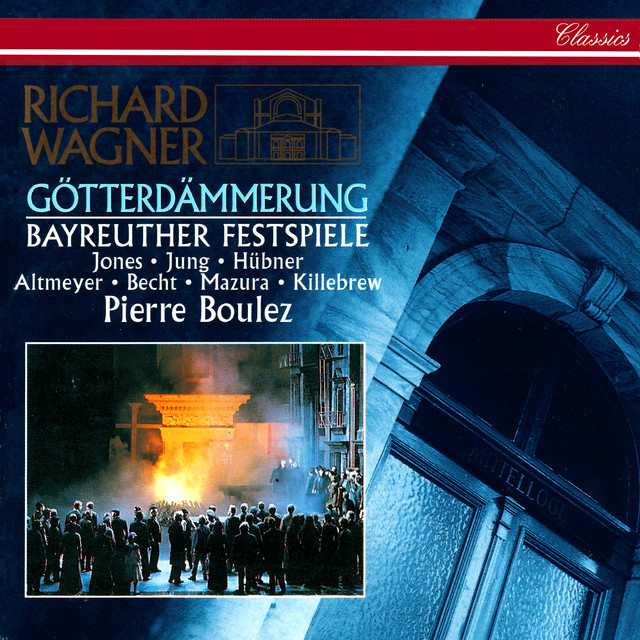
Wagner: Götterdämmerung
Richard Wagner, Pierre Boulez, Gwyneth Jones, Manfred Jung, Fritz Hübner, Franz…
Wagnerian Singing
1981
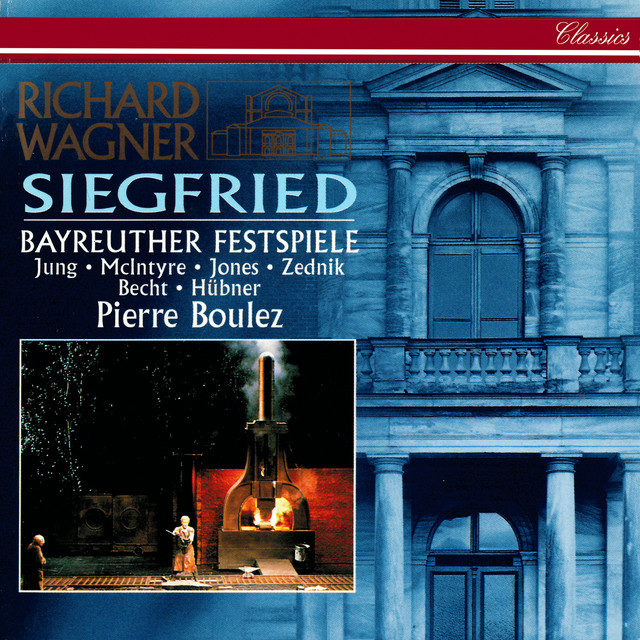
Wagner: Siegfried
Richard Wagner, Manfred Jung, Donald McIntyre, Gwyneth Jones, Heinz Zednik, Her…
Wagnerian Singing
1973
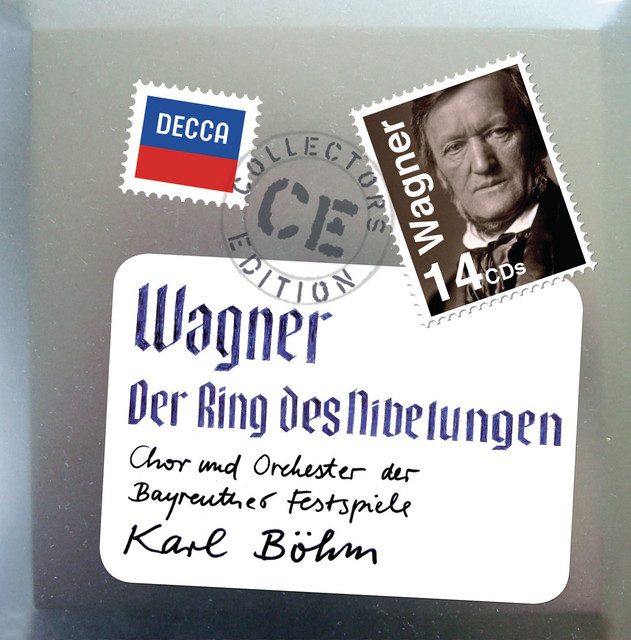
Wagner: Der Ring des Nibelungen
Richard Wagner, Bayreuth Festival Orchestra, Karl Böhm
Wagnerian Singing
1972
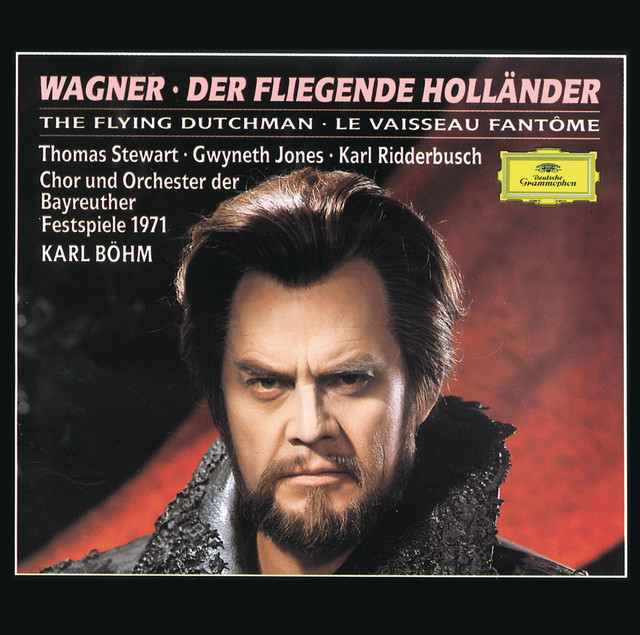
Wagner: Der fliegende Holländer
Richard Wagner, Bayreuth Festival Chorus, Bayreuth Festival Orchestra, Karl Böhm
Wagnerian Singing
1971
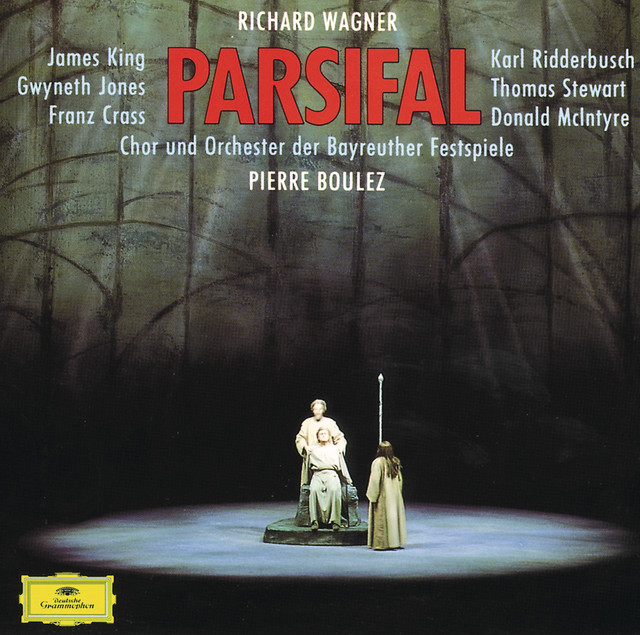
Wagner: Parsifal
Richard Wagner, Bayreuth Festival Chorus, Bayreuth Festival Orchestra, Pierre B…
Wagnerian Singing
Similar artists
4
/5
London Symphony Orchestra
Classical
Ballet
Concerto
4
/5
Berliner Philharmoniker
Classical
Symphony
Romantic Classical
4
/5
Herbert von Karajan
Classical
Symphonic Poem
Symphony
4
/5
London Philharmonic Orchestra
Opera
Classical
Deep Soundtrack
4
/5
Philharmonia Orchestra
Classical
Opera
Choral
3
/5
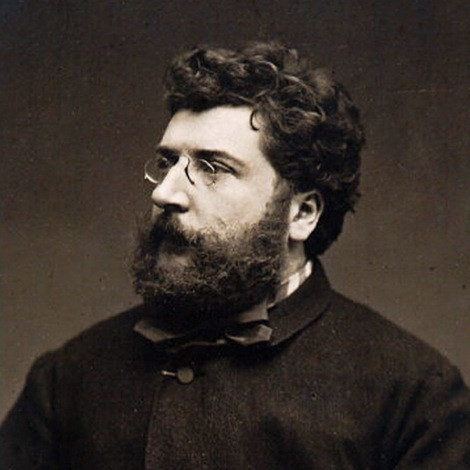
Georges Bizet
Opéra Comique
Classical
Opera
3
/5
Academy of Ancient Music
Classical
Baroque
Concerto
3
/5
Los Angeles Philharmonic
Classical
Opera
Orchestral
3
/5
Slovak Radio Symphony Orchestra
Classical
Opera
Orchestral
3
/5
Richard Wagner
New German School
Romantische Oper
Classical
Download our mobile app
Get the Melodigging app and start digging for new genres on the go
Download on the App Store
Get it on Google Play
© 2026 Melodigging
Give feedback
Legal
Melodding was created as a tribute to
Every Noise at Once
, which inspired us to help curious minds keep digging into music's ever-evolving genres.