Your digging level
Description
Yoruba worship is a branch of Nigerian Christian praise-and-worship performed primarily in the Yoruba language. It blends congregational hymnody with Yoruba rhythmic aesthetics, call-and-response singing, and praise poetry (oríkì) addressed to God.
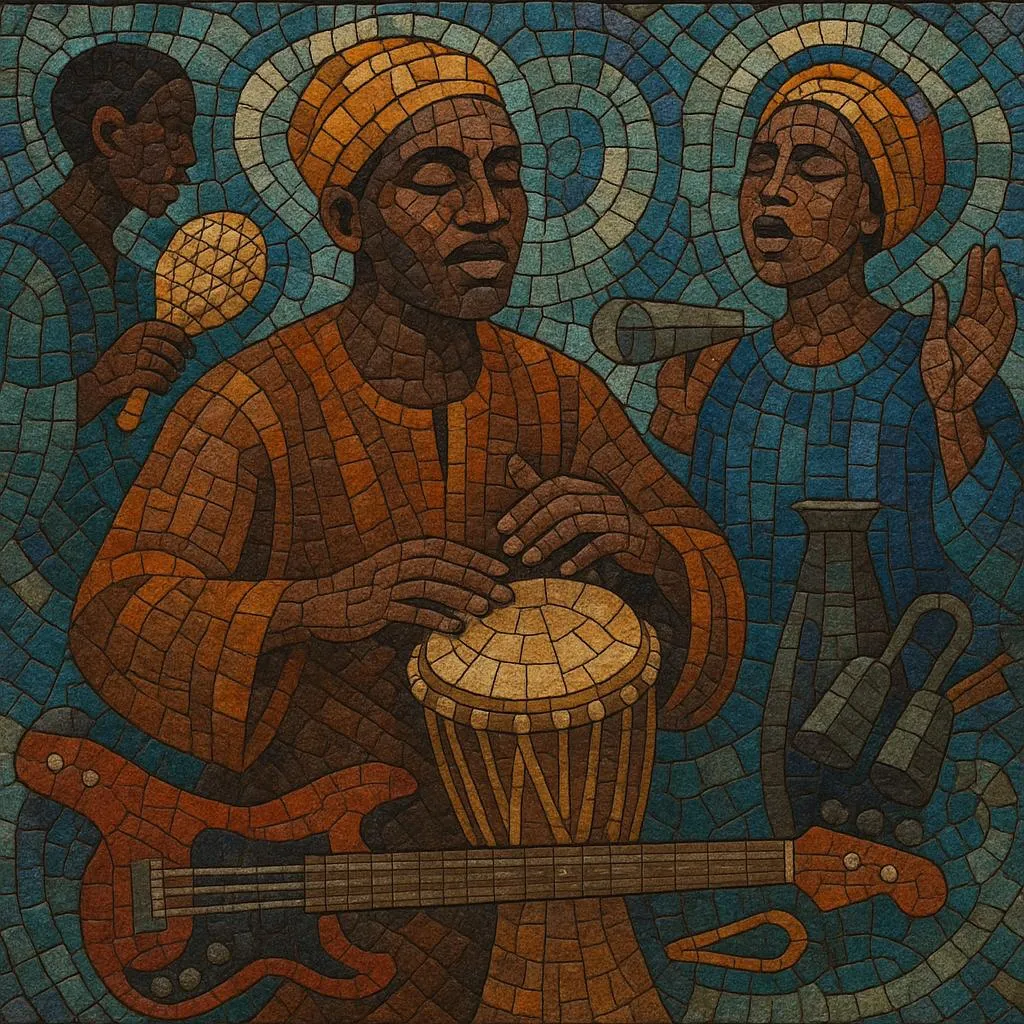
Musically, it often marries hand percussion (talking drum/gaǹgàn, shẹ̀kẹ̀rẹ̀, agogo) and juju/fuji-derived grooves with electric bass, guitars, and modern keyboards. Lyrically, it relies on rich Yoruba honorifics for the divine (e.g., “Oluwa,” “Olódùmarè,” “Oba tó ga”), devotional refrains, and scriptural paraphrases. The result ranges from intimate, slow-moving adoration to ecstatic, dance-forward praise medleys that invite congregational participation.
History
Christian missions and Yoruba converts in southwestern Nigeria began translating hymns and prayer songs into Yoruba in the late 19th and early 20th centuries. Aládùrá revival movements (from the 1910s–1930s) normalized indigenous-language worship, call-and-response forms, hand percussion, and extended prayer-chant sections in church services.
From the 1970s, locally produced cassettes and radio broadcasts helped a distinctly Yoruba Christian sound cohere. Choirs and evangelists combined Western harmony with Yoruba rhythmic cycles, borrowing timbres and grooves from juju and fuji while keeping worship texts front and center. This period set the template: alternating slow adoration songs and uptempo praise medleys, all in accessible keys and communal structures.
With better church sound systems and live bands, Yoruba worship became more band-driven: drum set, bass, guitars, and keyboards supported traditional percussion and choir. Youth fellowships and mega-churches amplified the style’s reach across Nigeria, while TV, VCD/DVD, and early web platforms circulated notable worship sessions beyond Yoruba-speaking regions.
Streaming platforms and social media popularized short-form praise clips, live-worship videos, and spontaneous oríkì-based adoration sets, making Yoruba worship recognizable across Africa and the diaspora. Contemporary productions move fluidly between slow, reverent sections and joyous, danceable praise, often weaving multiple choruses into extended medleys that audiences can learn quickly.

Best playlists